RV Tire Safety Explained: Load Ratings, Speed Limits, and DOT Standards

Salem Hassan founded Travelcamp RV and brings 30+ years of hands-on RV, marine, and powersports experience to every review.
✎ Reviewed by Salem Hassan — Founder, Travelcamp · 30+ years in RV, marine, and powersports
Why trust us
RVGearInsider articles are researched by the Searchshop Editorial team with a full-timer's lens — evaluating gear for year-round use, not weekend trips. We assess every recommendation against the demands of full-time living: sustained power draw, weight budget, water system integration, and long-term durability. We may earn a commission on qualifying purchases; it does not change what we recommend.



RV Tire Safety Explained: Load Ratings, Speed Limits, and DOT Standards
RV tires do far more than hold up the coach. They carry concentrated weight, manage heat, absorb road shock, and maintain stability in crosswinds, braking, and emergency maneuvers. When RV owners misunderstand load ratings, speed ratings, inflation requirements, or DOT markings, the result is often premature wear at best and a dangerous tire failure at worst.
In this guide, we researched the core rules behind rv tire safety load ratings speed ratings explained so RV owners can better understand what the numbers on the sidewall actually mean, how federal standards apply, and what safe day-to-day practices matter most.
Why This Matters

Ignoring tire load and speed limits has real consequences. An overloaded or underinflated RV tire flexes more than it should. That extra flex creates heat, and heat is one of the main enemies of tire durability. At highway speeds, excessive heat buildup can contribute to tread separation, sidewall damage, or sudden air loss.
For RVs, the risk is amplified because many rigs spend long periods parked, carry uneven cargo loads, and operate near their maximum weight ratings. A tire that is technically the right size can still be unsafe if its load range is inadequate, if inflation does not match the actual axle load, or if the tire is driven beyond its speed capability.
The consequences are not limited to the tire itself. A failure can damage wheel wells, plumbing, wiring, brake lines, fenders, and underbody panels. On towables, a blowout can also destabilize the trailer. On motorhomes, a front tire failure can affect steering control. We recommend treating tire ratings as a primary safety system, not a maintenance afterthought.
Relevant Standards & Regulations
FMVSS No. 119 (49 CFR §571.119): Federal Motor Vehicle Safety Standard covering new pneumatic tires for vehicles other than passenger cars, including many truck, bus, trailer, and RV-applicable tire categories. It addresses endurance, strength, high-speed performance, and labeling requirements.
FMVSS No. 120 (49 CFR §571.120): Federal standard covering tire and rim selection for motor vehicles other than passenger cars. It includes requirements for vehicle placards and information about original tire size and recommended cold inflation pressure.
49 CFR Part 574: Tire identification and recordkeeping requirements, including the Tire Identification Number (TIN), commonly called the DOT code, used for plant identification and date of manufacture.
49 CFR Part 575.104: Consumer tire information requirements, including comparative grading information for certain tire categories and consumer-facing disclosures.
Tire and Rim Association (TRA) Year Book: Industry reference used for load, inflation, dimensions, and fitment data for many tire types sold in the U.S. Manufacturers often rely on these tables when publishing load and inflation information.
U.S. DOT / NHTSA Recall Framework: The National Highway Traffic Safety Administration oversees tire safety recalls, defect investigations, and consumer complaint reporting relevant to RV tires and vehicles.
Key Safety Principles

Load Rating Must Match Real-World Weight
A tire's load rating is the maximum weight it can carry at a specified cold inflation pressure. For RV owners, this is the starting point. The key is not the gross vehicle weight alone, but the actual load on each axle and ideally each wheel position.
Practical application: We recommend weighing the RV when loaded for travel, including water, propane, passengers, food, tools, and accessories. Compare the measured axle weights to the tire manufacturer's load tables, not just the sidewall maximum. If one side of the RV carries more weight than the other, that heavier side determines the minimum safe inflation for that axle.
Speed Ratings Are Safety Limits, Not Performance Targets
A speed rating indicates the maximum speed capability of a tire under specified test conditions. It does not mean the tire should routinely be driven at that speed, especially on a heavily loaded RV.
Practical application: We recommend keeping actual travel speed conservative, particularly in hot weather or when the RV is near maximum weight. Some Special Trailer (ST) tires may have speed restrictions unless operated at specific inflation or load conditions according to the manufacturer. Always verify the tire maker's guidance.
Cold Inflation Pressure Is Critical
Tire load capacity depends on inflation pressure. Underinflation reduces carrying capacity and increases heat generation. Overinflation can affect ride quality, traction, and wear, though the more common RV hazard is underinflation.
Practical application: Check pressure when tires are cold, before driving and before direct sun significantly warms one side of the RV. Use the vehicle placard as the baseline for original equipment fitment, then confirm with actual scale weights and the tire manufacturer's load-inflation table where appropriate.
DOT Markings Help You Verify Identity and Age
The DOT code on the sidewall identifies the tire's manufacturing plant, size or construction code, and date of manufacture. The last four digits indicate the week and year the tire was made.
Practical application: We recommend checking the DOT date before purchase and during routine inspections. Tire age alone does not automatically condemn a tire, but aging matters on RVs because long storage periods, UV exposure, ozone, and inactivity can accelerate degradation even when tread depth still looks acceptable.
Fitment Must Match the Wheel and Vehicle Requirements
Correct size alone is not enough. The tire must be compatible with the wheel width, inflation pressure capability, valve hardware, and the RV's axle and suspension limits.
Practical application: Before changing tire type, load range, or size, confirm wheel pressure rating, valve stem rating, dual-spacing requirements where applicable, and clearance under full suspension travel. We recommend avoiding substitutions based only on sidewall dimensions.
Step-by-Step Safe Practices
- Read the vehicle placard for the original tire size and recommended cold inflation pressure.
- Find the full sidewall markings on every tire, including size, load range, maximum load, maximum inflation, speed symbol if listed, and DOT code.
- Weigh the RV fully loaded for travel using certified scales, capturing axle weights at minimum and individual wheel positions if available.
- Compare actual weights to GAWR and tire capacity so no axle or tire is carrying more than its rated limit.
- Set cold tire pressure using manufacturer guidance based on the actual measured load, while never exceeding wheel or valve limitations.
- Inspect tires before every trip for cracking, bulges, punctures, irregular wear, exposed cords, embedded debris, or signs of impact damage.
- Confirm valve stems and TPMS components are rated correctly for the inflation pressure used on the RV.
- Observe realistic highway speeds that stay within the tire's capability and account for temperature, road conditions, and load.
- Recheck pressure during long trips when weather changes significantly or after major load changes.
- Monitor tire age and service condition using the DOT date code and the tire maker's inspection or replacement guidance.
- Investigate uneven wear immediately because it may indicate misalignment, suspension issues, bearing problems, or chronic overload.
- Register new tires with the manufacturer so recall notices can reach you quickly.
Common Hazards & How to Avoid Them
Underinflation
Underinflation is one of the most common contributors to RV tire failure. It increases sidewall flex and heat, especially at highway speed.
How to avoid it: Check cold pressures with an accurate gauge, use a tire pressure monitoring system, and adjust pressure based on real scale weights and manufacturer tables.
Overloading One Axle or One Side
Many RVs are not loaded evenly. Slide-outs, appliances, water tanks, generators, and storage compartments can create side-to-side imbalance.
How to avoid it: We recommend individual wheel-position weighing when possible and thoughtful cargo placement. Do not assume equal distribution across the axle.
Driving Too Fast for Conditions or Tire Limits
Even properly inflated tires can overheat if speed is excessive for the load, ambient temperature, or road surface.
How to avoid it: Maintain conservative cruising speeds and follow any manufacturer-specific limits for ST, LT, or other tire categories used on the RV.
Aging and Weather Exposure
RV tires often age out before they wear out. Sunlight, ozone, prolonged parking, and infrequent movement can all degrade rubber compounds.
How to avoid it: Inspect sidewalls regularly, use covers during storage, maintain proper inflation in storage, move the RV periodically when practical, and follow manufacturer inspection intervals.
Mismatched Replacement Tires
Mixing tire types, capacities, or constructions without confirming compatibility can reduce stability and upset load margins.
How to avoid it: Replace with the exact specification required or an engineered equivalent confirmed by the tire manufacturer, RV manufacturer, or a qualified commercial tire professional.
Ignoring Damage After Impacts
Curbs, potholes, road debris, and overload events can damage internal tire structure even when exterior damage appears minor.
How to avoid it: After a hard impact or rapid air-loss event, have the tire professionally inspected. We recommend erring on the side of replacement when structural damage is suspected.
Authoritative Resources
- National Highway Traffic Safety Administration (NHTSA): https://www.nhtsa.gov
- NHTSA Recalls Lookup: https://www.nhtsa.gov/recalls
- Electronic Code of Federal Regulations: https://www.ecfr.gov
- U.S. Department of Transportation: https://www.transportation.gov
- Tire and Rim Association: https://www.us-tra.org
- SAE International: https://www.sae.org
- Rubber Manufacturers Association / U.S. Tire Manufacturers Association: https://www.ustires.org
- Intertek transportation testing and certification resources: https://www.intertek.com/automotive
- UL Solutions mobility and automotive resources: https://www.ul.com
Frequently Asked Questions
What is the difference between load rating and load range?
Load rating refers to how much weight a tire can carry at a specified pressure. Load range is a classification tied to the tire's strength and allowable inflation characteristics. Two tires of the same size may have different load ranges and different carrying capacities.
Can we use the maximum pressure printed on the sidewall as the everyday setting?
Not automatically. The sidewall figure is tied to the tire's maximum rated load. Proper everyday pressure should match the actual load and the vehicle or tire manufacturer's guidance. For many RV applications, especially near rated capacity, that may be close to placard pressure, but it should not be guessed.
Are trailer tires and motorhome tires rated the same way?
No. ST, LT, and other tire categories can have different design purposes, load tables, and speed-related conditions. We recommend using only the tire type specified or an approved equivalent supported by the manufacturer.
How do we read the DOT date code?
The last four digits of the DOT Tire Identification Number indicate the week and year of manufacture. For example, 1424 means the tire was made in the 14th week of 2024.
Does tread depth tell us whether an RV tire is still safe?
Not by itself. RV tires may retain good tread while aging internally or developing weather-related cracking. Tread is only one part of the inspection.
Should we replace all tires if one fails?
Not always, but the remaining tires should be evaluated carefully for age, overload history, inflation history, and possible companion damage. If the set is old or similarly stressed, replacement as a group may be the safer choice.
Is a TPMS enough to prevent blowouts?
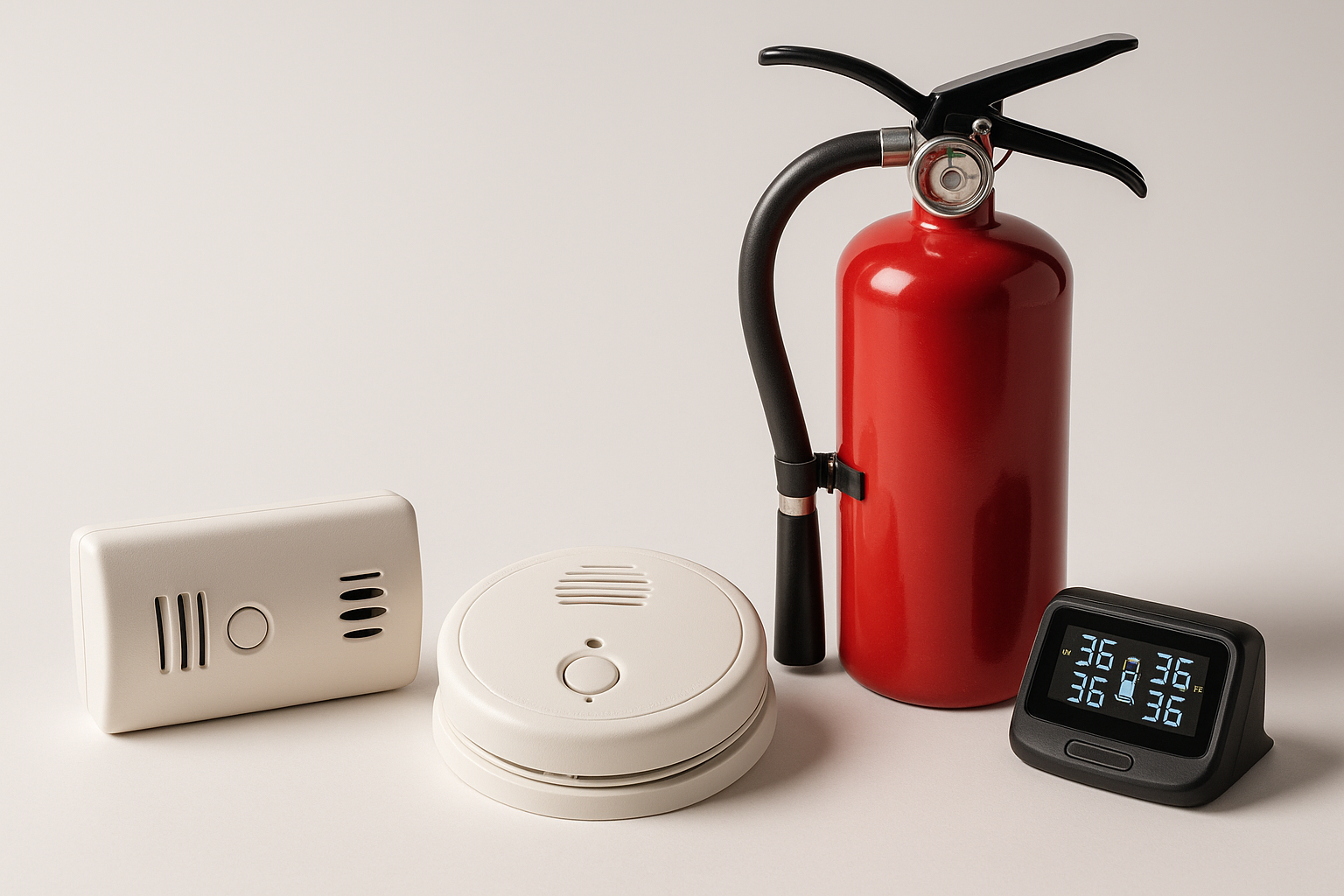
A tire pressure monitoring system is helpful, but it is not a substitute for proper inflation, weight management, visual inspection, and age monitoring. We recommend using TPMS as one layer in a broader tire safety routine.
Final Takeaway
For RV owners, tire safety starts with understanding what the markings mean and how they relate to actual use. Load ratings, speed ratings, inflation pressure, fitment, and DOT identification all work together. We researched the governing standards and practical guidance, and the clearest conclusion is simple: the safest RV tire is not just the right size, but the right capacity, correctly inflated, appropriately loaded, and regularly inspected.
Get your free Get Our Free Full-Timer's Gear Guide
The no-fluff gear list trusted by full-time RVers — tested in real conditions across North America.