Best RV Wheel Chocks for Rock-Solid Leveling and Safety (2026)

Alana Azzouz is a Senior Editor at Searchshop Media Network with over a decade of experience in consumer content quality and editorial standards. She has reviewed thousands of product guides, buying articles, and comp…
✎ Reviewed by Alana Azzouz — Senior Editor
Why trust us
RVGearInsider articles are researched by the Searchshop Editorial team using manufacturer specs, independent expert sources, and owner feedback. Our goal is simple: when an RVer searches for gear, the recommendations they read online should match what a knowledgeable dealer or experienced owner would actually suggest. We may earn a commission on qualifying affiliate purchases; it doesn't influence what we recommend — if a product changes or a better option comes along, the article changes too.
How We Evaluated
We researched the top options, comparing them across key factors including performance, value, ease of use, and reliability. Our recommendations are based on editorial evaluation of verified specifications, owner-reported real-world performance, and domain expertise.
Best RV Wheel Chocks for Rock-Solid Leveling and Safety
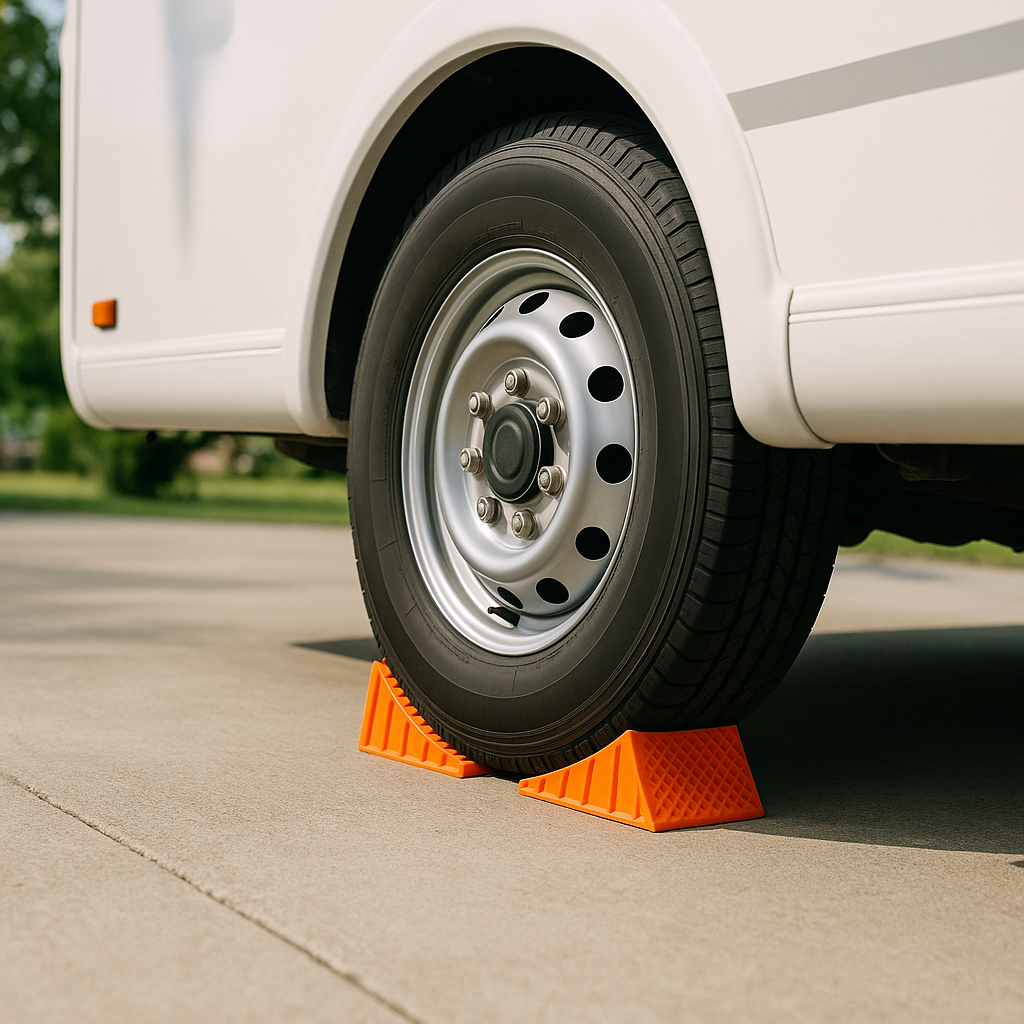
If we want the best RV wheel chocks for real-world camping, we need more than a cheap wedge tossed behind a tire. Good wheel chocks help prevent unwanted rolling, add stability while parked, and make setup feel much more secure on uneven campsites. Whether we camp in a travel trailer, fifth wheel, toy hauler, or motorhome, the right chocks are a small purchase that can make a big difference in day-to-day safety.
In this RVGearInsider buyer’s guide, we’re comparing the top RV wheel chocks, explaining which styles work best for different rigs, and showing what to look for before we buy.
Quick Comparison Table: Best RV Wheel Chocks

| Product | Type | Best For | Key Strength | Possible Drawback |
|---|---|---|---|---|
| X-Chock Wheel Stabilizer | Between-the-tires stabilizer | Tandem-axle travel trailers and fifth wheels | Excellent side-to-side stability | Not for single-axle rigs |
| BAL X-Chock Tire Locking Chock | Between-the-tires stabilizer | Frequent campers wanting a premium fit | Strong build and secure expansion | Pricier than basic wedges |
| Camco Heavy-Duty Wheel Chock with Rope | Standard wedge chock | Travel trailers, motorhomes, utility use | Simple, affordable, easy to place | Less stabilizing than X-style chocks |
| Andersen Camper Wheel Chock | Curved wedge chock | Larger RV tires and uneven ground | Grippy design and robust construction | Higher cost for wedge style |
| MaxxHaul Solid Rubber Wheel Chocks | Rubber wedge chock | Heavy rigs and hard surfaces | Excellent traction and weight | Heavier to carry |
| Tri-Lynx Lynx Levelers Wheel Chock | Lightweight plastic wedge | Occasional campers and lighter trailers | Compact and budget-friendly | Not as confidence-inspiring for heavy rigs |
| Vestil Laminated Rubber Wheel Chock | Industrial rubber chock | Big trailers, toy haulers, and steep sites | Very durable and substantial | Bulkier than typical RV chocks |
Why RV Wheel Chocks Matter
Wheel chocks are one of those basic accessories that are easy to underestimate until we camp on a slight grade, soft gravel, or a slick concrete pad. Their main job is simple: stop tire movement. But in practice, a quality set can also:
- Reduce trailer rocking and fore-aft movement
- Add confidence during hitching and unhitching
- Help stabilize tandem-axle trailers when paired with between-the-wheel chocks
- Improve safety during loading, unloading, and campsite setup
- Provide a backup layer of security alongside leveling blocks and jacks
It’s important to remember that wheel chocks are not the same thing as leveling blocks. Leveling blocks raise one side of the RV to help us get level. Wheel chocks keep the tires from rolling once we’re in position. Most RVers need both.
Our Top Picks for the Best RV Wheel Chocks

1. X-Chock Wheel Stabilizer
The X-Chock style remains one of the most popular solutions for tandem-axle trailers, and for good reason. Instead of simply blocking a tire from the outside, it expands between two tires to limit movement where it starts.
What we like
- Greatly reduces front-to-back trailer wiggle
- Especially useful for travel trailers and fifth wheels
- Compact enough to store in a pass-through compartment
- Helps make campsites feel more stable underfoot
Potential downsides
- Only works on tandem-axle setups
- Should not replace standard wheel chocks on sloped sites
- Requires a little more setup time than basic wedges
Who It’s For
This is for RVers with tandem-axle trailers who want noticeably better stability at camp, especially if we’re tired of movement when walking inside the rig.
2. BAL X-Chock Tire Locking Chock
BAL’s version of the between-the-tires chock is one of the most trusted premium options in the category. It expands securely between tandem tires and is known for solid construction and a dependable fit.
What we like
- Durable metal construction
- Strong expansion mechanism for a snug hold
- Excellent for reducing trailer movement
- Popular among experienced RVers
Potential downsides
- More expensive than standard rubber or plastic chocks
- Heavier than simple wedge-style options
- Best performance depends on correct tire spacing
Who It’s For
We recommend this for frequent travelers with tandem-axle RVs who want a more robust stabilizing solution and don’t mind paying extra for build quality.
3. Camco Heavy-Duty Wheel Chock with Rope
Camco’s heavy-duty wedge chocks are a go-to choice because they’re affordable, easy to find, and simple to use. The rope handle is a small but helpful touch when we’re reaching behind tires.
What we like
- Budget-friendly and widely available
- Lightweight and easy to position
- Rope makes retrieval easier
- Good general-purpose option for many RV types
Potential downsides
- Basic wedge design offers less stabilization than X-chocks
- Plastic models may slide more on slick surfaces than rubber versions
- May feel undersized for very heavy rigs
Who It’s For
This is a solid pick for casual campers, smaller trailers, and anyone who wants a straightforward, affordable chock set for everyday use.
4. Andersen Camper Wheel Chock
Andersen’s curved wheel chock has a more premium feel than many standard wedges. It’s designed to nest securely against the tire and provide better grip, especially when paired with leveling products from the same brand.
What we like
- Strong, well-shaped design
- Good traction and tire contact
- Easy to use with larger RV tires
- Durable enough for regular camping
Potential downsides
- Costs more than many basic wedge chocks
- Still not a substitute for between-the-wheel stabilization on tandem axles
- Some RVers may prefer heavier rubber for maximum grip
Who It’s For
We like this for RV owners who want a premium wedge-style chock and prefer a cleaner, better-engineered design than bargain-bin plastic options.
5. MaxxHaul Solid Rubber Wheel Chocks
If our priority is grip and durability, solid rubber chocks are hard to beat. MaxxHaul-style rubber chocks tend to stay put well on concrete, asphalt, and packed gravel, and they feel reassuringly substantial in hand.
What we like
- Excellent traction on hard surfaces
- Heavy-duty feel inspires confidence
- Less likely to crack than cheap plastic under stress
- Useful for RVs, trailers, trucks, and towables
Potential downsides
- Heavier and dirtier to handle than plastic chocks
- Bulkier to store
- Not as specialized for tandem-axle stabilization
Who It’s For
These are ideal for heavier trailers, motorhomes, and RVers who want a simple but more confidence-inspiring alternative to lightweight plastic chocks.
6. Tri-Lynx Lynx Levelers Wheel Chock
Tri-Lynx is best known for leveling blocks, but its wheel chocks fit nicely into a lightweight, budget-conscious setup. They’re easy to store and work well for lighter-duty needs.
What we like
- Lightweight and compact
- Budget-friendly for new RVers
- Easy to pack with leveling gear
- Good for flatter campsites and lighter rigs
Potential downsides
- Less rugged than heavier rubber or metal options
- Not our first choice for large fifth wheels or steep grades
- May wear faster with frequent use
Who It’s For
This works best for smaller travel trailers, popup campers, and occasional campers who want a basic chock without spending much.
7. Vestil Laminated Rubber Wheel Chock
Vestil’s industrial-style laminated rubber chocks bring a more commercial-grade feel to RV use. They’re larger, heavier, and built for serious holding power.
What we like
- Extremely durable construction
- Strong grip for heavier rigs
- Good choice for sloped or challenging sites
- Long service life with regular use
Potential downsides
- Heavier and bulkier than most RV-specific products
- More than many campers need for weekend trips
- Storage takes more room
Who It’s For
We recommend these for toy haulers, large fifth wheels, heavier trailers, or RVers who camp on less predictable terrain and want maximum confidence.
Types of RV Wheel Chocks
Before we buy, it helps to know the main categories.
Standard Wedge Chocks
These are the classic blocks placed in front of or behind the tire. They’re simple, affordable, and widely compatible.
Best for:
- Single-axle trailers
- Motorhomes
- Basic parking security
- Budget-minded shoppers
Between-the-Wheel Chocks
These expand between tandem-axle tires to reduce movement. They’re often called X-chocks or wheel stabilizers.
Best for:
- Tandem-axle travel trailers
- Fifth wheels
- RVers who want less rocking at camp
Rubber Chocks
Rubber adds traction and weight, which can improve grip on paved or compacted surfaces.
Best for:
- Heavier RVs
- Hard surfaces like concrete and asphalt
- Campers who prioritize durability
Plastic Chocks
Plastic is lighter and often cheaper, though quality varies a lot.
Best for:
- Smaller rigs
- Occasional use
- Weight-conscious setups
How to Choose the Best RV Wheel Chocks
The best choice depends on our RV type, tire setup, and camping style.
1. Match the Chock to the RV Type
A single-axle trailer usually needs a different setup than a tandem-axle fifth wheel. Motorhomes often benefit from larger, heavier wedge chocks, while tandem-axle trailers can gain extra stability from X-style chocks.
2. Consider Tire Size
Larger tires need larger chocks with more contact area. Undersized chocks can feel insecure and may not hold as confidently on uneven ground.
3. Think About Surface Conditions
If we often camp on gravel, dirt, wet grass, or sloped concrete, traction matters. Rubber generally grips better than hard plastic.
4. Prioritize Build Quality
Cheap chocks can crack, deform, or slide. We look for:
- Solid rubber or reinforced construction
- Textured or grippy surfaces
- Good weight capacity
- Reliable hardware on expanding models
5. Decide Whether We Need Stabilization or Just Blocking
If our main goal is preventing rolling, standard wedge chocks may be enough. If we also want to reduce trailer movement while parked, tandem-axle stabilizer chocks are worth considering.
How to Use RV Wheel Chocks Safely
Using wheel chocks correctly matters just as much as buying the right ones.
Step-by-Step: How We Chock an RV Properly
- Park on the flattest site available. Even the best chocks work better when we start with a reasonably level position.
- Keep the tow vehicle attached if we’re setting up a trailer on a slope. This adds an extra layer of control during positioning.
- Place the RV in park or use the parking brake. For towables, make sure the tow vehicle is secure before exiting.
- Position wheel chocks snugly against the tires. On a slope, we chock the downhill side first. On flatter sites, we often chock both sides when possible.
- Install between-the-wheel chocks after the trailer is in final position. These are for stabilization, not the first line of roll prevention.
- Lower stabilizers only after the RV is chocked and leveled. Stabilizer jacks are not meant to stop rolling.
- Check chocks before unhitching or moving. We make sure they’re firmly placed and haven’t shifted on loose ground.
Common Wheel Chock Mistakes to Avoid
Even good products can be used the wrong way. Here are the most common mistakes we see.
Relying on Stabilizer Jacks Instead of Chocks
Stabilizer jacks reduce movement; they do not secure the RV against rolling.
Using Tiny Chocks on a Heavy RV
A large trailer or motorhome deserves appropriately sized chocks. Small bargain chocks can be underwhelming at best and unsafe at worst.
Using Only Between-the-Tire Stabilizers on a Grade
X-style chocks are great for reducing movement, but they should not be the only wheel restraint on a slope. We still want standard chocks at the tire.
Forgetting Surface Conditions
Loose gravel, mud, and wet grass can reduce holding power. If we camp in variable conditions, heavier rubber chocks are often the safer call.
Our Buying Advice by RV Type
Best RV Wheel Chocks for Travel Trailers
For tandem-axle travel trailers, we like a two-part approach: standard wedge chocks for safety plus between-the-wheel stabilizers for comfort. For single-axle trailers, a heavy-duty rubber or premium wedge chock is often the best fit.
Best RV Wheel Chocks for Fifth Wheels
Fifth wheels are heavy and benefit from robust chocking. We generally prefer quality wedge chocks at the tires and X-style stabilizers between tandem wheels for added steadiness.
Best RV Wheel Chocks for Motorhomes
Motorhomes typically need substantial wedge-style chocks rather than between-the-wheel products. Rubber chocks are often the better match because of their traction and weight.
Best RV Wheel Chocks for Toy Haulers
Toy haulers can be heavy and may see more loading movement. We lean toward larger, industrial-style rubber chocks or premium heavy-duty wedge options.
Pros and Cons of the Main Chock Styles
Wedge Chocks
Pros
- Simple and fast to use
- Compatible with most RVs
- Affordable and easy to replace
- Available in plastic or rubber
Cons
- Less effective at reducing trailer rocking
- Some lightweight models can slide
- Quality varies widely
X-Style Between-the-Wheel Chocks
Pros
- Excellent for reducing movement in tandem-axle trailers
- Can make the RV feel more stable inside
- Great companion to standard chocks
Cons
- Not suitable for single-axle rigs or most motorhomes
- More expensive
- Not a standalone solution for steep grades
Heavy Rubber Chocks
Pros
- Great traction and durability
- Confidence-inspiring for heavier RVs
- Useful beyond RVing
Cons
- Heavier to carry and store
- Can be messy after use on dirt or mud
- Usually cost more than basic plastic models
Final Verdict: Which RV Wheel Chocks Are Best?
If we’re choosing the best RV wheel chocks overall, the right answer depends on our rig.
- For tandem-axle travel trailers and fifth wheels, the best setup is usually a pair of standard wheel chocks plus an X-Chock or BAL X-Chock stabilizer.
- For motorhomes and heavier single-position needs, solid rubber wheel chocks like MaxxHaul or industrial-style Vestil options offer the best grip and confidence.
- For budget shoppers or occasional campers, Camco remains a dependable entry point.
- For premium wedge-style performance, Andersen is a strong upgrade.
Our overall advice is simple: buy the heaviest-duty chock that makes sense for our RV, use it correctly, and don’t treat wheel chocks as an afterthought. They’re one of the cheapest ways to improve campsite safety and stability.
FAQ
1. What are the best RV wheel chocks for tandem-axle trailers?
For tandem-axle trailers, we like a combination of standard wedge chocks at the tires and between-the-wheel stabilizers such as X-Chock or BAL X-Chock for extra stability.
2. Are rubber wheel chocks better than plastic for RVs?
Often, yes. Rubber chocks usually provide better traction and feel more secure, especially for heavier RVs or hard surfaces like asphalt and concrete. Plastic can still work well for lighter rigs and occasional use.
3. Do wheel chocks level an RV?
No. Wheel chocks prevent rolling. Leveling blocks are used to raise the RV and help it sit level. Most RV setups need both.
4. How many wheel chocks do we need for an RV?
At minimum, we want enough to secure the tires properly, usually at least two. Many RVers use four for added safety, and tandem-axle trailer owners may add two between-the-wheel stabilizers as well.
5. Can we use X-chocks by themselves?
We don’t recommend it on grades or as the only restraint. X-chocks are best used as stabilizers in combination with standard wheel chocks, not as a complete replacement.
Get your free Get Our Free Full-Timer's Gear Guide
The no-fluff gear list trusted by full-time RVers — tested in real conditions across North America.