Best RV Tires for Travel Trailers and 5th Wheels (2026)

Alana Azzouz is a Senior Editor at Searchshop Media Network with over a decade of experience in consumer content quality and editorial standards. She has reviewed thousands of product guides, buying articles, and comp…
✎ Reviewed by Alana Azzouz — Senior Editor
Why trust us
RVGearInsider articles are researched by the Searchshop Editorial team using manufacturer specs, independent expert sources, and owner feedback. Our goal is simple: when an RVer searches for gear, the recommendations they read online should match what a knowledgeable dealer or experienced owner would actually suggest. We may earn a commission on qualifying affiliate purchases; it doesn't influence what we recommend — if a product changes or a better option comes along, the article changes too.
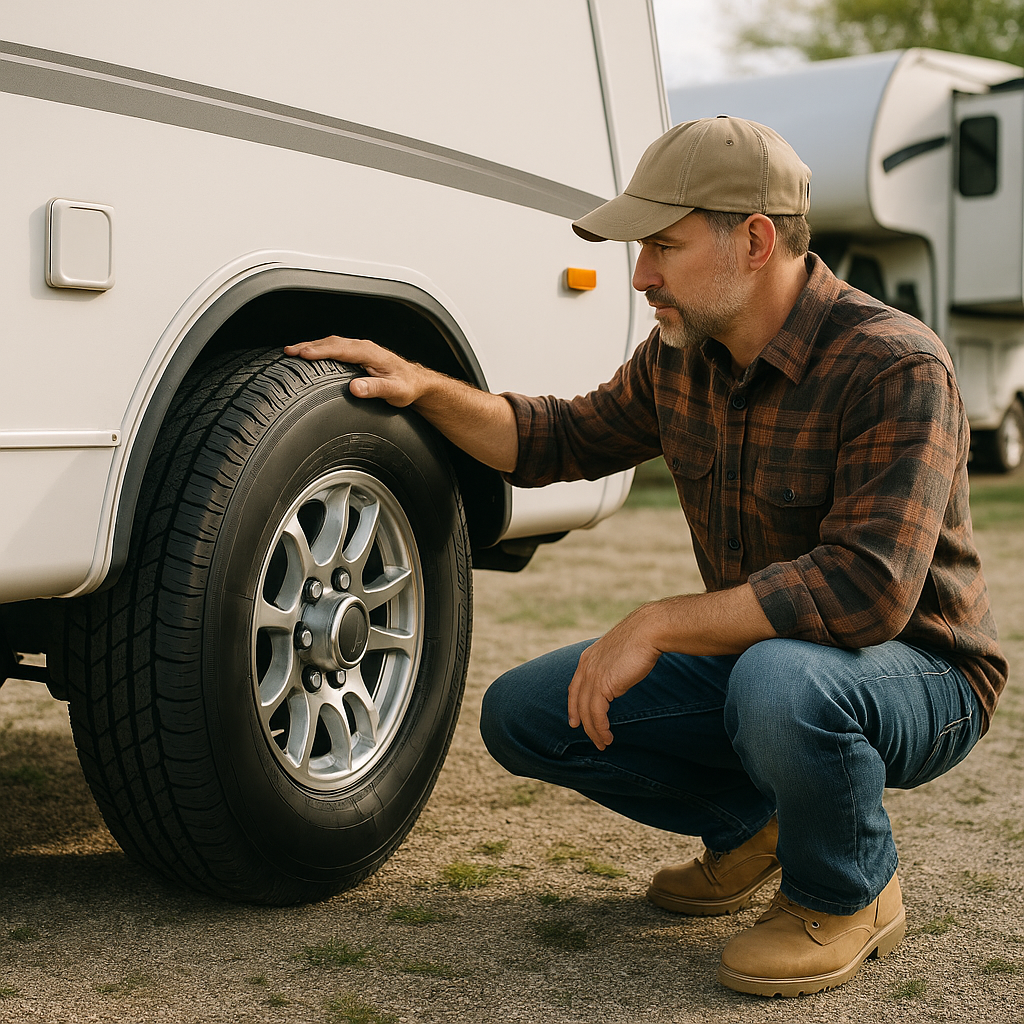
How We Evaluated
We researched the top options, comparing them across key factors including performance, value, ease of use, and reliability. Our recommendations are based on editorial evaluation of verified specifications, owner-reported real-world performance, and domain expertise.
Best RV Tires for Travel Trailers and 5th Wheels
Finding the best rv tires for travel trailer owners can trust is one of the most important upgrades we can make for safer towing, better stability, and fewer roadside headaches. We researched and researched leading trailer tire options for travel trailers and 5th wheels, focusing on load capacity, heat resistance, construction quality, speed ratings, and long-term value. In this guide, we break down the top choices, explain what really matters when buying RV tires, and show how we recommend matching a tire to your trailer’s real-world weight and travel style.
RV Tire Comparison Table

| Tire Model | Best For | Tire Type | Key Strengths | Potential Drawbacks |
|---|---|---|---|---|
| Goodyear Endurance | Best overall | ST radial | High speed rating, strong build quality, trusted brand | Premium price |
| Sailun S637 | Heavy 5th wheels | ST all-steel radial | Excellent load support, durable casing, stable under heavy loads | Heavier tire, can ride firmer |
| Carlisle Radial Trail HD | Best value | ST radial | Good price-to-performance, wide availability | Not as premium as top-tier options |
| Provider ST Radial | Budget-conscious owners | ST radial | Affordable, better than many entry-level OEM tires | Less established premium reputation |
| Maxxis M8008 ST Radial | Highway travel | ST radial | Consistent quality, strong owner satisfaction | Can cost more than midrange competitors |
Key Takeaways
- We recommend choosing trailer-specific tires, not passenger or light-truck tires unless your manufacturer specifically approves them.
- Load capacity matters more than almost any other spec; every tire should comfortably support its share of your trailer’s fully loaded weight.
- For heavier travel trailers and 5th wheels, higher-quality radial tires with strong heat resistance are usually the best choice.
- Speed rating, tread design, and sidewall construction all affect durability and highway stability.
- We recommend replacing RV tires based on age and condition, not just tread depth.
- Proper inflation, storage, and axle alignment can dramatically extend tire life.
Our Top Picks at a Glance

After comparing major trailer tire brands and real-world owner feedback, these are the models we recommend most often.
Best Overall: Goodyear Endurance
A premium ST trailer tire made in the USA with strong speed rating, durable construction, and excellent reputation for highway towing.
Best for Heavy 5th Wheels: Sailun S637
A commercial-grade all-steel radial that we like for heavier rigs needing serious load support and stability.
Best Value: Carlisle Radial Trail HD
A solid balance of price, reliability, and broad fitment for many travel trailers.
Best Budget Upgrade: Provider ST Radial
A good step up from generic OEM tires for owners who want better confidence without premium pricing.
Best for Long-Distance Highway Use: Maxxis M8008 ST Radial
A long-respected trailer tire known for consistent quality and dependable performance.
Why RV Tires Matter More Than Many Owners Realize
Travel trailer and 5th wheel tires live a hard life. Unlike tow vehicle tires, they often sit for long periods, then suddenly carry heavy loads at highway speed in high heat. They also scrub during tight turns, especially on tandem and triple axles. That combination creates sidewall stress, heat buildup, and accelerated aging.
We have seen many RV owners focus on tread alone, but trailer tire failures usually happen because of overload, underinflation, impact damage, age, or heat, not because the tread is worn out. That is why choosing the right tire from the beginning matters so much.
Best RV Tires for Travel Trailers and 5th Wheels
1. Goodyear Endurance
The Goodyear Endurance is our top overall recommendation for many RV owners. If we were outfitting a mid-size to large travel trailer and wanted a premium ST tire with broad availability, this is one of the first models we would consider.
Why We Like It
The Endurance has built a strong reputation because it combines trailer-specific construction with a higher speed rating than many older ST tires. We like its highway manners, heat resistance, and predictable towing feel. It is especially appealing for owners who tow frequently in warmer climates or on long interstate runs.
Pros
- Excellent overall reputation
- Strong speed rating for modern highway travel
- Trailer-specific ST design
- Good stability and heat resistance
- Made in the USA in many sizes
Cons
- More expensive than budget alternatives
- Not the cheapest option for large multi-axle setups
Best For
Owners who want a high-confidence upgrade for travel trailers and many 5th wheels without stepping into ultra-heavy commercial-style tires.
2. Sailun S637
For heavier 5th wheels, the Sailun S637 stands out. We recommend it often for larger rigs where load margin and structural strength are top priorities.
Why We Like It
This is an all-steel radial trailer tire, which gives it a more robust construction than many standard polyester-cased ST tires. We like it for heavy pin weights, long-distance towing, and larger tandem or triple-axle RVs. Many experienced RV owners upgrade to Sailun after repeated issues with lighter-duty OEM tires.
Pros
- Excellent load-carrying capability
- All-steel construction adds durability
- Strong choice for heavy 5th wheels
- Good highway stability under load
Cons
- Heavier than standard ST tires
- Ride can feel stiffer
- Overkill for smaller trailers
Best For
Large travel trailers and especially 5th wheels that operate near the upper end of standard trailer tire capacities.
3. Carlisle Radial Trail HD
The Carlisle Radial Trail HD is one of the best value picks in the category. We think it hits a sweet spot for many owners who want better quality than bargain-basement tires without paying top-shelf prices.
Why We Like It
This tire is widely available, generally well-priced, and designed specifically for trailer use. We like it for family travel trailers, seasonal campers, and owners replacing aging factory tires on a reasonable budget.
Pros
- Very good value
- Broad size availability
- Reliable choice for common trailer weights
- Better quality than many unknown OEM brands
Cons
- Not as robust as premium heavy-duty options
- Long-term durability can vary more than top-tier tires
Best For
Mid-size travel trailers and owners who want a practical, affordable replacement tire from a recognized brand.
4. Provider ST Radial
The Provider ST Radial has become a popular upgrade path for RV owners replacing basic original-equipment tires. We consider it a good budget-friendly option when the goal is to improve confidence without overspending.
Why We Like It
It typically offers stronger overall owner satisfaction than many no-name trailer tires found on entry-level RVs. We like it as a sensible upgrade for lighter and mid-weight trailers that need dependable service at a moderate price point.
Pros
- Competitive pricing
- Better reputation than many generic OEM tires
- Available in common trailer sizes
- Good everyday towing choice
Cons
- Not as premium as Goodyear or Sailun
- May not be ideal for the heaviest rigs or most demanding use
Best For
Owners replacing entry-level trailer tires on smaller to mid-size travel trailers.
5. Maxxis M8008 ST Radial
The Maxxis M8008 has long been respected in the trailer tire category. We still consider it one of the safer bets for owners who prioritize consistency and proven road manners.
Why We Like It
Maxxis has earned loyal followings among trailer owners because of dependable quality control and solid service life. We like the M8008 for frequent highway towing, especially where owners want a well-established alternative to factory tires.
Pros
- Strong reputation for quality
- Good highway performance
- Dependable handling and stability
- Well-suited to regular towing use
Cons
- Can be priced above some midrange competitors
- Availability can vary by size and region
Best For
Travel trailer owners who tow often and want a time-tested ST radial from a trusted brand.
How We Recommend Choosing the Right RV Tire
Not every highly rated tire is right for every trailer. We recommend working through these factors before buying.
1. Confirm the Correct Tire Type
For most travel trailers and 5th wheels, we recommend ST tires, which stands for Special Trailer. These are engineered for trailer loads, sidewall stiffness, and towing stability.
Some heavy RV owners use LT tires, but we only recommend that when the wheel size, load requirements, and manufacturer guidance all support the switch.
2. Match the Load Capacity to Real Trailer Weight
This is the most important buying step. We recommend weighing the trailer fully loaded, ideally by axle, and then making sure each tire has enough capacity with a safety margin.
Do not shop by dry weight alone. Real camping weight is what matters.
3. Choose the Right Load Range
Load range is not the same as ply count in the old-fashioned sense, but it still indicates how much pressure and weight the tire is designed to handle. Common load ranges include C, D, E, F, and G.
Heavier travel trailers and many 5th wheels often need E, F, or G depending on tire size and axle ratings.
4. Pay Attention to Speed Rating
Older trailer tires were often limited to lower speeds. We recommend choosing a tire with a speed rating that fits your actual highway travel habits. Higher speed capability usually goes hand in hand with better heat management.
5. Radial vs. Bias Ply
For most modern RV use, we recommend radial tires. They generally run cooler, track better on the highway, and last longer in normal towing conditions.
Bias-ply tires still have niche uses, but for travel trailers and 5th wheels covering real road miles, radial is usually the smarter buy.
6. Consider Age and Storage Conditions
If your RV sits outside in the sun or spends long periods parked, tire aging becomes a major issue. Even a great tire can fail early if it is underinflated, UV-exposed, overloaded, or neglected.
Common Mistakes We See RV Owners Make
Buying by Price Alone
The cheapest tire is rarely the best value if it fails early or causes damage to the RV.
Ignoring Weight Distribution
Uneven loading can overload one side or one axle even when total trailer weight looks acceptable.
Replacing Only One Tire
We strongly prefer replacing trailer tires in matched sets when age and wear are similar.
Running Incorrect Tire Pressure
Underinflation is one of the fastest ways to create heat and destroy a trailer tire.
Waiting Too Long Because Tread Looks Fine
Trailer tires often age out before they wear out.
How to Choose and Install RV Tires Safely
If you are replacing your own tires or preparing for a shop install, we recommend following a careful process.
Step-by-Step: How to Select the Right RV Tire
- Read the trailer placard and current tire sidewall. Note the size, load range, and recommended cold inflation pressure.
- Weigh the trailer fully loaded. Include water, propane, gear, batteries, and anything you normally carry.
- Check axle ratings and wheel ratings. A tire upgrade is only safe if the wheel and axle can support the pressure and load.
- Choose a trailer-specific tire with adequate capacity. We recommend building in reserve capacity rather than selecting the bare minimum.
- Verify speed rating and fitment. Make sure the tire diameter and section width will clear suspension and fender components.
- Inspect the valve stems. Replace old stems, especially if moving to higher-pressure tires.
- Install and torque lug nuts to spec. Follow the trailer or wheel manufacturer’s torque requirements.
- Inflate to the correct cold pressure. Use an accurate gauge before travel, not after driving.
- Re-torque after the first 50 to 100 miles. This is especially important after wheel removal or tire replacement.
- Monitor pressure and wear regularly. We recommend checking before every trip.
Safety Notes
- Never exceed the tire’s max load or the trailer axle rating.
- Never inflate beyond the wheel’s pressure rating.
- Replace cracked, bulging, cut, or impact-damaged tires immediately.
- If one tire fails, inspect the others closely for overload or age-related damage.
- Use a TPMS if possible; we consider it one of the best safety upgrades for any trailer.
ST vs. LT Tires for Travel Trailers and 5th Wheels
This question comes up constantly. In most cases, we recommend staying with ST tires because they are designed specifically for trailer service. They typically have stiffer sidewalls that help reduce sway and improve stability.
That said, some heavy-duty RV setups successfully use LT tires, especially when paired with appropriate wheels and verified load capacity. We only recommend making that switch if the numbers work on paper and the trailer manufacturer or a qualified tire professional agrees.
When Should You Replace RV Tires?
We recommend replacing RV tires based on age, condition, and use history, not just tread depth. Many trailer tires begin aging out around the 5- to 7-year window, though climate, storage, and maintenance can shorten or extend that range.
Replace Sooner If You See:
- Sidewall cracking
- Bulges or bubbles
- Uneven wear patterns
- Repeated air loss
- Tread separation signs
- Vibration that was not there before
- Damage from curbs, potholes, or debris
If a tire’s date code shows it is getting older and you are planning a major trip, we usually recommend replacing sooner rather than later.
Tire Maintenance Tips That Help Prevent Blowouts
The best tire in the world still needs proper care. We recommend these simple habits:
Check Pressure Before Every Trip
Always check when the tires are cold.
Cover Tires During Storage
UV and heat accelerate sidewall aging.
Move the Trailer Periodically
Long stationary periods can contribute to flat spotting and stress.
Avoid Overloading
We recommend verifying weights at least once per season if your cargo changes.
Inspect for Uneven Wear
Wear on one edge can signal alignment, suspension, or axle issues.
Use Metal Valve Stems for Higher Pressures
Especially important on heavier 5th wheels using high-pressure load range E, F, or G tires.
Our Final Recommendation
If we had to recommend one tire for the broadest range of owners shopping for the best RV tires for travel trailers and 5th wheels, we would start with the Goodyear Endurance. It offers one of the best combinations of quality, speed capability, and towing confidence for mainstream RV use.
For heavier 5th wheels, we would look hard at the Sailun S637, especially when load margin and structural durability are top priorities. For value-focused buyers, the Carlisle Radial Trail HD remains one of the strongest all-around picks.
The right answer ultimately depends on your trailer’s loaded weight, wheel size, pressure requirements, and how far and how often you tow. We recommend buying the best tire your budget allows, because tire failures on an RV can quickly become far more expensive than the price difference between a budget tire and a premium one.
FAQ
What is the best rv tires for travel trailer owners to buy?
For many owners, we recommend the Goodyear Endurance as the best all-around choice because of its strong reputation, trailer-specific design, and highway-friendly speed capability. Heavier 5th wheels may be better served by the Sailun S637.
Are ST tires better than LT tires for RV trailers?
In most cases, yes. We recommend ST tires for travel trailers and 5th wheels because they are designed specifically for trailer loads and stability. LT tires only make sense when load ratings, wheel specs, and manufacturer guidance support the change.
How often should RV trailer tires be replaced?
We recommend inspecting them frequently and replacing based on age, condition, and use. Many trailer tires are replaced around 5 to 7 years, even if tread looks acceptable.
What load range do I need for my travel trailer?
That depends on your trailer’s fully loaded axle weights and the tire size specified by the manufacturer. We recommend weighing the trailer and choosing a tire with enough capacity for each wheel position plus a safety margin.
Can I upgrade to a higher load range tire?
Sometimes, yes, but only if your wheels are rated for the higher pressure and the tire size still fits properly. We recommend checking wheel ratings, axle ratings, and clearance before upgrading.
Get your free Get Our Free Full-Timer's Gear Guide
The no-fluff gear list trusted by full-time RVers — tested in real conditions across North America.
Final Thoughts
Choosing the best RV tires for travel trailers and 5th wheels is really about reducing risk. We researched the market’s most popular options and found that premium ST radials consistently offer the best mix of safety, durability, and towing stability for most RV owners. If you match the tire to your real loaded weight, maintain proper pressure, and replace aging tires before they fail, you will put yourself in a much better position for trouble-free travel.
When in doubt, we recommend prioritizing load capacity, build quality, and brand reputation over the lowest price. That approach usually pays for itself the first time you avoid a blowout on the side of the highway.