Best RV TPMS Systems to Prevent Dangerous Blowouts (2026)

Alana Azzouz is a Senior Editor at Searchshop Media Network with over a decade of experience in consumer content quality and editorial standards. She has reviewed thousands of product guides, buying articles, and comp…
✎ Reviewed by Alana Azzouz — Senior Editor
Why trust us
RVGearInsider articles are researched by the Searchshop Editorial team using manufacturer specs, independent expert sources, and owner feedback. Our goal is simple: when an RVer searches for gear, the recommendations they read online should match what a knowledgeable dealer or experienced owner would actually suggest. We may earn a commission on qualifying affiliate purchases; it doesn't influence what we recommend — if a product changes or a better option comes along, the article changes too.
How We Evaluated
We researched the top options, comparing them across key factors including performance, value, ease of use, and reliability. Our recommendations are based on editorial evaluation of verified specifications, owner-reported real-world performance, and domain expertise.
Best RV TPMS Systems to Prevent Dangerous Blowouts
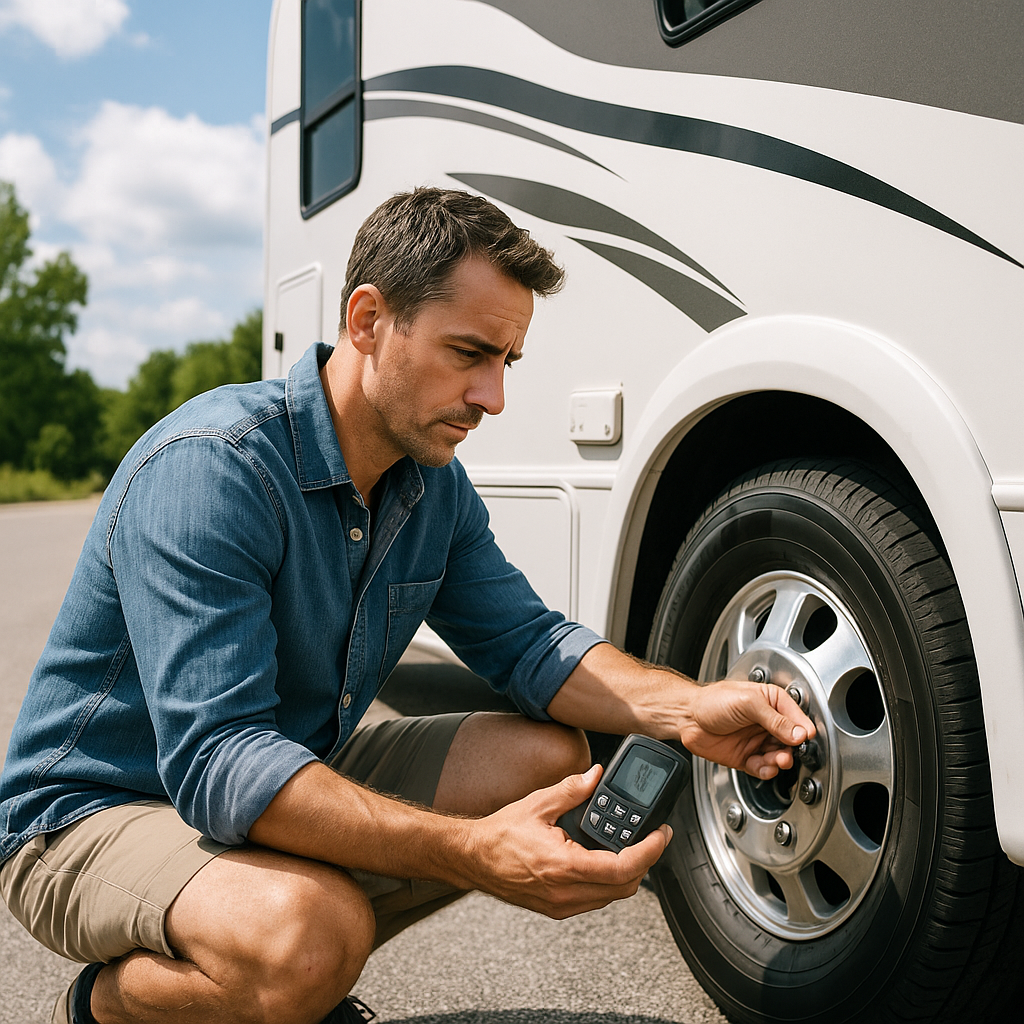
When we shop for the best RV tire pressure monitoring system, we are not just buying another gadget. We are investing in safety, tire life, fuel efficiency, and peace of mind on every trip. A quality RV TPMS can warn us about slow leaks, rapid air loss, overheating, and pressure changes before they turn into expensive tire failures or dangerous blowouts on the highway.
For RV owners, tire problems are more than an inconvenience. A blowout on a motorhome, fifth wheel, or travel trailer can damage fenders, wiring, plumbing, and underbody panels in seconds. It can also put our family and other drivers at risk. That is why a dedicated tire pressure monitoring system is one of the smartest upgrades we can make.
In this buyers guide, we will compare the top RV TPMS systems, explain the features that matter most, and help you choose the right setup for your rig.
Quick Comparison Table

| Product | Best For | Sensor Type | Tire Capacity | Signal Repeater | Standout Feature |
|---|---|---|---|---|---|
| TireMinder i10 | Best overall | Cap | Up to 20 | Included on many kits | Large color display and strong RV-focused features |
| TST 507 | Best for customization | Cap or flow-through | Up to 115 | Optional/included by kit | Flexible sensor choices and proven RV reputation |
| EEZTire-TPMS Real Time System | Best for value | Cap or flow-through | Up to 26 | Included in many kits | Solid range and easy setup at a competitive price |
| Tymate RV TPMS | Best budget pick | Cap | Up to 10-14 depending on kit | Varies by kit | Affordable entry point for smaller RV setups |
| Flow Through Sensor TPMS by TST | Best for frequent pressure checks | Flow-through | Up to 115 | Optional/included by kit | Add air without removing sensors |
| TireMinder Smart TPMS | Best smartphone-based option | Cap | Varies by kit | Varies | App-driven monitoring with modern interface |
Why an RV TPMS Matters
Passenger-car tire monitors are helpful, but RVs place much greater demands on tires. Our rigs often sit for long periods, carry heavy loads, and travel through wide temperature swings. Trailer tires, in particular, are vulnerable to underinflation, heat buildup, and sidewall stress.
A good RV TPMS helps us:
- Catch slow leaks before a tire goes flat
- Detect high temperature that can signal bearing or brake issues
- Monitor multiple tires across a truck and trailer combination
- Reduce uneven wear caused by improper inflation
- Improve fuel economy by keeping tires at proper pressure
- Drive with more confidence on long trips
The best systems alert us in real time, even when the trailer is far behind the tow vehicle. That long-range reliability is a major difference between RV-specific TPMS units and generic automotive options.
Our Top Picks for the Best RV TPMS Systems

1. TireMinder i10
The TireMinder i10 earns our pick for best overall because it balances ease of use, RV-friendly range, and a clean display that is easy to read while driving. It is designed specifically for motorhomes, fifth wheels, and travel trailers, and it supports enough sensors for larger rigs.
The monitor is bright, compact, and intuitive. Alerts are clear, and the system tracks both tire pressure and temperature. TireMinder also has a strong reputation in the RV market, which matters when we want dependable support and replacement parts.
Pros
- Large, easy-to-read color monitor
- Strong signal performance for towable RVs
- Monitors pressure and temperature in real time
- Expandable for larger setups
- Good customer support reputation
Cons
- Higher price than budget systems
- Cap sensors require removal for adding air
- Full feature set may be more than casual users need
Who It’s For
This is the best fit for RV owners who want a dependable, full-featured system without overcomplicating setup. We especially like it for frequent travelers and mid-size to large trailers.
2. TST 507 TPMS
The TST 507 is one of the most established names in the RV TPMS category. It is popular for a reason: it is versatile, expandable, and available with either cap sensors or flow-through sensors. That flexibility makes it a favorite among experienced RVers.
One standout benefit is the ability to tailor the system to our preferences. If we check or adjust tire pressure often, the flow-through version can save time. If we want lighter sensors, the cap style may be better.
Pros
- Available with cap or flow-through sensors
- Excellent reputation among RV owners
- Highly expandable for large combinations
- Good alert customization
- Suitable for motorhomes, trailers, and toads
Cons
- Interface may feel dated compared to newer displays
- Flow-through sensors are heavier than cap sensors
- Setup can take a little longer for first-time users
Who It’s For
We recommend the TST 507 for serious RV travelers, full-timers, and owners of larger multi-axle rigs who want sensor options and room to expand.
3. EEZTire-TPMS Real Time System
EEZTire has built a loyal following by offering a practical balance of price and performance. Its real-time monitoring system is often chosen by RVers who want strong range and dependable alerts without paying top-tier prices.
The monitor is straightforward, and many kits include a repeater to strengthen communication between trailer tires and the display. For many towable RV owners, that included booster is a major plus.
Pros
- Good value for the features offered
- Reliable long-range communication
- Many kits include a signal repeater
- Available with different sensor styles
- Easy-to-understand alerts
Cons
- Display styling is more functional than premium
- Initial programming may take patience
- Fewer polish touches than higher-end competitors
Who It’s For
This is a strong choice for value-focused RV owners who still want a system built for real towing distances and multi-tire setups.
4. Tymate RV TPMS
If we want basic tire monitoring without spending heavily, Tymate is a reasonable budget option. It is often marketed to smaller RVs, travel trailers, and campers that do not need a large number of sensors.
The main appeal here is affordability. We should not expect the same long-term track record or premium support as the top RV-specific brands, but for lighter use, it can still provide useful pressure and temperature monitoring.
Pros
- Budget-friendly price
- Simple feature set for beginners
- Compact monitor
- Good for smaller trailer setups
Cons
- Less proven in the RV space than premium brands
- Range may be more limited on longer rigs
- Fewer advanced features and expansion options
Who It’s For
We like this for occasional campers, smaller towables, and buyers who want an affordable first TPMS before moving up to a premium system later.
5. TST 507 Flow-Through Sensor Kit
While this is technically a variation of the TST 507, it deserves separate mention because flow-through sensors solve a specific pain point. We can add air without removing the sensor, which is convenient during pre-trip checks and seasonal pressure adjustments.
That convenience comes with tradeoffs. Flow-through sensors are generally bulkier and heavier, so they are best used with metal valve stems. On many RVs, that is not a problem, but it is something we always verify before buying.
Pros
- Easy inflation without sensor removal
- Great for frequent pressure adjustments
- Well-established RV platform
- Strong expansion capability
Cons
- Heavier than cap sensors
- Typically costs more
- Metal valve stems strongly recommended
Who It’s For
This is ideal for RVers who are meticulous about tire maintenance and want to save time during routine checks.
6. TireMinder Smart TPMS
For RV owners who prefer app-based monitoring, TireMinder Smart offers a more modern connected approach. Instead of relying only on a dedicated display, it integrates with a smartphone interface.
This style can be convenient, especially if we want fewer devices mounted in the cab. Still, some RV owners prefer a dedicated monitor that stays visible at all times, rather than juggling alerts through a phone.
Pros
- Smartphone-based monitoring
- Cleaner dashboard with fewer separate devices
- Modern app experience
- Good fit for tech-comfortable users
Cons
- Phone dependence is not ideal for everyone
- App reliability matters more than with dedicated monitors
- Dedicated displays are often simpler while driving
Who It’s For
We recommend this for tech-savvy RV owners who like app-driven gear and want a streamlined cockpit setup.
How to Choose the Best RV Tire Pressure Monitoring System
Not every TPMS is equally suited to RV use. Here are the buying factors we focus on.
1. Tire Capacity
Count every tire we plan to monitor, including:
- Motorhome tires
- Trailer tires
- Tow vehicle tires if desired
- Toad or dinghy vehicle tires
- Spare tires if supported
A two-axle travel trailer may need only four sensors, but a dually truck plus fifth wheel can quickly require 10 to 14 or more.
2. Sensor Type: Cap vs Flow-Through
Cap Sensors
Cap sensors are lighter, simpler, and usually less expensive. They are great for most RV owners, but we need to remove them before adding air.
Flow-Through Sensors
Flow-through sensors let us inflate tires without taking the sensor off. They are more convenient but also larger and heavier. We prefer them only when paired with metal valve stems.
3. Signal Range and Repeaters
A long fifth wheel or motorhome towing a car needs strong signal performance. Many RV TPMS kits include a repeater or signal booster, which can make a major difference in reliability.
If our rig is longer than average, we strongly favor a system with a repeater included or recommended.
4. Alert Types
The best systems monitor more than pressure alone. We look for alerts for:
- High pressure
- Low pressure
- Rapid air loss
- High temperature
- Sensor signal loss
- Low sensor battery
Fast alerts matter because a slow leak and a catastrophic failure are very different situations.
5. Display Quality
A TPMS monitor should be easy to read in bright daylight and simple to understand at a glance. Large numbers, clear icons, and audible alerts all make a difference when we are driving.
6. Battery Style and Sensor Maintenance
Some sensors use replaceable batteries, while others are sealed. Replaceable batteries can lower long-term cost, but sealed sensors may be simpler initially. We also consider how easy it is to pair, remove, and maintain the sensors.
7. Valve Stem Compatibility
This is critical. Heavier sensors, especially flow-through styles, should generally be used with metal valve stems. Rubber stems can flex or fail under added weight, especially at highway speed.
Features We Think Matter Most
There is no shortage of marketing language in this category, but in real RV use, a few features matter more than the rest.
Real-Time Pressure and Temperature Monitoring
Pressure tells us one part of the story. Temperature adds another layer of protection. Rising tire temperature can indicate underinflation, overloading, brake drag, or bearing trouble.
Fast Leak Detection
A system that quickly identifies rapid air loss gives us a better chance to slow down safely before a tire completely fails.
Expandability
Even if we have a smaller rig today, we may upgrade later. Systems that support more tires can stay with us longer.
User-Friendly Setup
No TPMS is fun if programming becomes a chore. Clear instructions and intuitive menus are worth paying for.
Common RV TPMS Mistakes to Avoid
Buying the right system is only part of the equation. We also want to avoid these common mistakes.
Choosing a Generic Car TPMS for a Long Trailer
Automotive systems often do not have the range or tire capacity needed for RV combinations.
Ignoring Valve Stem Requirements
Using heavy sensors on weak or aging rubber stems can create a problem instead of solving one.
Skipping the Repeater
If our system recommends a booster for longer rigs, we should install it. Signal dropouts defeat the point of a monitoring system.
Setting Incorrect Pressure Baselines
TPMS alerts are only useful if we start with the correct cold inflation pressure for our actual tire load and manufacturer guidance.
How to Install and Set Up an RV TPMS
Most RV tire pressure monitoring systems are fairly straightforward to install. While exact steps vary by brand, this is the process we usually follow.
1. Confirm the Correct Tire Pressures
Before installing anything, we check the proper cold inflation pressure for each tire based on the tire manufacturer’s load chart, our RV weight, and axle loading.
2. Inspect Valve Stems
We make sure the valve stems are in good condition and confirm whether they are metal or rubber. If we are using heavier sensors, especially flow-through types, metal stems are the safer choice.
3. Mount the Monitor in the Tow Vehicle or Cab
We place the display where it is easy to see but does not block the windshield or distract us while driving.
4. Pair Each Sensor to the Correct Tire Position
We follow the manufacturer’s programming steps and assign every sensor to its exact tire location. This takes a little time, but accuracy here prevents confusion later.
5. Install the Sensors
We screw each sensor onto the matching valve stem. Some systems include anti-theft nuts or tools, though many RV owners skip those for easier maintenance.
6. Install the Repeater if Needed
If the system includes a signal repeater, we mount it according to the instructions, usually in a protected location with a suitable power source.
7. Set Alert Thresholds
We program high- and low-pressure limits if the system allows customization. These should match our tire and load requirements, not generic assumptions.
8. Test the System Before Travel
Before heading out, we verify that every tire is reading correctly and that the monitor receives all signals consistently.
Our Overall Buying Advice
If we want the safest all-around choice, the TireMinder i10 is our top recommendation for most RV owners. It combines RV-focused features, good usability, and dependable monitoring in one polished package.
If we want the most flexibility, especially with sensor choices and future expansion, the TST 507 remains one of the best long-term investments in the category.
If value matters most, the EEZTire-TPMS system hits a sweet spot with practical features and solid range at a more approachable price.
And if we only need a basic setup for occasional trips with a smaller trailer, a budget option like Tymate can still be better than traveling with no monitoring at all.
Final Thoughts
The best RV tire pressure monitoring system can help us prevent one of the most expensive and dangerous problems in RV travel. A blowout can happen fast, but pressure loss and heat buildup often provide warning signs first. A good TPMS gives us those warnings when they matter most.
For many RVers, this is one of the rare accessories that can pay for itself by preventing tire damage, body damage, roadside delays, and ruined travel days. Whether we drive a motorhome, tow a fifth wheel, or pull a travel trailer, a dedicated RV TPMS is a smart safety upgrade we should not overlook.
FAQ
What is the best RV tire pressure monitoring system overall?
For most RV owners, we rate the TireMinder i10 as the best overall choice because it offers a user-friendly display, strong RV-specific range, and dependable pressure and temperature monitoring.
Are flow-through TPMS sensors better than cap sensors?
Not always. Flow-through sensors are more convenient for adding air, but they are heavier and usually work best with metal valve stems. Cap sensors are lighter, simpler, and a better fit for many RV setups.
Do I need a repeater for my RV TPMS?
If we have a longer trailer, fifth wheel, or motorhome with a towed vehicle, a repeater is often a very good idea. It improves signal reliability between the sensors and the monitor.
Can an RV TPMS prevent blowouts completely?
No system can guarantee that, but a TPMS can significantly reduce risk by alerting us to low pressure, rapid air loss, and overheating before a tire failure becomes catastrophic.
Is an RV TPMS worth it for short trips?
Yes. Tire failures can happen close to home just as easily as on cross-country trips. Even occasional RV users benefit from better tire awareness and earlier warning of problems.
Get your free Get Our Free Full-Timer's Gear Guide
The no-fluff gear list trusted by full-time RVers — tested in real conditions across North America.