Best RV Shade Canopies and Screen Rooms for Full-Timers (2026)

Alana Azzouz is a Senior Editor at Searchshop Media Network with over a decade of experience in consumer content quality and editorial standards. She has reviewed thousands of product guides, buying articles, and comp…
✎ Reviewed by Alana Azzouz — Senior Editor
Why trust us
RVGearInsider articles are researched by the Searchshop Editorial team using manufacturer specs, independent expert sources, and owner feedback. Our goal is simple: when an RVer searches for gear, the recommendations they read online should match what a knowledgeable dealer or experienced owner would actually suggest. We may earn a commission on qualifying affiliate purchases; it doesn't influence what we recommend — if a product changes or a better option comes along, the article changes too.
How We Evaluated
We researched the top options, comparing them across key factors including performance, value, ease of use, and reliability. Our recommendations are based on editorial evaluation of verified specifications, owner-reported real-world performance, and domain expertise.
If you’re searching for the best RV shade canopy for full-time travel, the right choice can make a huge difference in comfort, campsite usability, and how much time we actually spend outdoors. We’ve compared standalone canopies, RV-mounted shade add-ons, and screen rooms with an eye toward what full-timers really need: fast setup, weather resistance, packability, and enough living space to justify carrying the gear.
Side-by-Side Comparison: Which Type Is Best?

Choosing the best option often comes down to travel style more than brand alone. Here’s how the main categories compare.
| Category | Setup Speed | Weather Resistance | Bug Protection | Best for Frequent Moves | Best for Long Stays | Storage Efficiency |
|---|---|---|---|---|---|---|
| Pop-up canopy | Fast | Fair | Low to moderate | Good | Fair | Good |
| Hub-style screen shelter | Fast to moderate | Good | High | Good | Good | Fair |
| RV awning sun shade | Very fast | Fair | Low | Excellent | Good | Excellent |
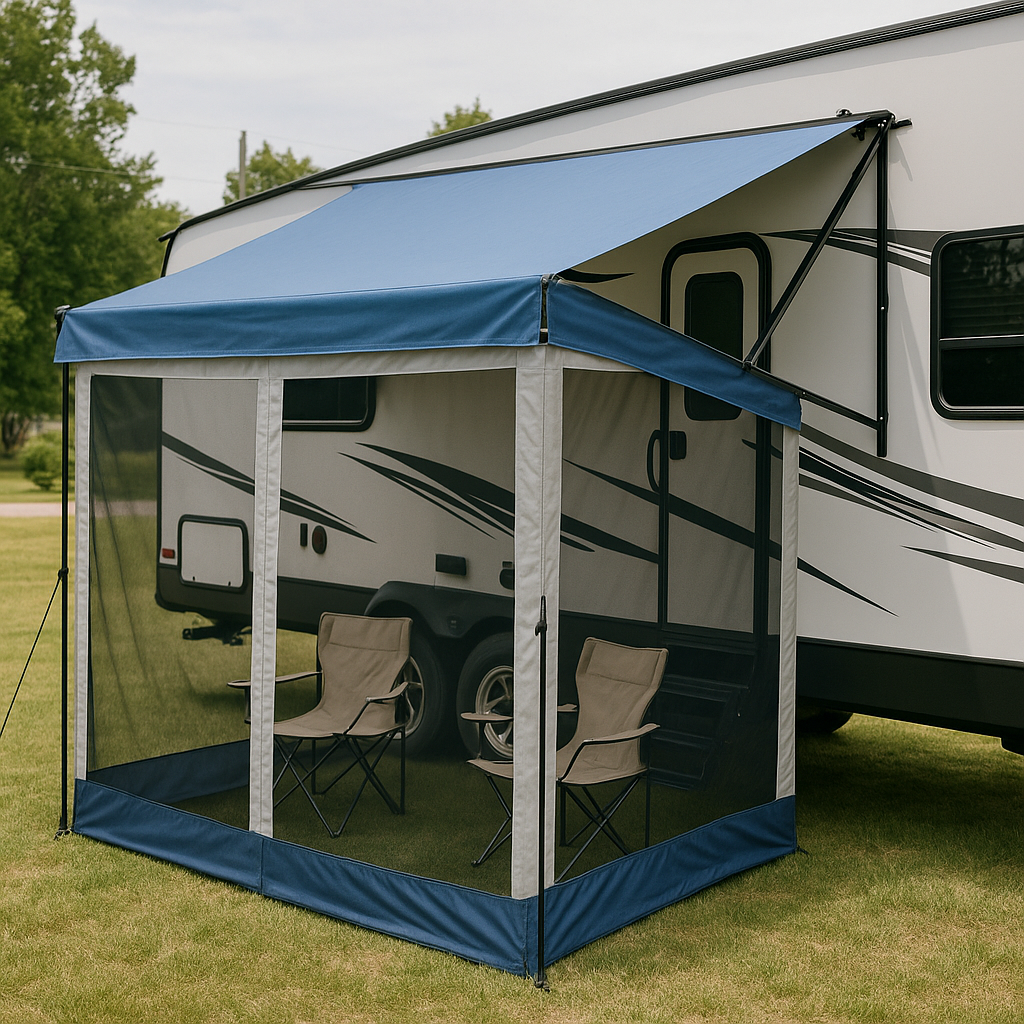
| RV awning screen room | Moderate to slow | Good | High | Fair | Excellent | Good |
| Lightweight screen house | Fast | Fair | High | Good | Fair | Excellent |
Our Verdict
If we had to recommend one option for the widest range of full-time RVers, we’d choose a hub-style screen shelter, especially something like the CLAM Quick-Set Escape. It offers the best balance of portability, bug protection, usable space, and repeatable setup.
If your RV already has a strong awning setup and you stay put for longer periods, an awning-mounted screen room can be even better. If heat and glare are your main issue, an awning sun shade is the simplest and most cost-effective upgrade.
Our Top Picks at a Glance
Full-timers need more than occasional weekend shade. We want gear that can handle repeated setup, changing campgrounds, and long afternoons of sun, bugs, and light weather. Below is our quick comparison of the models and styles we recommend most often.
| Product | Type | Best For | Approx. Size | Key Strength | Main Tradeoff |
|---|---|---|---|---|---|
| CLAM Quick-Set Escape | Screen shelter | Best overall screen room | 12.5 x 12.5 ft | Fast hub-style setup, roomy | Bulky packed size |
| E-Z UP Camping Cube + Canopy | Canopy + screen room combo | Flexible shade and bug protection | 10 x 10 ft | Converts canopy into enclosed room | Requires compatible canopy |
| Carefree Fiesta Add-A-Room | RV awning room | Long-term campsite living | Varies by awning | Integrated RV patio room feel | More involved installation |
| Solera Family Room | RV awning screen room | Best for awning users | Varies by awning | Great for semi-permanent use | Fit depends on awning size |
| ABCCANOPY Pop-Up Canopy with Sidewalls | Pop-up canopy | Best budget shade canopy | 10 x 10 ft | Affordable and easy to find | Less durable in wind |
| ShadePro Vista Shade | RV awning sun shade | Best sun-blocking add-on | Varies by awning | Cuts glare and heat fast | Not a full room |
| Alvantor Screen House Room | Lightweight screen house | Best lightweight option | Various sizes | Light, compact, easy to move | Less robust than hub shelters |
Best RV Shade Canopies and Screen Rooms Reviewed

1. CLAM Quick-Set Escape
The CLAM Quick-Set Escape is our top overall pick for full-timers who want a true outdoor room without a complicated setup. We like it because it gives you bug protection, overhead shade, and enough square footage for chairs, a table, pet beds, or even a portable workstation.
The hub-style design is one of the fastest we’ve used in this category. Once you get the hang of it, setup is much easier than piecing together a traditional frame-and-fabric shelter. For full-time RVers moving every week or two, that matters.
Pros:
- Very fast setup for its size
- Excellent bug protection
- Spacious enough for real campsite living
- Stronger overall feel than many lightweight screen tents
Cons:
- Takes up meaningful storage space
- Higher price than budget canopies
- Still needs proper anchoring in wind
Who It’s For: Full-timers who stay out for months at a time and want a durable screen room they’ll use constantly.
2. E-Z UP Camping Cube + Compatible Canopy
This is one of the most versatile systems we recommend because it gives you two products in one. Use the canopy alone for simple shade, then add the Camping Cube when you want bug protection or privacy. For RVers who camp in mixed climates, that flexibility is hard to beat.
We especially like this setup for travelers who split time between hot, buggy regions and dry western campgrounds. The modular approach means you’re not always hauling a fully enclosed shelter when you only need a roof.
Pros:
- Flexible modular design
- Works as canopy or enclosed room
- Good ventilation options
- More multi-purpose than many dedicated screen houses
Cons:
- Best performance depends on canopy quality
- Setup takes longer than a simple pop-up
- Footprint may feel small for larger families
Who It’s For: RV owners who want one system that can serve as both a shade canopy and a bug-free room.
3. Carefree Fiesta Add-A-Room
For full-timers who stay put for longer stretches, an RV awning room can feel like adding square footage to the rig. The Carefree Fiesta Add-A-Room is designed to attach to compatible awnings and create a more integrated patio enclosure.
Compared with standalone shelters, this style feels more connected to the RV. It’s especially useful when we want a semi-private area for dining, pet containment, or gear storage while still maintaining airflow.
Pros:
- Creates a true RV patio room
- Great for extended stays
- More polished integrated look
- Useful extra living and storage space
Cons:
- More setup and fitment complexity
- Not ideal for frequent overnight moves
- Awning compatibility is critical
Who It’s For: Full-timers who spend weeks or months in one spot and want a more permanent-feeling outdoor room.
4. Solera Family Room
The Solera Family Room is another strong option for RVers with compatible awnings. It combines shade, screen protection, and a room-like footprint that can make a campsite significantly more livable.
In our experience, products in this category work best for snowbirds, seasonal campers, and full-timers who prefer slower travel. If you relocate often, setup effort can become a drawback. But if you linger in one place, the payoff is substantial.
Pros:
- Excellent for extended campsite living
- Good bug protection
- Uses existing awning structure
- Adds practical enclosed outdoor space
Cons:
- Less convenient for frequent movers
- Sizing and fit require careful measuring
- Can be more weather-sensitive than hard structures
Who It’s For: RVers who already rely on their awning and want to turn it into a functional screen room.
5. ABCCANOPY Pop-Up Canopy with Sidewalls
If your priority is affordable shade, this is one of the better budget-friendly routes. A pop-up canopy with removable sidewalls gives you a simple way to create sun protection beside the RV, and it can also help block low-angle light or light drizzle.
We don’t consider this the most heavy-duty long-term option for serious weather, but for many full-timers it’s a practical secondary shelter. It’s especially useful when we need quick shade over grills, outdoor kitchens, or a sitting area away from the RV awning.
Pros:
- Budget-friendly
- Easy to source and replace parts for
- Quick pop-up format
- Sidewalls add versatility
Cons:
- Wind performance is limited without serious anchoring
- Fabric and frame durability vary by model tier
- Not as refined as dedicated RV systems
Who It’s For: Budget-conscious full-timers who want basic shade coverage and can commit to proper tie-downs.
6. ShadePro Vista Shade
Not every full-timer needs a full room. Sometimes the biggest issue is heat, glare, and low sun under the awning. That’s where an awning sun shade like the ShadePro Vista Shade shines.
This style won’t give you enclosed bug protection, but it can noticeably improve comfort during long afternoons. We’ve found that a good drop shade often makes the difference between sitting outside and retreating indoors.
Pros:
- Excellent glare and heat reduction
- Lightweight and easy to store
- Simple add-on for many RV setups
- More affordable than full screen rooms
Cons:
- No enclosed room function
- Limited bug control
- Coverage is narrower than standalone canopies
Who It’s For: RVers who already have an awning and mainly want better sun control rather than a separate shelter.
7. Alvantor Screen House Room
The Alvantor Screen House Room is one of the better lightweight options for RVers who value low packed weight and easy handling. It’s less heavy-duty than premium hub shelters, but for fair-weather use it’s very convenient.
We like this style for couples, solo travelers, and anyone with limited basement storage. If you want a screen room you can move, pack, and deploy without much effort, it’s a compelling option.
Pros:
- Lightweight and compact
- Easy to carry and reposition
- Good airflow and bug screening
- Convenient for shorter stays
Cons:
- Less rugged than heavier premium shelters
- Can feel less stable in wind
- Best for mild conditions
Who It’s For: Full-timers with limited storage who still want a bug-free outdoor lounge in calmer weather.
How to Choose the Best RV Shade Canopy
1. Match the shelter to your travel pace
This is the first filter we use. If you move every few days, avoid anything that feels semi-permanent. Fast setup and takedown matter more than maximum enclosure. If you stay for weeks at a time, a larger screen room may be worth the effort.
2. Think about your real purpose
Ask what problem you’re solving:
- Too much afternoon sun?
- Mosquitoes and no-see-ums?
- Need a pet-safe outdoor area?
- Want extra dining space?
- Need room for bikes, shoes, and gear?
The best RV shade canopy for one full-timer may be the wrong choice for another if the intended use is different.
3. Check campsite size and surface conditions
Some public campgrounds have narrow pads, trees, or uneven terrain that limit large shelters. Before buying, think about whether your preferred canopy can fit beside the RV without blocking slides, doors, or utilities.
4. Prioritize anchoring systems
A canopy is only as good as its tie-downs. Full-timers encounter wind sooner or later, and lightweight stakes included in many kits are often not enough. We strongly recommend budgeting for upgraded stakes, guylines, and weight bags if you camp on mixed surfaces.
5. Measure your awning carefully
For awning-attached rooms and shades, exact fit matters. Don’t guess. Measure awning width, projection, mounting height, and compatibility with your RV model and awning brand.
6. Consider storage and lifting effort
A large shelter may look perfect online but become frustrating if it barely fits in the pass-through or requires awkward lifting. Packed length, total weight, and storage bag durability all matter for full-time use.
How to Set Up an RV Shade Canopy Safely
Whether you choose a standalone canopy or screen room, setup technique affects both performance and longevity.
Materials and Tools
Before setup, we recommend having:
- Canopy or screen room kit
- Heavy-duty stakes
- Mallet or small hammer
- Guylines
- Weight bags or sandbags
- Step stool if needed
- Soft brush or towel for cleanup
- Work gloves
Numbered Setup Steps
- Choose level ground. Look for the flattest area available and avoid drainage paths where water can pool.
- Check overhead clearance. Watch for branches, power pedestals, and the RV awning arms.
- Lay out all parts first. Confirm fabric, poles, hubs, and anchors are present before starting.
- Assemble or expand the frame. Follow the manufacturer’s order exactly to avoid twisting joints or stressing hubs.
- Attach the canopy fabric evenly. Don’t force corners; tension should be balanced across the frame.
- Stake the corners immediately. Even before final adjustments, anchor the shelter so a gust doesn’t move it.
- Add guylines and side tie-outs. This is where many users cut corners, but it’s essential for stability.
- Install sidewalls or screens last. Once the frame is secure, zip or clip panels into place.
- Recheck tension after 10-15 minutes. Fabric often relaxes slightly after setup.
- Lower or remove the shelter in bad weather. Don’t leave it up during strong wind, storms, or when leaving camp for long periods unless the product is specifically rated and conditions are mild.
Safety Tips
- Never assume the included stakes are enough for full-time use.
- Avoid open flames or grills too close to canopy walls.
- Don’t attach a standalone canopy rigidly to the RV unless the manufacturer allows it.
- Lower awning-based setups during storms or when winds increase.
- Inspect zippers, seams, and anchor points regularly for wear.
Common Mistakes Full-Timers Make
Buying too large
A massive shelter sounds appealing, but oversized models are harder to fit, anchor, store, and justify for short stays.
Underestimating wind
Even the best-looking canopy can fail quickly if it isn’t anchored properly. We’ve seen more damage from poor tie-downs than from product defects.
Ignoring packed dimensions
Always check the packed size, not just deployed size. Long storage bags can be especially awkward in smaller motorhomes and travel trailers.
Choosing price over use case
A budget canopy can be a great value, but not if you need a true screen room for months of daily use. Buy for frequency and conditions, not just sticker price.
Final Buying Advice
For most full-timers, the best setup is the one that gets used often, not the one with the most features. We recommend starting with your actual campsite habits. If you move frequently and want the best all-around performance, go with a hub-style screen shelter like the CLAM Quick-Set Escape. If you stay longer and want a more integrated patio feel, choose an awning-mounted screen room such as the Solera Family Room or Carefree Fiesta Add-A-Room. If your main goal is simply reducing heat and glare, an awning shade panel may be the smartest buy.
The clear winner for most readers is the CLAM Quick-Set Escape because it strikes the strongest balance between convenience, comfort, and durability. But the real best choice depends on how often you move, how much bug protection you need, and how much storage space you can spare.
FAQ
What is the best RV shade canopy for full-time living?
For most full-timers, we recommend a hub-style screen shelter because it combines shade, bug protection, and relatively quick setup. Our top overall pick is the CLAM Quick-Set Escape.
Are RV screen rooms worth it for full-timers?
Yes, especially if you spend a lot of time outdoors or stay in buggy climates. A good screen room can add usable living space, improve comfort, and help keep pets and gear contained.
Can I leave an RV shade canopy up all season?
Some awning rooms and heavy-duty shelters are better suited for longer stays, but we still recommend monitoring weather closely. Strong wind, storms, and prolonged UV exposure can damage any canopy if it’s left unattended too long.
What size canopy is best for an RV campsite?
A 10 x 10-foot canopy works for many campsites, but larger screen shelters can be worth it if you have the room. Always consider slide clearance, picnic table placement, and campground pad size.
Do I need extra stakes and tie-downs?
Almost always, yes. The included hardware on many canopies is minimal, and full-timers benefit from upgrading to stronger stakes, better guylines, and weight bags for hard surfaces.
Get your free Get Our Free Full-Timer's Gear Guide
The no-fluff gear list trusted by full-time RVers — tested in real conditions across North America.