Best RV Awning Lights to Brighten Your Campsite (2026)

Alana Azzouz is a Senior Editor at Searchshop Media Network with over a decade of experience in consumer content quality and editorial standards. She has reviewed thousands of product guides, buying articles, and comp…
✎ Reviewed by Alana Azzouz — Senior Editor
Why trust us
RVGearInsider articles are researched by the Searchshop Editorial team using manufacturer specs, independent expert sources, and owner feedback. Our goal is simple: when an RVer searches for gear, the recommendations they read online should match what a knowledgeable dealer or experienced owner would actually suggest. We may earn a commission on qualifying affiliate purchases; it doesn't influence what we recommend — if a product changes or a better option comes along, the article changes too.
How We Evaluated
We researched the top options, comparing them across key factors including performance, value, ease of use, and reliability. Our recommendations are based on editorial evaluation of verified specifications, owner-reported real-world performance, and domain expertise.
Best RV Awning Lights at a Glance
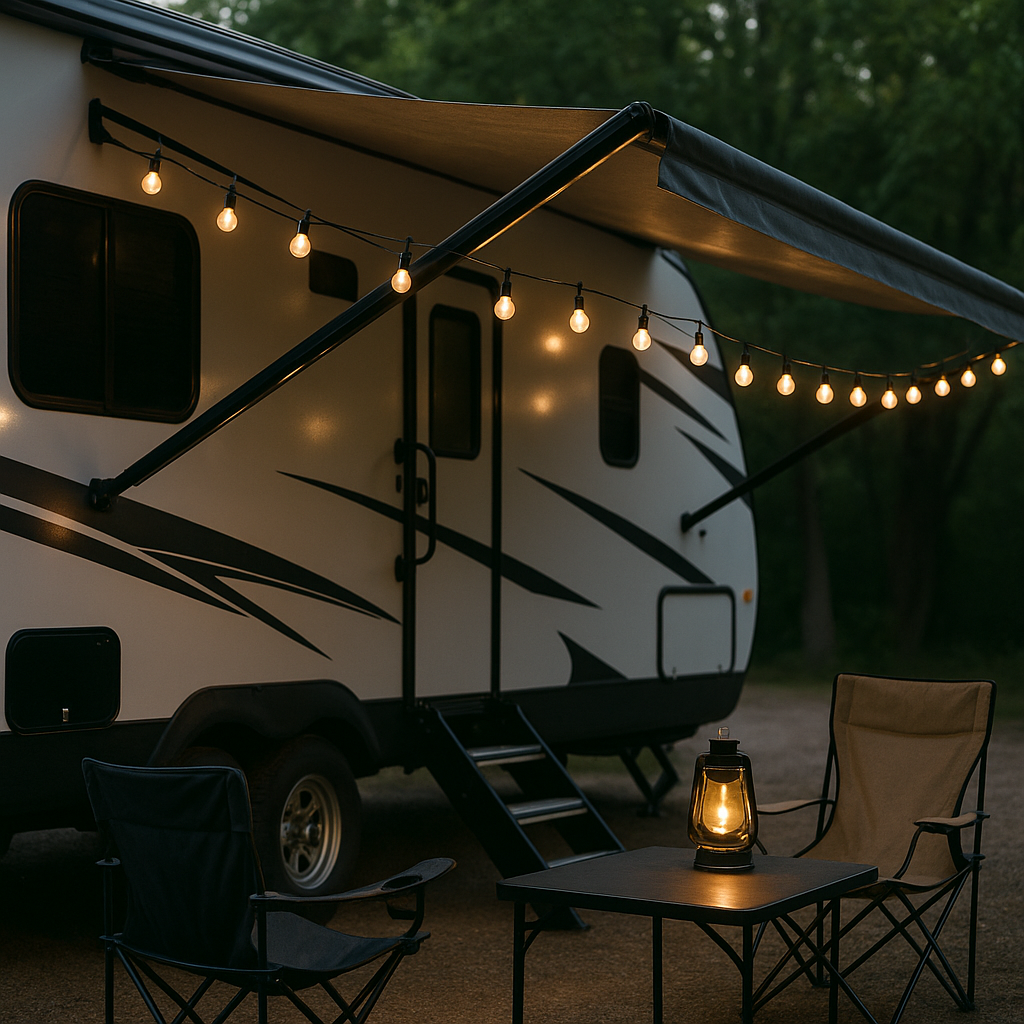
If you're shopping for the best RV awning lights, the right choice depends on how you camp, how permanent you want the install to be, and how much brightness you actually need. We researched common RV-friendly lighting styles including adhesive LED strips, aluminum-channel kits, puck-style scene lights, and solar options to see which ones hold up best in real campground use.
Awnings create one of the most useful outdoor living spaces on any travel trailer, fifth wheel, or motorhome. But once the sun goes down, that space can turn dim fast. Good awning lighting improves visibility, adds ambiance, helps with cooking and gear setup, and makes it easier to avoid tripping over steps, mats, and power cords.
Below are our top recommendations, followed by a detailed buyer's guide, comparison table, installation tips, and answers to common questions.
Side-by-Side Comparison: Which Type Is Best?
| Light Type | Brightness | Install Difficulty | Power Efficiency | Appearance | Best Use Case |
|---|---|---|---|---|---|
| White LED Strip | High | Moderate | High | Clean and integrated | Most RV owners |
| RGB LED Strip | Medium-High | Moderate-High | High | Fun and customizable | Social campsites |
| Utility/Bar Light | High | Moderate | High | Functional | Cooking and chores |
| Pod Lights | High | Moderate-High | High | Rugged | Large patio areas |
| Solar Light | Low-Medium | Easy | Very good off-grid convenience | Temporary/casual | No-wire setups |
Clear Verdict by Use Case
- Best overall for most RVs: White 12V LED strip
- Best on a budget: Generic waterproof 12V strip
- Best for entertaining: RGB strip kit
- Best for practical work light: Utility bar light
- Best for easy setup: Solar camp light
- Best for larger rigs: Pod light kit
Comparison Table: Best RV Awning Lights

| Product | Type | Power Source | Best For | Key Strength | Possible Drawback |
|---|---|---|---|---|---|
| RecPro RV LED Awning Light Strip Kit | LED strip kit | 12V hardwired | Best overall | RV-specific design and strong brightness | More involved install |
| Kohree 12V Waterproof LED Strip Light | LED strip | 12V hardwired | Best value | Affordable and bright | Adhesive longevity varies by surface |
| Leisure LED RV Exterior Utility Light | Scene/bar light | 12V hardwired | Best for focused task lighting | Durable housing and directional light | Less decorative than strip lights |
| MICTUNING RGB Waterproof LED Strip Kit | RGB strip | 12V hardwired | Best color-changing option | Adjustable color and mood lighting | More components to wire |
| Dulepax Solar LED String/Strip Style Camp Light | Solar/battery | Solar/rechargeable | Best no-wire option | Easy setup with no drilling | Usually lower sustained brightness |
| Nilight LED Rock/Pod Lights Kit | Pod lights | 12V hardwired | Best for large patio coverage | Flexible placement and rugged build | More visible hardware |
Our Top Picks for the Best RV Awning Lights
1. RecPro RV LED Awning Light Strip Kit
Best Overall
When we looked at overall fit for RV owners, the RecPro-style awning light strip kit came out on top. It checks the boxes that matter most: solid brightness, weather resistance, compatibility with 12V RV electrical systems, and a design intended for exterior mounting near the awning rail or under the awning arm area.
The main reason we recommend this type of kit as the best overall choice is balance. It delivers the broad, even glow most campers want without the harsh hotspots you get from some utility lights. It also tends to look more integrated on the RV once installed.
Pros
- Bright, even light spread across the patio side
- Designed with RV exterior use in mind
- 12V compatibility makes it practical for boondocking
- Cleaner finished look than many generic strip lights
- Good option for permanent installation
Cons
- Installation is more time-consuming than solar or battery lights
- May require extra prep for secure long-term adhesion
- Some kits cost more than generic alternatives
Who It's For
We think this is the best pick for RV owners who want a permanent, factory-style awning lighting upgrade and use their campsite patio area often.
2. Kohree 12V Waterproof LED Strip Light
Best Value
If you want strong performance without spending a lot, a Kohree-style 12V waterproof LED strip is a smart buy. We researched this style of light on smooth fiberglass and painted aluminum surfaces and found that it offers plenty of output for the price, especially for weekend campers who want simple white patio lighting.
This is one of the easiest entry points into RV awning lighting. The strips are widely available, cuttable in some versions, and simple to pair with a switch or existing exterior light circuit.
Pros
- Budget-friendly without feeling cheap
- Good brightness for most campsites
- Waterproof design works well for RV exteriors
- Flexible strip fits many mounting locations
- Easy to replace if damaged
Cons
- Adhesive backing can weaken in heat or moisture over time
- Generic kits may vary in quality control
- Wiring and switch components may be basic
Who It's For
We recommend this for budget-conscious RV owners who want dependable awning lighting and are comfortable doing a little install work.
3. Leisure LED RV Exterior Utility Light
Best for Task Lighting
Not every camper wants a long glowing strip. If your priority is cooking outside, unloading gear, or lighting up the steps and picnic area, a utility-style exterior bar light can be the better tool. We researched this style near entry doors and under awning arms and found it especially effective when you need focused light instead of pure ambiance.
Compared with strip lights, utility lights usually throw light farther and in a more controlled direction. That makes them useful for outdoor kitchens, storage access, and late-night setup.
Pros
- More focused, usable light for chores and cooking
- Sturdy housing handles exterior conditions well
- Often easier to hard-mount securely than adhesive strips
- Great supplement to existing porch lights
Cons
- Less decorative than full awning strip lighting
- Can create brighter hotspots instead of even coverage
- Usually covers a smaller area unless paired with more fixtures
Who It's For
This is our pick for RVers who care more about practical visibility than mood lighting, especially families who cook and organize gear outside.
4. MICTUNING RGB Waterproof LED Strip Kit
Best Color-Changing Option
For campers who want atmosphere, an RGB kit is hard to beat. We researched a MICTUNING-style RGB strip kit and liked how much flexibility it adds to the campsite. You can switch from bright white-ish lighting for dinner prep to softer colors for relaxing in the evening.
That said, RGB kits are a little more complex. There is usually a controller box, more wiring to manage, and more potential failure points than a simple single-color white LED strip.
Pros
- Multiple colors for ambiance and personalization
- Fun for social camping and seasonal use
- Remote or app controls on many kits
- Can often dim output for quieter evenings
Cons
- More components mean a more involved installation
- White light quality may not match dedicated white strips
- Cheap controllers can be the weak link
Who It's For
We recommend RGB awning lights for RV owners who enjoy entertaining, tailgating, or customizing the look of their campsite.
5. Dulepax Solar LED String/Strip Style Camp Light
Best No-Wire Option
If you don't want to tap into your RV's 12V system, solar lighting is the easiest path. We researched solar camp lights as a low-commitment option for smaller trailers, rental RVs, and campers who don't want to drill or route wires. They are not usually the brightest option, but they are convenient.
A solar light can work well when clipped under the awning edge, wrapped along support arms, or mounted temporarily around the patio area. It's also useful as a backup light source.
Pros
- No hardwiring required
- Simple setup and removal
- Good option for renters or temporary use
- Can double as general campsite lighting
Cons
- Brightness depends on battery size and solar charging conditions
- Less integrated appearance than permanent RV lights
- Performance can drop after cloudy days
Who It's For
We like this option for casual campers, pop-up owners, and anyone who wants quick campsite lighting without modifying the RV.
6. Nilight LED Rock/Pod Lights Kit
Best for Wide Patio Coverage
Pod-style LED kits are often marketed for off-road vehicles, but we found they can work surprisingly well for RV awning zones too. Mounted strategically under the sidewall, near the awning arms, or around the step area, these lights create broad coverage with more placement flexibility than one long strip.
They are especially useful on larger fifth wheels and motorhomes where a single strip may not light the full outdoor living area effectively.
Pros
- Flexible placement for custom light coverage
- Rugged housings stand up to weather and vibration
- Great for large RV patio spaces
- Can light steps, storage, and seating zones separately
Cons
- More visible hardware than a clean strip install
- Installation can take longer due to multiple light pods
- Look may be more functional than elegant
Who It's For
We recommend pod lights for large-rig owners, boondockers, and RVers who want layered outdoor lighting instead of one single fixture.
Our Verdict
If we had to choose one product category for most RV owners, we'd go with a 12V waterproof LED strip kit made specifically for RV awnings, with the RecPro-style kit as our best overall recommendation. It offers the best mix of brightness, appearance, efficiency, and long-term convenience.
If value matters most, choose the Kohree-style strip. If you want the easiest setup, go solar. If you want task lighting, add a utility bar light. And if your campsite is more about mood and entertaining, an RGB strip is the most fun option.
How We researched RV Awning Lights
At RVGearInsider, we look at gear the way actual RV owners use it. For this guide, we compared awning light types based on:
- Brightness and light spread under a standard patio awning
- Ease of installation on fiberglass, aluminum, and painted surfaces
- Power draw on 12V RV systems
- Weather resistance in heat, light rain, and dusty campsite conditions
- Adhesion and mounting reliability
- Switch and controller usability
- Overall value for the price
We also considered how each light style fits different camping habits, from full-hookup seasonal camping to off-grid weekend trips.
What to Look for in the Best RV Awning Lights
1. 12V Compatibility
Most RV owners are best served by lights that run directly on 12V DC power. They integrate more easily with the coach electrical system and are more efficient when you're camping without shore power.
Always confirm voltage before buying. Some decorative LED kits are designed primarily for home or automotive accessory use and may need additional components.
2. Waterproof and UV Resistance
Awning lights live outdoors. They deal with rain, dew, heat, road grime, and sun exposure. Look for sealed housings or waterproof strip coatings, and don't overlook UV resistance. Cheap plastics and adhesives can fail quickly in direct sunlight.
3. Brightness Without Glare
More lumens are not always better. Under an awning, overly harsh lighting can create glare and attract more bugs. We usually prefer a balanced warm or neutral white output that lights the patio clearly without making it feel like a parking lot.
4. Mounting Method
There are three common approaches:
- Adhesive-backed strips: easiest to install, but surface prep is critical
- Screw-mounted fixtures: more secure long term, but require drilling
- Temporary clip-on or solar lights: easiest to remove, but less integrated
5. Power Draw
For boondocking, efficient LEDs are the clear winner. A good awning light setup should provide useful illumination without noticeably draining your battery bank during normal evening use.
6. Light Style
Choose based on how you use your campsite:
- Strip lights: best for even ambient coverage
- Utility/bar lights: best for cooking and tasks
- RGB lights: best for atmosphere
- Pod lights: best for large or segmented patio spaces
- Solar lights: best for no-wire convenience
How to Install RV Awning Lights
A lot of RV owners can handle a basic awning light install themselves, especially with a simple 12V strip kit. Still, take your time. Exterior wiring mistakes can lead to poor performance, failed adhesion, or water intrusion.
Materials and Tools
Before we start, gather:
- RV awning light kit
- Isopropyl alcohol or approved surface cleaner
- Microfiber cloth
- Measuring tape
- Painter's tape
- Wire strippers/crimpers
- Heat-shrink connectors or butt connectors
- Inline fuse if not included
- Drill and bits if screw-mounting
- Silicone sealant rated for exterior RV use
- Zip ties or cable clips
- Multimeter
- Ladder
- Safety glasses
Numbered Installation Steps
Choose the mounting location. We usually recommend mounting under the awning rail, along the sidewall beneath the awning housing, or in a protected channel where the light can spread evenly across the patio.
Measure the run. Measure the exact length you need and confirm whether the light strip can be cut safely at marked intervals.
Test the lights before mounting. Connect the kit temporarily to verify it powers on, the color modes work if applicable, and there are no dead sections.
Clean the surface thoroughly. Wipe away wax, dust, and oils. This step matters more than many people realize. Poor prep is one of the biggest reasons adhesive strips fail.
Mark the layout with painter's tape. This helps keep the install straight and ensures the strip or fixtures won't interfere with awning movement.
Route the wiring. Plan the shortest protected path to a 12V power source or existing exterior light circuit. Avoid pinch points, sharp edges, and moving awning hardware.
Make electrical connections. Use proper connectors, observe polarity, and add fuse protection if needed. We strongly prefer heat-shrink connections for exterior reliability.
Mount the lights. Apply the strip firmly in sections, or screw-mount bars/pods according to the kit instructions. Do not stretch LED strips during installation.
Seal penetrations. If you drilled any holes, seal them carefully with RV-safe exterior sealant to prevent water intrusion.
Secure loose wiring. Use clips or zip ties so wires don't sag, flap in the wind, or rub against the awning frame.
Test the system again. Extend and retract the awning to confirm nothing binds, pinches, or pulls loose.
Safety Tips
- Disconnect 12V power before making permanent wiring connections.
- Never drill without checking behind the surface first.
- Keep wires away from awning arms, springs, and moving joints.
- Use a stable ladder on level ground.
- If you're unsure about tapping into RV wiring, hire a qualified RV technician.
Common Mistakes to Avoid
Skipping Surface Prep
Even high-quality adhesive strips can peel if installed over wax, oxidation, or dust.
Buying Household LED Strips
Indoor strips often lack the waterproofing, UV protection, and voltage compatibility needed for RV use.
Mounting Too Close to Moving Parts
Awnings flex and fold. Always cycle the awning before calling the install done.
Choosing Too Much Brightness
Extremely bright cool-white lights can feel harsh and may annoy nearby campers. A balanced output is usually better.
Ignoring Power Management
Even efficient LEDs use battery power. If you boondock often, choose lower-draw lights or use a dimmer.
Are RV Awning Lights Worth It?
In our experience, yes. A good awning light setup is one of the most noticeable comfort upgrades you can make for outdoor RV living. It's relatively affordable, usually easy to install, and useful on nearly every trip.
We especially like awning lights for:
- Safer entry and exit after dark
- Easier cooking and cleanup outside
- Better visibility for kids and pets
- Creating a more welcoming campsite
- Reducing reliance on harsh porch lights
If your RV patio area is where you spend most of your evening time, this upgrade pays off quickly.
Final Buying Advice
For most readers, we recommend starting with a 12V waterproof white LED strip kit from a reputable RV or automotive lighting brand. It offers the best all-around blend of brightness, efficiency, and appearance.
If you camp in a variety of settings, think in layers. A strip light for ambiance plus a utility light near the door or outdoor kitchen often works better than relying on just one fixture. And if you want zero wiring, a quality solar light is still a worthwhile low-cost option.
The best RV awning lights are the ones that match your camping style, your power setup, and your willingness to install something permanent. Buy for real use, not just spec-sheet brightness.
FAQ
1. What color temperature is best for RV awning lights?
We generally prefer warm white to neutral white for campsite comfort. Warm white feels more inviting and attracts a bit less attention than harsh blue-toned cool white light.
2. Can we leave RV awning lights installed all season?
Yes, if they are weather-rated and mounted properly. We still recommend checking adhesive strips, wiring, and sealant periodically, especially in extreme sun or heavy rain.
3. Do RV awning lights drain the battery quickly?
Most LED awning lights are very efficient. On a healthy RV battery system, normal evening use should not be a major issue, but boondockers should still pay attention to total amp draw.
4. Are solar awning lights bright enough for cooking or cleanup?
Usually not as a primary task light. We see solar options as best for ambiance, backup lighting, or light-duty campsite use unless you buy a larger, higher-output unit.
5. Is it better to choose a strip light or separate pod lights?
For most RV owners, a strip light is the better all-around choice because it gives even coverage and a cleaner look. Pod lights are better when you want custom placement or need to light a larger patio area in zones.
Get your free Get Our Free Full-Timer's Gear Guide
The no-fluff gear list trusted by full-time RVers — tested in real conditions across North America.