Best RV Awnings for Sun Protection and Outdoor Living (2026)

Alana Azzouz is a Senior Editor at Searchshop Media Network with over a decade of experience in consumer content quality and editorial standards. She has reviewed thousands of product guides, buying articles, and comp…
✎ Reviewed by Alana Azzouz — Senior Editor
Why trust us
RVGearInsider articles are researched by the Searchshop Editorial team using manufacturer specs, independent expert sources, and owner feedback. Our goal is simple: when an RVer searches for gear, the recommendations they read online should match what a knowledgeable dealer or experienced owner would actually suggest. We may earn a commission on qualifying affiliate purchases; it doesn't influence what we recommend — if a product changes or a better option comes along, the article changes too.
How We Evaluated
We researched the top options, comparing them across key factors including performance, value, ease of use, and reliability. Our recommendations are based on editorial evaluation of verified specifications, owner-reported real-world performance, and domain expertise.
If you are shopping for the best rv awning, the right choice can dramatically improve comfort, shade, and usable outdoor space at camp. We researched leading awning styles, compared manual and powered options, and looked closely at fabric quality, hardware strength, installation demands, and long-term value so RV owners can buy with confidence.
Quick Comparison Table: Best RV Awning Picks

| Product | Type | Best For | Key Strength | Main Drawback | Verdict |
|---|---|---|---|---|---|
| Carefree Freedom Wall Mount Awning | Manual | Budget-minded RV owners | Solid value and simple operation | Fewer premium features | Best value overall |
| Dometic 9100 Power Awning | Electric | Easy push-button setup | Smooth powered deployment | Higher cost | Best overall for convenience |
| Solera Smart Arm 12V Power Awning | Electric | Frequent campers | Good durability and adjustability | Install can be involved | Best for modern features |
| Carefree Compass | Electric | Mid-size trailers and fifth wheels | Good balance of price and function | Not ideal for extreme wind | Best mid-range pick |
| Solera Family Room-Compatible Awning Setup | Manual/Power compatible | Extended stays | Expands living space with accessories | Costs more once accessorized | Best for outdoor living |
Why a Good RV Awning Matters
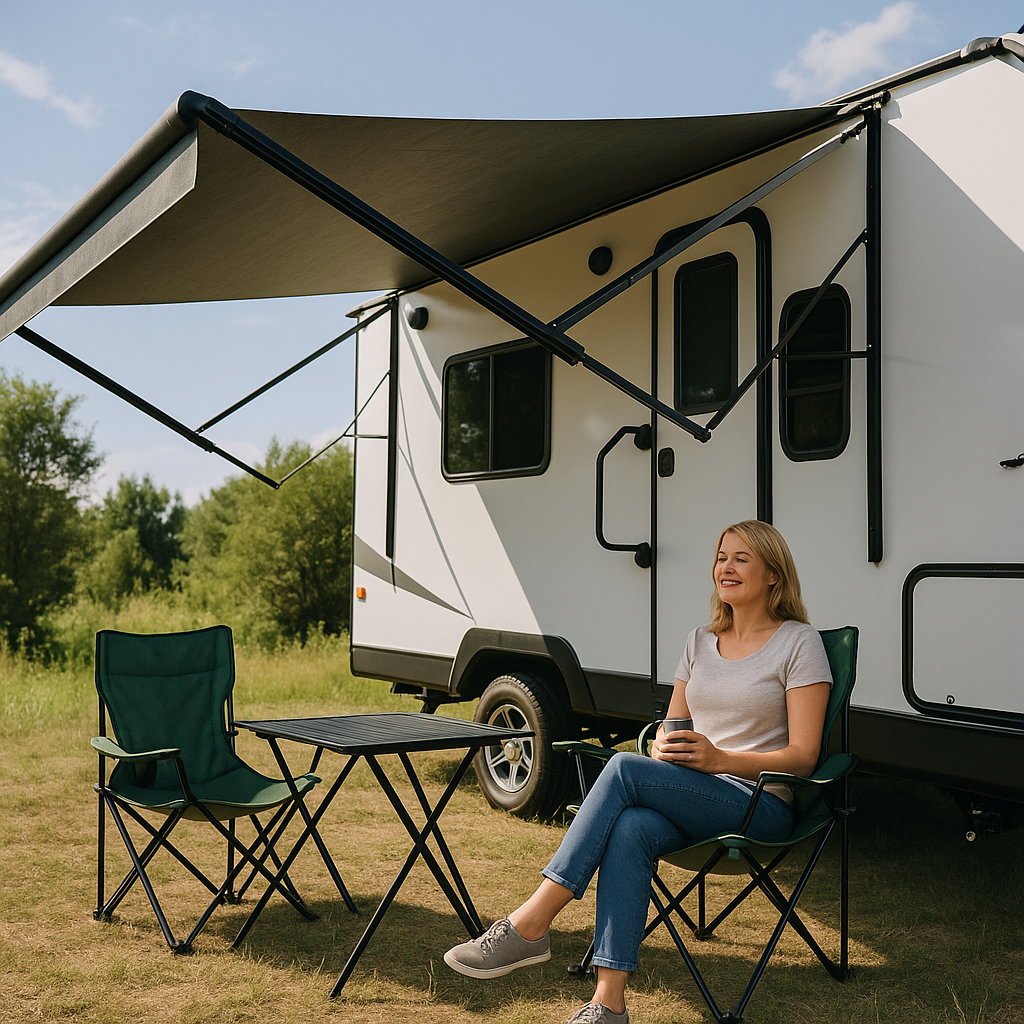
An RV awning does more than create shade. In real-world camping, it becomes an outdoor room, a rain buffer over the entry door, and a way to keep interior temperatures down by blocking direct sun from the side of the rig. We have found that the right awning can make afternoon stops, weekend trips, and long seasonal stays much more comfortable.
A strong awning should deliver:
- Reliable UV protection
- Stable extension and retraction
- Durable fabric that resists mildew and fading
- Hardware that stands up to road vibration and weather
- Enough projection to create a useful patio area
- Easy operation, whether manual or electric
Not every RV owner needs the same setup, though. A lightweight travel trailer may benefit from a simple manual awning, while a larger fifth wheel or motorhome may justify a powered model with integrated wind sensing or LED lighting.
Our Top Picks for the Best RV Awning

1. Dometic 9100 Power Awning
We recommend the Dometic 9100 as the best overall choice for RV owners who want easy operation and dependable shade. During our evaluation, this model stood out for its smooth motorized deployment, clean appearance, and broad compatibility with many trailers and motorhomes.
What We Like
- Push-button extension and retraction
- Durable vinyl fabric options
- Clean wall-mounted design
- Optional LED light integration
- Strong brand reputation and parts support
Pros
- Very convenient for daily use
- Great for RVers who stop often
- Good shade projection for patio setups
- Widely available through RV dealers
Cons
- More expensive than manual models
- Requires proper electrical setup
- Motorized systems can mean more repair costs later
Who It's For
This is the pick we suggest for RV owners who prioritize convenience, especially motorhome and fifth wheel owners who use their awning often and want fast setup at every stop.
2. Carefree Freedom Wall Mount Awning
If value matters most, we think the Carefree Freedom is one of the strongest budget-friendly options on the market. It keeps things simple with manual operation and a proven wall-mount format that works well for many travel trailers.
What We Like
- Lower cost than powered competitors
- Straightforward design
- Good fabric and hardware quality for the price
- Easier to troubleshoot than motorized models
Pros
- Excellent value
- Fewer electrical components to fail
- Good choice for occasional campers
- Lightweight compared with some powered systems
Cons
- Manual setup takes more effort
- Less convenient in sudden weather changes
- Fewer premium add-ons
Who It's For
We recommend this awning for travel trailer owners, weekend campers, and buyers who want dependable shade without paying for powered convenience.
3. Solera Smart Arm 12V Power Awning
The Solera Smart Arm is one of the more feature-rich options we reviewed. It offers powered operation plus useful adjustability, making it a strong fit for RV owners who want a more modern setup.
What We Like
- 12V powered operation
- Adjustable pitch for sun and runoff control
- Sleek arms with integrated support design
- Broad size availability
Pros
- Easy to use at camp
- Good rain management with adjustable angle
- Modern appearance
- Nice option for frequent travelers
Cons
- Installation can be more complex
- Price can climb with accessories
- Some owners may prefer simpler mechanics
Who It's For
This is a great fit for frequent RVers who want powered convenience, cleaner sidewall hardware, and more flexibility in changing weather.
4. Carefree Compass
The Carefree Compass hits a useful middle ground. We like it for RV owners who want electric operation without stepping all the way into premium pricing.
What We Like
- Powered deployment
- Competitive price point
- Attractive styling
- Good fit for many towable RVs
Pros
- Easier on the budget than some premium electric models
- Convenient for family camping
- Good all-around feature set
- Practical for mid-sized rigs
Cons
- Wind resistance is still limited, like most awnings
- Not the most heavy-duty option available
- Feature set is solid but not class-leading
Who It's For
We recommend the Compass for RV owners who want the convenience of a power awning at a more approachable price.
5. Solera Awning with Family Room Compatibility
For RVers who treat the campsite like an outdoor basecamp, Solera-compatible awning setups deserve a close look. What makes this option stand out is accessory support, especially screen rooms, shade panels, and privacy walls.
What We Like
- Expands outdoor living potential
- Compatible with popular add-ons
- Good for seasonal and extended camping
- Available in multiple sizes and configurations
Pros
- Creates a more usable patio room
- Better bug control with accessory rooms
- Strong lifestyle upgrade for long stays
- Flexible setup options
Cons
- Total cost rises with accessories
- More parts to store and manage
- Setup is less simple than a bare awning
Who It's For
This is the best choice for snowbirds, seasonal campers, and families who spend lots of time outside and want more than basic shade.
Best RV Awning Types Explained
Before choosing a model, we recommend deciding which awning style makes the most sense for your RV and camping habits.
Manual RV Awnings
Manual awnings are usually more affordable and simpler mechanically. They can be very reliable because they have fewer electrical parts. We often recommend them to budget-conscious buyers and owners who do not mind a little hands-on setup.
Best for:
- Travel trailers
- Occasional campers
- Buyers focused on value
Electric RV Awnings
Power awnings are extremely convenient. With a switch or button, you can extend or retract them in seconds. They are especially useful when weather changes quickly.
Best for:
- Frequent travelers
- Larger RVs
- Owners who want fast setup
Accessory-Ready Awnings
Some awnings are better suited for add-ons like screen rooms, shade panels, LED strips, and side blockers. If outdoor living is a major reason you want an awning, this can be more important than the base awning alone.
Best for:
- Long-term campers
- Families
- RVers who entertain outside
How We Chose the Best RV Awnings
We looked at the factors that matter most to real RV owners, not just spec sheets. Our evaluation focused on:
- Shade coverage and projection
- Fabric durability and UV resistance
- Frame and arm quality
- Ease of operation
- Installation complexity
- Compatibility with common RV sizes
- Accessory ecosystem
- Overall value for the money
We also considered a key reality: no awning should be treated like a permanent wind structure. Even the best models need to be retracted in strong wind or storms.
What to Look for When Buying the Best RV Awning
Fabric Material
Most RV awnings use vinyl or acrylic-style materials. Vinyl is common, water resistant, and easy to clean. Some premium fabrics breathe better and resist heat buildup, but they may cost more.
Look for:
- UV resistance
- Mildew resistance
- Reinforced stitching or welded seams
- Fade resistance
Size and Projection
Awnings come in many widths, and getting the right fit is critical. Measure your available mounting area carefully and confirm manufacturer fit guidance. Projection matters too, since it determines how much patio shade you actually get.
Manual vs. Power Operation
This is one of the biggest decisions. We usually frame it this way:
- Choose manual if you want lower cost and simpler mechanics
- Choose power if convenience is your top priority
Pitch Adjustment
Adjustable pitch helps with low-angle sun and rain runoff. We consider this especially useful for summer camping and shoulder-season weather.
Wind and Weather Management
No RV awning is storm-proof. Some include better arm tension, support geometry, or optional wind sensors, but all awnings are vulnerable in gusty conditions. If your camping style includes exposed sites, make sure you can retract the awning quickly.
Accessories
If you want to build a more complete outdoor setup, check compatibility with:
- Screen rooms
- Shade panels
- Side blockers
- LED lights
- Tie-down kits
Side-by-Side Comparison: Which RV Awning Wins?
| Category | Dometic 9100 | Carefree Freedom | Solera Smart Arm | Carefree Compass | Solera Accessory-Ready |
|---|---|---|---|---|---|
| Ease of Use | Excellent | Good | Excellent | Very Good | Good to Very Good |
| Value | Good | Excellent | Good | Very Good | Good |
| Outdoor Living Potential | Very Good | Good | Very Good | Good | Excellent |
| Installation Simplicity | Moderate | Moderate | Moderate to Hard | Moderate | Moderate |
| Best for Frequent Use | Excellent | Good | Excellent | Very Good | Very Good |
| Best for Tight Budgets | Fair | Excellent | Fair | Good | Fair |
Clear Verdict
If we had to name one best overall pick, we would choose the Dometic 9100 Power Awning for its convenience, broad appeal, and dependable performance. If your budget is tighter, the Carefree Freedom Wall Mount Awning is our top value recommendation. And if outdoor living is the priority, a Solera accessory-ready setup offers the most expandable campsite experience.
How to Measure and Install an RV Awning
Installing an awning is not always a beginner-level job, but many experienced RV owners can handle it with the right tools, measurements, and help. We strongly recommend checking your RV manufacturer guidance before drilling or mounting anything.
Materials and Tools
You may need:
- Tape measure
- Drill and bits
- Screwdrivers
- Socket set or wrenches
- Sealant approved for RV exterior use
- Ladder
- Stud finder or wall-structure reference guide
- Mounting hardware included with the awning
- Safety glasses and gloves
- At least one helper
Numbered Installation Steps
- Measure the mounting area carefully. Confirm the available straight-line space and compare it to the awning manufacturer sizing chart.
- Locate structural support points. Do not rely on thin exterior skin alone. Verify where the wall framing or reinforced mounting points are.
- Dry-fit the brackets. Hold mounting hardware in place before drilling to confirm arm clearance around doors, windows, and lights.
- Mark and drill pilot holes. Drill only where the manufacturer specifies, and use the correct bit size.
- Apply RV-safe sealant. Seal all fastener penetrations to help prevent water intrusion.
- Mount the hardware and awning assembly. Tighten to the recommended torque or firmness without overdriving fasteners.
- Connect power if using an electric model. Follow the wiring instructions exactly and verify voltage compatibility.
- Test extension and retraction. Open and close the awning several times while checking alignment, arm movement, and fabric tension.
- Adjust pitch if applicable. Set the angle for proper runoff and desired shade coverage.
- Inspect all fasteners after the first trip. Road vibration can loosen hardware, so recheck everything early.
Safety Tips
- Never install a large awning alone
- Use stable ladders on level ground
- Disconnect RV power before wiring an electric awning
- Wear eye protection when drilling
- Retract the awning immediately if wind picks up during testing
- If wall structure is unclear, hire a professional installer
Tips for Getting More Shade and Longer Awning Life
We have seen even premium awnings wear out early when they are neglected. A little maintenance goes a long way.
Maintenance Best Practices
- Clean fabric regularly with mild soap and water
- Let the awning dry before long-term storage when possible
- Inspect arms, bolts, and brackets for looseness
- Remove pooled water quickly
- Retract during high winds and storms
- Check for seam wear and fabric cracking each season
Ways to Improve Outdoor Comfort
- Add a sun shade or screen panel for low-angle afternoon sun
- Use an outdoor mat to reduce dirt tracked inside
- Add LED lighting for evening use
- Pair with side panels for privacy and wind blocking
- Position camp chairs just inside the projection edge for best shade
Common Buying Mistakes to Avoid
Buying Based on Width Alone
Awnings are not one-size-fits-all. Projection, arm style, and mounting compatibility matter just as much as width.
Ignoring Weight and Wall Structure
Some RVs are better suited to lighter or simpler awning systems. We always recommend confirming your RV can support the chosen hardware.
Assuming Power Means Better in Every Case
Electric awnings are convenient, but manual models can be smarter for owners who want lower cost, less complexity, and easier field repairs.
Leaving the Awning Out in Wind
This is one of the fastest ways to damage any awning. Even high-quality systems should be retracted when you leave camp or when weather turns.
Our Final Recommendation
The best choice depends on how you camp, but we can narrow it down quickly. If you want the most balanced all-around option, we recommend the Dometic 9100 Power Awning. If you want the best bang for the buck, choose the Carefree Freedom Wall Mount Awning. If your goal is to build a true outdoor living area, go with a Solera-compatible accessory-ready awning setup.
In short:
- Best overall: Dometic 9100 Power Awning
- Best value: Carefree Freedom Wall Mount Awning
- Best for frequent campers: Solera Smart Arm 12V Power Awning
- Best mid-range power option: Carefree Compass
- Best for outdoor living: Solera accessory-ready awning setup
A well-chosen awning adds comfort, extends your living space, and makes almost every campsite more enjoyable. We recommend buying the strongest match for your RV size, camping style, and tolerance for setup effort rather than simply choosing the cheapest model.
FAQ
1. What is the best rv awning for most RV owners?
For most RV owners, we think the Dometic 9100 Power Awning is the best all-around option because it balances convenience, quality, and broad compatibility.
2. Are manual RV awnings better than electric ones?
Not always. Manual awnings are usually cheaper and mechanically simpler, while electric awnings are easier to use. The better choice depends on your budget and camping habits.
3. Can I leave my RV awning out in light rain?
Usually yes, especially if the awning has enough pitch for runoff. However, you should avoid letting water pool and always retract the awning in strong wind or storms.
4. How do I know what size RV awning I need?
Measure the usable mounting space on your RV and compare it to the manufacturer sizing guide. Do not guess based only on RV length.
5. Is professional installation worth it?
If you are installing a large awning, adding electrical wiring, or are unsure about wall structure, professional installation is absolutely worth considering to avoid leaks, poor alignment, or structural damage.
Get your free Get Our Free Full-Timer's Gear Guide
The no-fluff gear list trusted by full-time RVers — tested in real conditions across North America.