RV Plumbing Maintenance Guide: Every Task from Sanitizing to Winterization

Salem Hassan founded Travelcamp RV and brings 30+ years of hands-on RV, marine, and powersports experience to every review.
✎ Reviewed by Salem Hassan — Founder, Travelcamp · 30+ years in RV, marine, and powersports
Why trust us
RVGearInsider articles are researched by the Searchshop Editorial team with a full-timer's lens — evaluating gear for year-round use, not weekend trips. We assess every recommendation against the demands of full-time living: sustained power draw, weight budget, water system integration, and long-term durability. We may earn a commission on qualifying purchases; it does not change what we recommend.
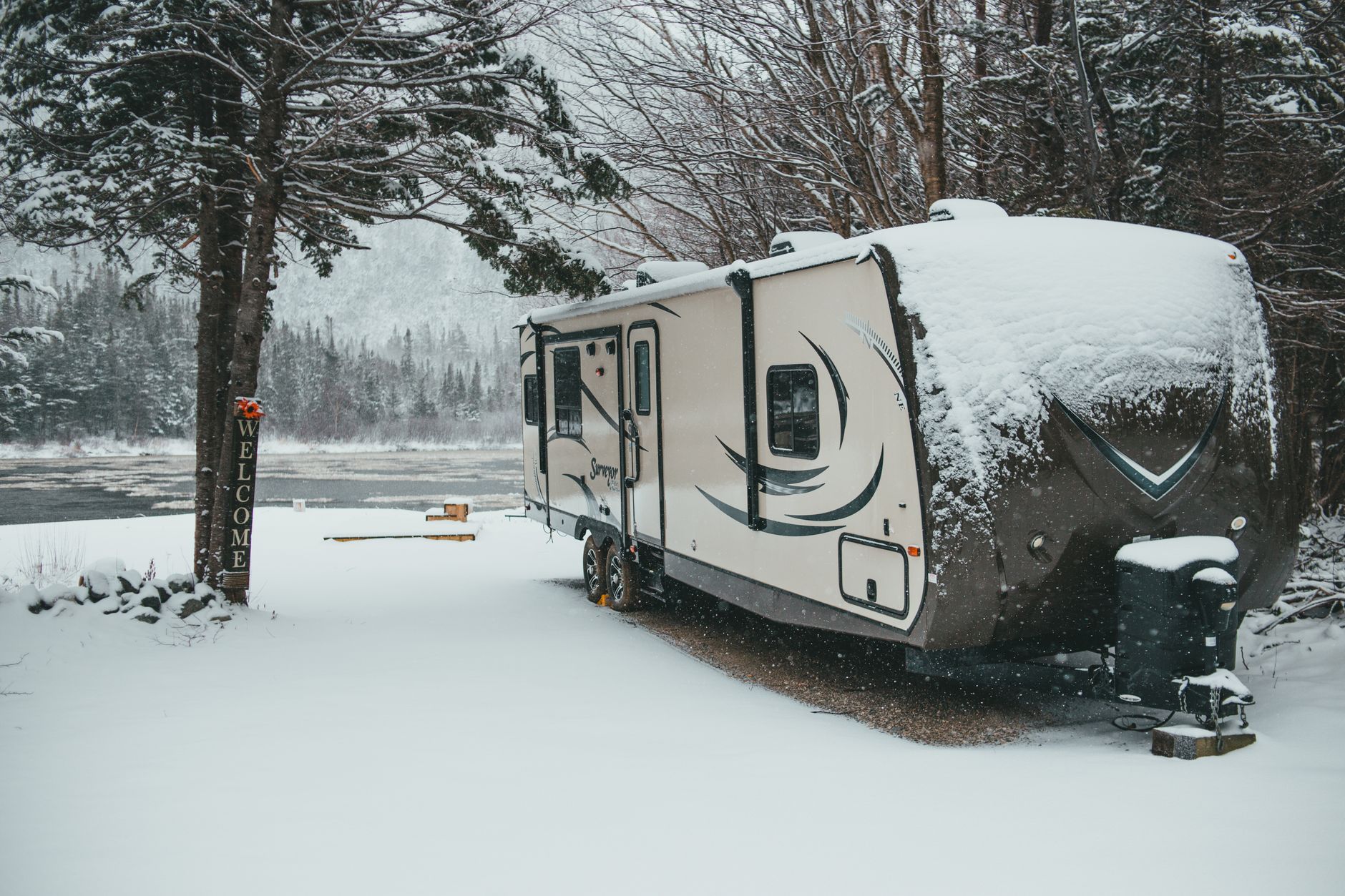


Keeping an RV plumbing system healthy is less about one big annual project and more about following a reliable routine. In this rv plumbing maintenance winterization guide, we’ve organised the essential tasks into a practical schedule you can actually follow, from sanitizing fresh-water lines to protecting the system before freezing weather hits.
A well-maintained plumbing setup helps you avoid bad-tasting water, pump strain, hidden leaks, cracked fittings, and expensive off-season repairs. Whether you camp every weekend or store your rig for months at a time, the goal is the same: clean water in, wastewater out, and no surprises in between.
Maintenance Schedule

| Interval | Task | What to Check | Est. Time |
|---|---|---|---|
| Daily | Monitor for active leaks | Under sinks, around toilet base, at city water inlet, near pump | 5 min |
| Daily | Check tank levels and pump behaviour | Unusual pump cycling, overfilled grey/black tanks, sensor accuracy | 5 min |
| Weekly | Inspect hoses and connections | Fresh-water hose ends, pressure regulator, washers, quick-connects | 10 min |
| Weekly | Rinse sink/shower drains | Slow drainage, odours, hair or debris buildup | 10 min |
| Weekly | Verify dump valve operation | Smooth pull, seepage, cap drips | 10 min |
| Monthly | Sanitize high-touch plumbing fixtures | Faucet aerators, showerhead, sprayer nozzles | 20 min |
| Monthly | Check water pump and strainer | Debris in strainer bowl, vibration, loose fittings, noise changes | 20 min |
| Monthly | Inspect visible plumbing lines | PEX runs, elbows, clamps, low-point drains, signs of chafing | 20–30 min |
| Monthly | Check toilet seal and operation | Blade seal moisture, bowl holding water, pedal action | 10 min |
| Annually | Sanitize fresh-water system | Fresh tank, lines, faucets, outdoor shower, icemaker line if equipped | 2–4 hrs |
| Annually | Flush water heater | Sediment, anode rod wear, drain plug condition, bypass valves | 30–60 min |
| Annually | Deep-clean holding tanks | Sensor fouling, valve performance, persistent odours | 45–90 min |
| Annually | Pressure-check for leaks | City water connection, regulator setting, hidden drips | 30 min |
| Annually | Winterize entire system | Drain lines, bypass heater, antifreeze distribution, traps | 1–3 hrs |
| As-needed | Descale fixtures | White crust, reduced flow, uneven spray | 15–30 min |
| As-needed | Replace worn washers and seals | Drips, seepage, cracked rubber, loose caps | 10–30 min |
| As-needed | Troubleshoot odours | Stagnant water, dry P-traps, venting issues, tank residue | 20–60 min |
| As-needed | Dewinterize and flush | Antifreeze taste/colour, valve reset, heater refill | 1–2 hrs |
Why Regular Maintenance Matters
RV plumbing systems work hard in a compact space. Unlike residential plumbing, they deal with vibration, temperature swings, long storage periods, and lightweight plastic fittings that can loosen over time. When upkeep gets skipped, small issues tend to become expensive ones.
Neglect can lead to:
- Contaminated fresh-water lines and foul odours
- Mineral buildup in faucets, showerheads, and water heaters
- Premature water pump wear from running dry or cycling too often
- Hidden leaks that damage flooring, cabinetry, and insulation
- Sticking dump valves and inaccurate tank sensor readings
- Frozen lines, cracked fittings, and split water heater tanks in winter
The return on regular maintenance is straightforward. A few minutes spent checking hose washers, sanitizing the fresh tank, flushing the water heater, or winterizing properly can save hundreds or even thousands in repair costs. We researched common RV plumbing failures, and many of them trace back to preventable issues: old seals, missed drain-downs, mineral scale, and unnoticed leaks.
In short, regular upkeep improves:
- Water quality
- System reliability
- Component lifespan
- Cold-weather protection
- Resale confidence
Tools & Supplies You'll Need

- Camco TastePURE drinking water hose, 5/8-inch NSF-certified
- Renator M11-0660R RV water pressure regulator with gauge, lead-free brass
- Camco RV/Marine water heater cleaning wand
- Suburban-compatible magnesium anode rod or the correct drain plug for your heater model
- Thetford Fresh Water Tank Sanitizer or unscented household bleach
- RV/Marine non-toxic antifreeze, rated to -50°F burst protection
- Flojet or Camco RV antifreeze hand pump kit for winterizing
- Replacement hose washers, 3/4-inch garden hose rubber washers
- Adjustable pliers and a 1-1/16-inch socket for many anode rod fittings
- Clear elbow sewer fitting for tank rinsing observation
- Dedicated tank rinser hose, separate from drinking-water hose
- White vinegar or a manufacturer-approved descaler for aerators and showerheads
- PTFE thread seal tape for approved threaded fittings
- Flashlight or headlamp for cabinet and underbelly inspections
- Microfiber towels or paper towels for leak detection
- Nitrile gloves and eye protection ⚠️ when handling chemicals or opening pressurized components
Detailed Step-by-Step Instructions
Fresh-Water System Sanitizing
- Turn off the water heater and let it cool completely.
- Disconnect any external water source and switch off the water pump.
- Drain the fresh-water tank if old water has been sitting for an extended period.
- Mix a sanitizing solution according to your RV manufacturer’s guidance or the sanitizer label. If using bleach, confirm the correct dilution for your tank size.
- Add the solution to the fresh-water tank through a clean fill method.
- Fill the tank with potable water.
- Turn on the pump and open each cold-water faucet one at a time until you smell sanitizer, then close it.
- Repeat at each hot-water faucet, the shower, outdoor shower, toilet sprayer, and any appliance-fed water line.
- Let the solution sit in the system for the recommended contact time.
- Drain the system fully.
- Refill with fresh potable water and flush every fixture until odour and taste return to normal.
- Repeat the flush if any sanitizer smell remains stronger than expected.
⚠️ Never mix bleach with other cleaning chemicals.
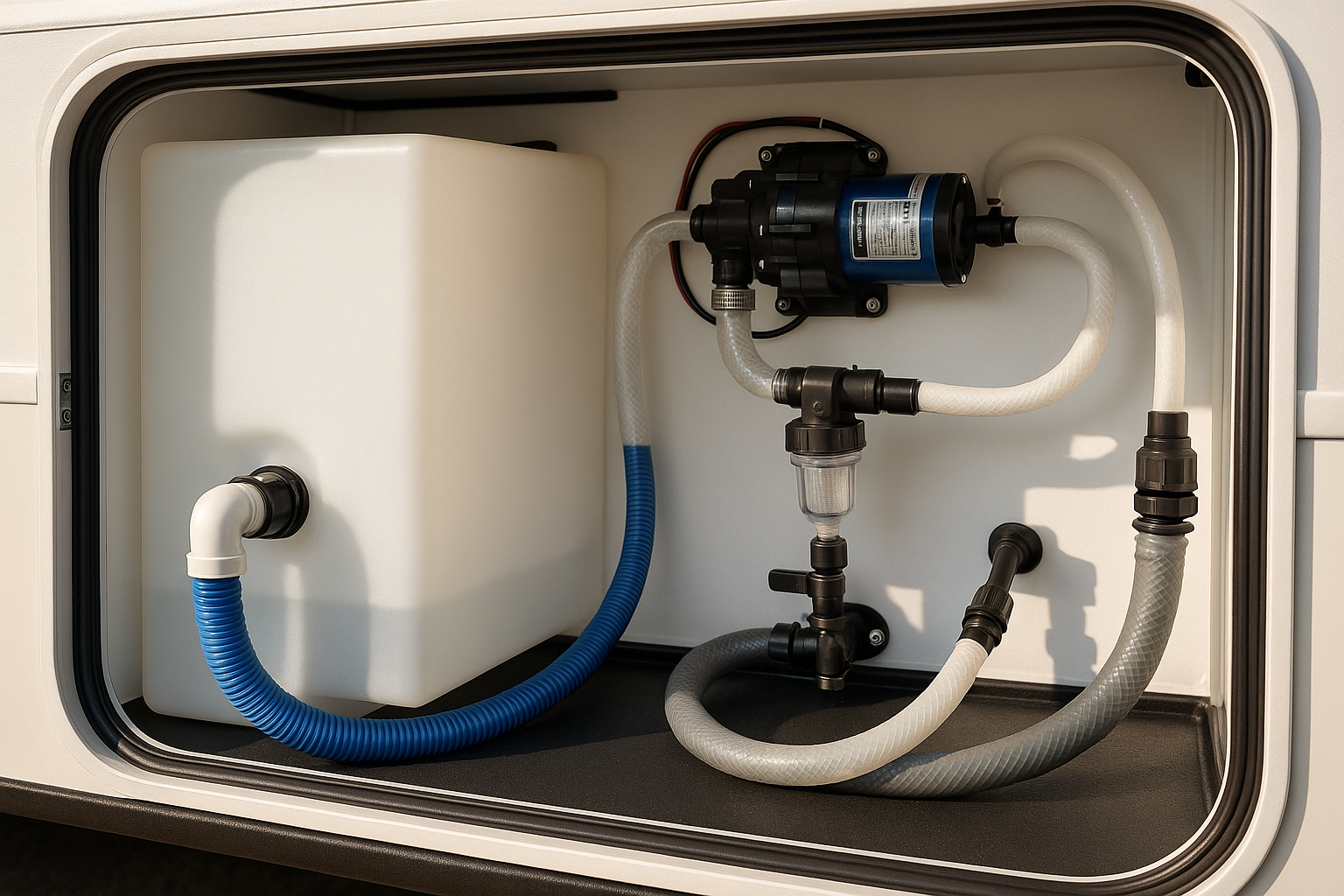
Water Pump Inspection and Care
- Turn off power to the pump.
- Locate the pump and inspect the surrounding area for moisture, staining, or vibration wear.
- Check inlet and outlet fittings for looseness.
- Unscrew the pump strainer bowl and inspect for debris.
- Rinse the strainer screen with clean water and reinstall it carefully to avoid cross-threading.
- Restore power and run the pump.
- Listen for rapid cycling, sputtering, or excessive vibration.
- If the pump runs when no faucet is open, inspect for leaks or a pressure-side issue.
- Confirm the pump shuts off properly after pressure builds.
- Tighten mounting hardware only as needed; overtightening can increase noise transfer.
Water Heater Flushing and Inspection
- Shut off propane and electric heating modes.
- Allow the water heater to cool completely. ⚠️ Hot water heaters can release scalding water under pressure.
- Turn off the pump and disconnect city water.
- Open a hot-water faucet to relieve pressure.
- Remove the drain plug or anode rod slowly.
- Let the tank drain fully.
- Use a water heater cleaning wand to flush sediment from the tank until water runs clear.
- Inspect the anode rod if your model uses one. Replace it if it is heavily consumed.
- Check the drain opening threads and sealing surfaces.
- Reinstall the correct replacement rod or plug.
- Return bypass valves to normal operating position if they were changed.
- Refill the heater before restoring electric mode. ⚠️ Never energize an empty water heater tank.
Faucet, Showerhead, and Fixture Maintenance
- Unscrew faucet aerators and showerheads where accessible.
- Check for mineral scale, grit, and reduced-flow debris.
- Soak components in white vinegar or an approved descaling solution.
- Brush gently with a soft toothbrush if needed.
- Rinse thoroughly and reinstall.
- Turn on water and confirm even flow.
- Inspect around fixture bases for seepage or soft sealant.
- Replace worn washers or O-rings if dripping continues.
Holding Tank and Drain System Maintenance
- Empty black tank first, then grey tank, following your standard dump procedure.
- Use a clear elbow fitting to observe rinse clarity.
- Rinse the black tank thoroughly using the built-in flush or an approved rinser.
- Flush the grey tank to help clear the sewer hose.
- Check dump valve pull handles for smooth travel.
- Inspect for drips at the termination cap after valves are closed.
- Add the recommended amount of water back into the black tank after dumping.
- Use tank treatment only as directed by the manufacturer.
- If sensors read inaccurately, perform a deeper tank cleaning cycle.
- Keep P-traps wet, especially during storage, to reduce odours entering the coach.
Leak Checks and Line Inspection
- Pressurize the system using either the pump or regulated city water.
- Turn off all fixtures and listen for pump cycling.
- Inspect under sinks, behind access panels, near the water heater, and around the toilet.
- Run a dry paper towel around fittings to reveal slow drips.
- Check low-point drains and caps for seepage.
- Inspect visible PEX lines for rubbing, kinks, or discoloration.
- Examine the city water inlet and check valve area.
- Confirm the toilet base is dry and stable.
- Repair small issues immediately before they damage surrounding materials.
RV Plumbing Winterization
- Turn off the water heater and let it cool.
- Disconnect city water and switch off the pump.
- Drain the fresh-water tank.
- Open low-point drains and all faucets to remove as much water as possible.
- Drain the water heater completely.
- Set the water heater bypass valves to bypass mode.
- If equipped, use compressed air only within your RV manufacturer’s pressure limits. ⚠️ Excessive air pressure can damage lines and fittings.
- Connect your antifreeze pump kit to the RV’s winterization inlet or pump suction side.
- Pump RV/Marine antifreeze through the system.
- Open each cold-water fixture until pink fluid appears, then close it.
- Repeat for each hot-water fixture.
- Flush the toilet until antifreeze enters the bowl and valve area.
- Run antifreeze through the outdoor shower, washer prep, icemaker line, or other auxiliary plumbing if equipped.
- Pour antifreeze into every drain to protect P-traps.
- Add a small amount to holding tanks as recommended for valve protection.
- Label the system as winterized so no one accidentally energizes or fills components incorrectly.
Dewinterizing in Spring
- Inspect for any visible cracked fittings before introducing water.
- Return all valves to normal operating positions, including the water heater bypass.
- Reinstall drain plugs or anode rods.
- Fill the system with fresh water.
- Flush each fixture until antifreeze colour and taste are gone.
- Refill the water heater fully before turning it on.
- Sanitize the fresh-water system if the RV has been stored for an extended period.
- Check carefully for leaks as pressure returns to the system.
Signs You've Waited Too Long
The Water Pump Cycles When No Fixture Is Open
If the pump turns on periodically by itself, pressure may be bleeding off through a leak, faulty check valve, or loose fitting. This is one of the easiest early warnings to catch.
Water Smells Musty, Sulfur-Like, or Tastes Off
Persistent odours or unpleasant taste often point to a fresh-water system overdue for sanitizing, stagnant tank water, or contamination in hoses and fixtures.
Hot Water Flow Has Dropped Noticeably
Reduced hot-water performance can signal sediment buildup in the water heater, scale in the showerhead, or restrictions in hot-side plumbing.
There Are Drips Under Cabinets or Near the Water Heater
Slow leaks often start as occasional drips around threaded fittings, pump connections, toilet supply lines, or heater drain fittings. Left alone, they can damage subfloors and wall panels.
Tank Sensors Read Full After Dumping
False readings usually mean residue has built up on sensor surfaces inside the holding tanks. That often indicates the tanks need a more thorough rinse and cleaning routine.
Dump Valves Feel Stiff or Seep at the Cap
A sticky valve or liquid behind the termination cap suggests residue buildup, valve wear, or incomplete closure. Address it before storage or freezing conditions.
You See White Mineral Crust on Fixtures
Visible scale around aerators, showerheads, and connections means hard-water deposits are accumulating. If ignored, flow rate and sealing performance can suffer.
The RV Was Exposed to Freezing Weather Without Winterization
This is the biggest red flag of all. Even if everything seems normal initially, cracked fittings and split lines may not reveal themselves until the system is pressurized again.
Frequently Asked Questions
How often should we sanitize an RV fresh-water system?
We recommend doing a full sanitizing at least annually, and also as-needed after long storage, after buying a used RV, or whenever water develops an odour or taste issue.
Do we need RV antifreeze if we blow out the lines with air?
In many setups, yes. We researched manufacturer guidance across common RV plumbing systems, and the safest approach is often a combination of proper draining plus antifreeze in traps and vulnerable sections. Always follow your RV maker’s instructions.
Can we use automotive antifreeze in RV plumbing?
No. Only use RV/Marine non-toxic antifreeze designed for potable-water-adjacent plumbing systems. Automotive antifreeze is not appropriate for this use.
How do we know if the water heater is full before turning it on?
Open a hot-water faucet after restoring water supply. When water flows steadily without sputtering, the heater tank is generally full. Confirm your bypass valves are back in normal position first.
Why does the pump keep running after we close the faucet?
That can indicate air in the line, a leak, a clogged strainer, or a pump pressure issue. Start by checking for visible leaks and cleaning the strainer.
What is the most important part of RV plumbing winterization?
Complete water removal from vulnerable components and proper antifreeze placement are both critical. In practical terms, the water heater, low-point drains, fixtures, toilet valve, and P-traps are the areas we recommend paying closest attention to.
Should we leave water in the fresh tank during storage?
For long-term storage, we generally recommend draining it rather than leaving water sitting in the system, unless your manufacturer specifies otherwise for a particular use case.
What pressure regulator setting is best for RV plumbing?
Many RV owners aim for a moderate, controlled range rather than maximum flow. The correct setting depends on your RV manufacturer’s limits and plumbing design, so check your owner’s manual and regulator instructions before adjusting.
Staying ahead of RV plumbing care does not require a complicated workshop routine. It just takes consistency. Follow the schedule, keep the right supplies on hand, and treat sanitizing and winter prep as non-negotiable annual tasks. That approach gives you cleaner water, fewer leaks, and a much better chance of avoiding the kind of plumbing repair that can derail a trip before it starts.
Get your free Get Our Free Full-Timer's Gear Guide
The no-fluff gear list trusted by full-time RVers — tested in real conditions across North America.
Recommended Products