How to Upgrade Every RV Light to LED: Complete DIY Guide

Alana Azzouz is a Senior Editor at Searchshop Media Network with over a decade of experience in consumer content quality and editorial standards. She has reviewed thousands of product guides, buying articles, and comp…
✎ Reviewed by Alana Azzouz — Senior Editor
Why trust us
RVGearInsider articles are researched by the Searchshop Editorial team using manufacturer specs, independent expert sources, and owner feedback. Our goal is simple: when an RVer searches for gear, the recommendations they read online should match what a knowledgeable dealer or experienced owner would actually suggest. We may earn a commission on qualifying affiliate purchases; it doesn't influence what we recommend — if a product changes or a better option comes along, the article changes too.
How to Upgrade Every RV Light to LED: Complete DIY Guide
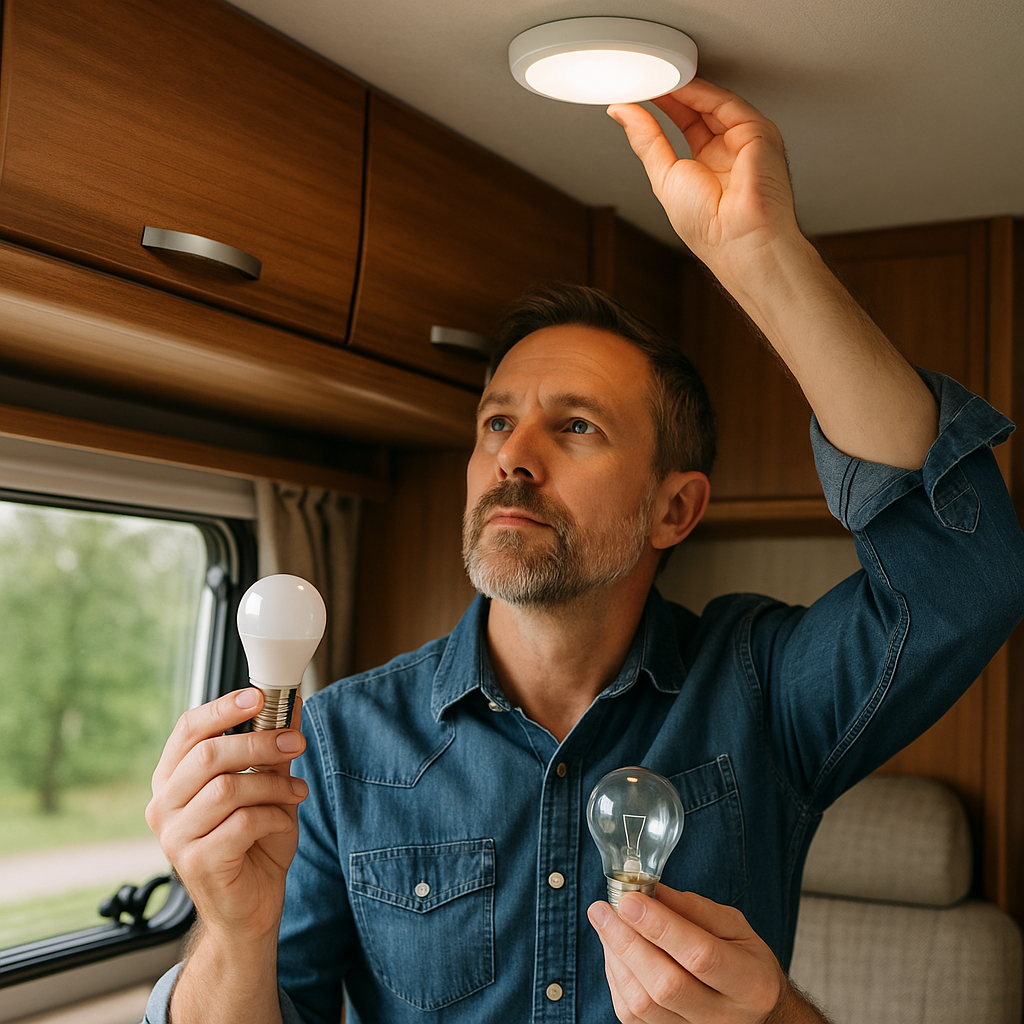
If we want to learn how to upgrade RV lights to LED, the good news is that most conversions are simple, affordable, and well within DIY territory. Swapping incandescent or halogen RV bulbs for LEDs reduces power draw, lowers heat output, extends bulb life, and can noticeably improve interior and exterior lighting. In this guide, we’ll walk through every major RV light type, how to identify the correct replacement, and how to install LEDs safely without damaging fixtures or dealing with flicker, polarity, or compatibility issues.
Quick Comparison Table: Best LED Upgrade Options by RV Light Type

Even in a how-to guide, it helps to compare the most common upgrade paths before we buy.
| RV Light Type | Typical Old Bulb | Best LED Upgrade | Difficulty | Best For |
|---|---|---|---|---|
| Ceiling dome light | 921/912 wedge | Plug-in wedge LED bulb or full LED fixture | Easy | Fast interior upgrades |
| Reading light | G4 bi-pin or small halogen | G4 LED disc or new LED reading fixture | Easy-Medium | Lower heat near beds and sofas |
| Bathroom/vanity light | Festoon or wedge | Warm white festoon LED | Easy | Softer indoor lighting |
| Porch light | Incandescent bayonet or wedge | LED bulb or sealed LED porch fixture | Easy-Medium | Better outdoor visibility |
| Marker/clearance light | Small incandescent bulb | Full sealed LED marker light | Medium | Weather resistance and longevity |
| Tail/brake light | 1156/1157 style | LED replacement bulb or LED assembly | Medium | Better visibility and lower draw |
| Cargo/storage light | Wedge or festoon | Bright neutral-white LED replacement | Easy | Utility lighting |
Why Upgrade RV Lights to LED?
Before we start pulling lenses and swapping bulbs, it helps to know why this upgrade is one of the best value projects for any RV.
Key benefits of LED RV lighting
- Lower power consumption: LEDs use far less 12V battery power than incandescent bulbs.
- Less heat: Old bulbs get hot fast, especially in enclosed fixtures.
- Longer lifespan: Quality LEDs can last for years of regular camping use.
- Brighter, cleaner light: We can choose warm, neutral, or cool color temperatures.
- Better off-grid efficiency: Less draw means more battery runtime when boondocking.
- Reduced maintenance: Fewer bulb failures on the road.
What We Need Before Starting

A successful LED conversion starts with identifying what’s already in the RV.
Tools and supplies
- Flathead screwdriver or plastic trim tool
- Phillips screwdriver
- Needle-nose pliers
- Voltage tester or multimeter
- Replacement LED bulbs or fixtures
- Dielectric grease (optional)
- Rubbing alcohol and cloth for cleaning contacts
- Step stool or ladder for ceiling fixtures
Safety basics
Before working on any fixture, we should:
- Turn off the RV’s light switch for that circuit.
- Disconnect shore power if needed.
- Turn off the 12V battery disconnect, or remove the fuse for the lighting circuit when possible.
- Let hot incandescent bulbs cool completely.
Identify Every RV Light Type First
Not all RV lights use the same bulb base or fixture design. The easiest way to avoid ordering the wrong LEDs is to inspect each light before buying replacements.
Common RV interior bulb types
- 921 / 912 wedge bulbs: Very common in ceiling dome lights
- T10 wedge bulbs: Used in many utility and accent fixtures
- BA15S / 1141 / 1156 bayonet bulbs: Common in older RV fixtures
- G4 bi-pin bulbs: Often found in puck lights or reading lights
- Festoon bulbs: Used in vanity, cargo, or some dome fixtures
Common RV exterior light types
- Porch lights
- Marker and clearance lights
- Tail, brake, and turn lights
- License plate lights
- Storage compartment lights
- Step lights and scare lights
Fixture replacement vs bulb replacement
In many RVs, we can simply replace the bulb with an LED equivalent. In others, it makes more sense to replace the entire fixture, especially if:
- The fixture is cracked or yellowed
- The contacts are corroded
- We want a slimmer, brighter modern light
- The old fixture uses inefficient or hard-to-find bulbs
How to Choose the Right RV LED Bulbs
Not all LEDs are equal. We should match more than just the bulb base.
1. Match the bulb base exactly
Look at the old bulb number printed on the base or glass. If there’s no marking, remove it and compare the shape:
- Wedge: Pushes straight in
- Bayonet: Push and twist
- Bi-pin: Two small pins insert into socket holes
- Festoon: Tube-shaped with pointed ends
2. Choose the right voltage
Most RV interior lighting runs on 12V DC. We should buy LEDs specifically rated for RV or marine 12V systems, since RV voltage can fluctuate.
3. Pick a color temperature
- Warm white (2700K–3200K): Cozy, similar to incandescent
- Neutral white (3500K–4500K): Balanced and clean
- Cool white (5000K–6500K): Bright, crisp, more clinical
For most RV interiors, we usually prefer warm white or neutral white.
4. Check brightness
Brightness is measured in lumens. If we want similar output to the old bulb, compare lumen ratings rather than wattage.
5. Verify bulb size and clearance
Some LED replacements are wider than the original bulb. Tight dome housings, puck lights, and decorative fixtures may need compact LEDs.
Pros and Cons of Upgrading RV Lights to LED
Pros
- Major battery savings
- Cooler operation
- Longer bulb life
- Better light quality options
- Less generator use when dry camping
- Reduced fixture discoloration from heat
Cons
- Cheap LEDs can flicker or fail early
- Some bulbs are polarity-sensitive
- Not every fixture has room for larger LED boards
- Exterior lights may require full fixture replacement for best sealing
- Upfront cost is higher than incandescent bulbs
Who This Upgrade Is For
This project is a great fit for:
- Boondockers who want to stretch battery power
- Weekend campers tired of replacing hot, fragile bulbs
- Full-timers looking for lower maintenance and better lighting
- Older RV owners modernizing dated fixtures
- DIY beginners who want an easy, high-impact project
If our RV has brittle wiring, water-damaged fixtures, or electrical issues beyond simple bulb replacement, we may want to inspect the system more thoroughly before proceeding.
Step-by-Step: How to Upgrade Every RV Light to LED
Now let’s walk through the process.
1. Make a lighting inventory
Start by going through the entire RV and listing every light fixture:
- Living area ceiling lights
- Kitchen lights
- Bathroom and vanity lights
- Bedroom reading lights
- Hallway lights
- Porch light
- Storage bay lights
- Marker lights
- Tail and brake lights
For each one, note:
- Fixture location
- Bulb type
- Number of bulbs
- Lens size or fixture style
- Whether we want a bulb-only swap or full fixture replacement
This prevents ordering mistakes and helps us buy in batches.
2. Remove one bulb from each fixture type
We don’t need to remove every bulb right away. Just pull one sample from each style of fixture and identify it. Check for printed numbers like:
- 921
- 912
- 1141
- 1156
- G4
- 578 festoon
Take photos of the bulb and socket for reference before ordering.
3. Order quality RV-rated LEDs
Choose LEDs made for 12V RV or marine use. We recommend avoiding the cheapest no-name packs, especially for exterior lights and frequently used interior fixtures. Better LEDs usually have:
- Voltage regulation
- Better heat management
- More consistent color
- Longer lifespan
For the living area and bedroom, warm white usually feels best. For task areas like the kitchen or storage bays, neutral white often works better.
4. Test one bulb before replacing everything
Once the LEDs arrive, install one in a fixture and test it before opening all packages. This lets us confirm:
- Correct fit
- Desired brightness
- Preferred color temperature
- Proper beam spread
- No flicker or buzzing
If we don’t like the result, we can return or exchange before converting the whole RV.
5. Replace interior wedge and bayonet bulbs
For standard ceiling and utility lights:
- Remove the lens cover carefully.
- Pull out the old wedge bulb or twist out the bayonet bulb.
- Clean the socket if dusty or corroded.
- Insert the new LED bulb.
- Turn the power back on and test it.
- If it doesn’t light, remove it, rotate if applicable, or reinsert to correct polarity.
- Reinstall the lens.
Many wedge-style LEDs are polarity-sensitive, so if one doesn’t turn on, it may simply need to be flipped.
6. Replace G4 and puck light bulbs carefully
G4 bi-pin bulbs are common in reading lights and puck fixtures. These sockets can be delicate.
- Remove the lens or trim ring.
- Pull the old bulb straight out without bending the pins.
- Insert the LED G4 replacement gently.
- Test before reassembling.
If there’s very little room behind the lens, we may need a shorter LED capsule or disc-style replacement.
7. Swap festoon bulbs in vanity and accent lights
Festoon bulbs sit between two spring contacts.
- Pry the lens off gently.
- Compress one side of the bulb and remove it.
- Match the festoon length exactly.
- Install the LED festoon and test it.
Be sure the new bulb isn’t too wide for the lens housing.
8. Upgrade exterior porch and utility lights
Exterior lights deserve extra attention because of moisture exposure.
For a simple bulb swap:
- Remove the fixture lens.
- Replace the incandescent bulb with the correct LED.
- Inspect the gasket and housing for cracks.
- Reassemble tightly.
For a full fixture replacement:
- Remove mounting screws.
- Pull the fixture away carefully.
- Disconnect the positive and negative wires.
- Connect the new LED fixture using crimp connectors or wire nuts rated for automotive use.
- Seal the mounting surface if needed.
- Screw the new fixture in place and test.
9. Replace marker, clearance, and tail lights if needed
For exterior running and safety lights, full LED assemblies are often the best option because they’re better sealed than old incandescent housings.
- Remove the old lens or fixture.
- Note wire colors and polarity.
- Disconnect the old light.
- Connect the new LED assembly.
- Test running, brake, and turn functions as applicable.
- Seal screw holes and edges if required.
If we use LED replacement bulbs in existing housings, we should ensure the reflector and lens still distribute light properly.
10. Check for polarity, dimming, and flicker issues
After installation, test every light with battery power and shore power if possible. If an LED doesn’t work:
- Flip the bulb if it’s polarity-sensitive
- Check for loose contacts
- Confirm the socket has 12V power
- Inspect for corrosion
- Verify the bulb base is correct
If an LED flickers, the issue is often poor bulb quality, a weak socket connection, or voltage irregularity.
11. Replace entire fixtures where it makes sense
Sometimes the smartest move is not a bulb swap but a fixture upgrade. Thin LED ceiling fixtures can provide more even light, lower profile styling, and fewer future maintenance issues.
This is especially worthwhile when:
- The old fixture is discolored
- The switch is failing
- The lens is brittle
- The light output is poor even with LEDs
12. Keep a small spare kit on board
Once the conversion is done, we should keep a few spare LEDs in the RV:
- 1-2 common interior bulbs
- 1 porch or utility bulb
- 1 marker light or assembly if traveling long-term
- A fuse assortment
This makes roadside or campground repairs much easier.
Common Mistakes to Avoid
Buying household LEDs instead of RV-rated 12V LEDs
Household bulbs designed for 120V fixtures won’t work in standard 12V RV sockets unless the fixture itself is on an inverter or AC circuit.
Mixing color temperatures randomly
A warm bedroom light next to a cool kitchen light can feel uneven. We usually get the best result by choosing a consistent lighting plan.
Ignoring fixture heat and size limits
Even though LEDs run cooler, some poorly designed bulbs still trap heat in enclosed fixtures. Always check fit and ventilation.
Reusing damaged exterior housings
If the lens seal is cracked, moisture can still ruin the new LED. In these cases, replacing the full fixture is the better long-term fix.
Final Thoughts
Learning how to upgrade RV lights to LED is one of the easiest ways to improve comfort, efficiency, and reliability in any rig. Most interior bulbs can be swapped in minutes, while exterior fixture upgrades take only a bit more time and care. If we identify bulb bases correctly, choose quality 12V RV-rated LEDs, and test each fixture as we go, we can complete a full lighting conversion with minimal tools and a big payoff in battery savings and usability.
FAQ
1. Can we replace RV incandescent bulbs with LED bulbs directly?
Yes, in many cases we can do a direct bulb swap as long as the LED matches the original bulb base, fits the fixture, and is rated for 12V RV use.
2. Why does my new RV LED bulb not turn on?
Many RV LEDs are polarity-sensitive. We should remove the bulb, rotate or flip it if possible, and reinstall it. If that doesn’t work, check the socket for corrosion or loss of power.
3. What color LED is best for RV interiors?
For most RVs, warm white or neutral white works best. Warm white feels more comfortable in living and sleeping areas, while neutral white is great for kitchens and storage compartments.
4. Is it better to replace the bulb or the whole RV light fixture?
If the fixture is in good shape, a bulb swap is usually enough. If the housing is cracked, dim, corroded, or outdated, replacing the full fixture is often the better upgrade.
5. Do LED RV lights save enough battery power to matter?
Absolutely. LEDs use significantly less power than incandescent bulbs, which can make a noticeable difference in battery life, especially for boondocking or dry camping.
Get your free Get Our Free Full-Timer's Gear Guide
The no-fluff gear list trusted by full-time RVers — tested in real conditions across North America.