Best LED Strip Lights for RV Interiors and Accent Lighting (2026)

Alana Azzouz is a Senior Editor at Searchshop Media Network with over a decade of experience in consumer content quality and editorial standards. She has reviewed thousands of product guides, buying articles, and comp…
✎ Reviewed by Alana Azzouz — Senior Editor
Why trust us
RVGearInsider articles are researched by the Searchshop Editorial team using manufacturer specs, independent expert sources, and owner feedback. Our goal is simple: when an RVer searches for gear, the recommendations they read online should match what a knowledgeable dealer or experienced owner would actually suggest. We may earn a commission on qualifying affiliate purchases; it doesn't influence what we recommend — if a product changes or a better option comes along, the article changes too.
How We Evaluated
We researched the top options, comparing them across key factors including performance, value, ease of use, and reliability. Our recommendations are based on editorial evaluation of verified specifications, owner-reported real-world performance, and domain expertise.
Best LED Strip Lights for RV Interiors and Accent Lighting
If we’re shopping for the best RV LED strip lights, we want more than just pretty color effects. In an RV, strip lighting has to handle vibration, limited power, compact spaces, and the occasional temperature swing. The right setup can brighten a dim galley, add soft bedroom lighting, improve nighttime visibility, and create a cleaner, more modern look without draining the battery bank.
In this guide, we’ll break down what matters most when choosing RV LED strip lights, compare the top types and use cases, and help you match the right option to your camper, travel trailer, fifth wheel, or motorhome.
Quick Comparison Table: Best RV LED Strip Lights

| Product Type | Best For | Power Type | Color Options | Water Resistance | Main Advantage | Main Drawback |
|---|---|---|---|---|---|---|
| 12V Warm White LED Strip Kit | Under-cabinet and task lighting | Direct 12V DC | Single color | Optional, varies by kit | Simple RV-ready wiring | No color-changing effects |
| 12V Dimmable High-CRI Strip | Interior living spaces | Direct 12V DC | Warm or neutral white | Usually indoor rated | Better color quality inside RV | Costs more than basic strips |
| RGB 12V LED Strip Kit with Remote | Accent lighting and mood lighting | Direct 12V DC or adapter | Multi-color | Varies | Fun and customizable | Color quality often weaker for task lighting |
| RGBIC Smart LED Strip | Premium accent lighting | Usually adapter or 12V-compatible kit | Multi-zone color effects | Usually indoor rated | Dynamic effects and app control | More complex setup |
| Waterproof Silicone-Coated Strip | Entry steps, bath areas, damp zones | Direct 12V DC | White or RGB | IP65 or better | Better protection in moisture-prone spots | Slightly bulkier |
| COB LED Strip Light | Seamless light lines and premium look | Direct 12V DC | Usually single color | Varies | No dotted LED appearance | Can be pricier |
Why LED Strip Lights Make Sense in an RV
LED strip lights are one of the easiest upgrades we can make inside an RV. They’re lightweight, low-profile, efficient, and flexible enough to fit in places where standard fixtures don’t work well.
Here’s why they’re such a practical RV lighting upgrade:
- Low power draw: Ideal for boondocking and battery-conscious setups.
- Minimal heat output: Safer and more comfortable than older incandescent options.
- Flexible placement: Great for under cabinets, toe-kicks, slide-outs, bunks, steps, and ceiling accents.
- Improved ambiance: Warm white strips can make an RV feel more residential, while RGB or RGBIC strips add mood lighting.
- Easy installation: Many kits use adhesive backing and simple wiring.
- Custom lengths: Most strips can be trimmed to fit exact spaces.
That said, not every LED strip is RV-friendly. Some cheap kits have weak adhesive, poor color consistency, or controllers that don’t hold up to road vibration.
Our Picks for the Best RV LED Strip Lights

Rather than focus on one specific private-label listing that may disappear next month, we recommend shopping by strip type and RV use case. That’s often the smartest way to buy in this category because many products share similar chips and housings, while the real differences come down to voltage compatibility, adhesive quality, waterproofing, dimming, and controller reliability.
1. Best Overall: 12V Warm White LED Strip Kit
For most RV owners, a 12V warm white LED strip kit is the best overall choice. It’s efficient, easy to wire into an RV’s existing 12V system, and useful in almost every interior space.
We like this style for:
- Under-cabinet kitchen lighting
- Dinette accent lighting
- Bedroom headboard glow
- Overhead indirect lighting
- Pantry or closet illumination
Pros
- RV-friendly 12V power without needing an inverter
- Warm white light feels comfortable and residential
- Lower power draw than many puck or dome fixtures
- Easy to dim with an inline dimmer
- Simple to cut and customize
Cons
- No color-changing features
- Quality varies widely between brands
- Some adhesive backings need reinforcement
Who It’s For
This is for RVers who want practical, everyday lighting that looks clean and modern without adding complexity.
2. Best for Premium Interior Light Quality: High-CRI 12V LED Strip
If we care about how our RV interior actually looks at night, a high-CRI LED strip is a major upgrade. CRI, or Color Rendering Index, measures how accurately light reveals colors. Lower-quality LEDs can make wood tones, upholstery, and food look flat or slightly off.
A high-CRI strip is especially useful in:
- Kitchens and food prep areas
- Bathrooms and vanity spaces
- Reading nooks
- Main living areas where we want a more natural look
Pros
- Better-looking interior colors
- More comfortable light for daily use
- Excellent for task lighting
- Usually available in warm white or neutral white
Cons
- More expensive than standard strips
- Fewer flashy features than RGB kits
- Not all listings clearly state true CRI ratings
Who It’s For
This is the best fit for RV owners upgrading an interior for comfort, aesthetics, and livability rather than just decorative color.
3. Best for Mood Lighting: RGB 12V LED Strip Kit with Remote
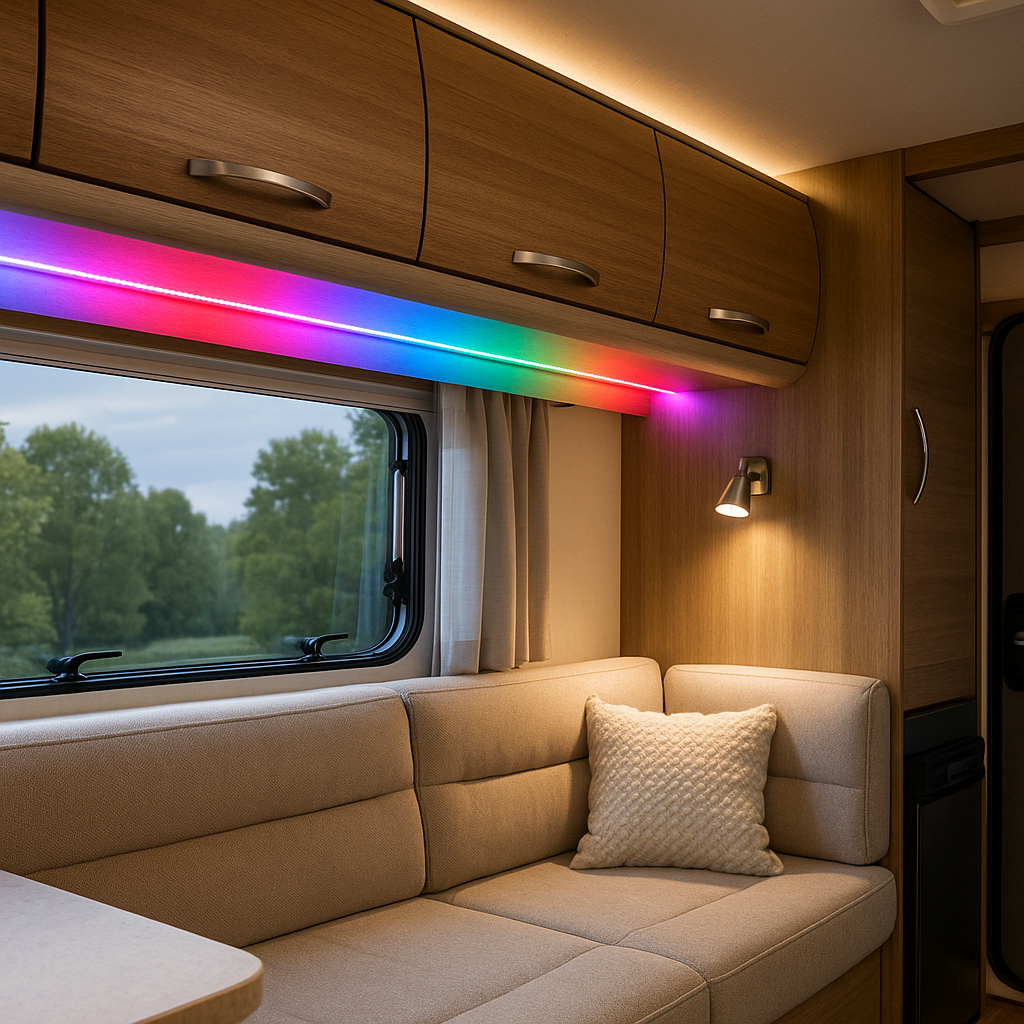
An RGB LED strip kit adds instant personality to an RV. We can mount it under seating, behind a TV, along bed platforms, or around ceiling trim to create a softer, more custom feel.
Many kits include:
- Remote control
- Color presets
- Brightness adjustment
- Flash, fade, or music-reactive modes
For RV use, we prefer simpler RGB kits over overly complicated smart systems if reliability is the top priority.
Pros
- Lots of color choices
- Fun for entertaining or relaxing evenings
- Usually affordable
- Easy to install in accent locations
Cons
- Not ideal as primary task lighting
- Budget controllers can fail early
- Some kits remember settings poorly after power cycles
Who It’s For
This option is ideal for RVers who want decorative lighting, family-friendly fun, or a more personalized interior vibe.
4. Best Smart Option: RGBIC or App-Controlled LED Strip
If we want more advanced effects, RGBIC or app-controlled strip lights can create multiple colors on one strip at the same time. That gives a more upscale look than basic RGB lighting.
These are best used for:
- Entertainment areas
- Ceiling coves
- Bed surrounds
- Lounge-style accent lighting
When shopping, we need to verify whether the kit can run directly on 12V DC or whether it requires a household-style adapter. In many RVs, simpler is better, but premium users may appreciate app scheduling, scenes, and finer brightness control.
Pros
- Advanced color effects
- App control and scene customization
- More premium visual appearance
- Great for modern RV interiors
Cons
- Setup can be more complicated
- Some systems rely heavily on phone apps
- May require extra planning for RV power compatibility
Who It’s For
This is best for tech-friendly RV owners building a more customized interior lighting system.
5. Best for Damp Areas and Entry Use: Waterproof LED Strip
For spots near the RV door, bathroom, or other moisture-prone areas, a waterproof LED strip is the safer pick. These usually have a silicone coating or sealed jacket and are commonly rated IP65 or better.
We like waterproof strips for:
- Entry step illumination
- Bathroom toe-kick lighting
- Exterior-adjacent interior trim
- Storage compartments that may see damp conditions
Pros
- Better resistance to moisture and splashes
- More durable in variable conditions
- Good for step safety lighting
Cons
- Thicker and less flexible than non-coated strips
- Adhesive may be weaker on some sealed models
- Can trap a bit more heat than open indoor strips
Who It’s For
This is the right choice for RVers prioritizing durability and safer lighting in high-traffic or damp areas.
6. Best for a Clean, Continuous Glow: COB LED Strip
COB, or chip-on-board, LED strips create a more uniform line of light with fewer visible “dots.” If we want a polished, built-in look, this style stands out.
They work especially well in:
- Under-cabinet channels
- Bed platform edges
- Ceiling valances
- Hidden indirect lighting reveals
Pros
- Smooth, continuous light appearance
- More premium look than standard strip LEDs
- Great for visible installations
Cons
- May cost more than standard SMD strips
- Not every COB strip is equally efficient
- Fewer ultra-budget options
Who It’s For
This is for RV owners who care about design details and want accent lighting that looks integrated instead of obviously aftermarket.
What to Look for When Buying RV LED Strip Lights
Choosing the best rv led strip lights comes down to a few RV-specific details.
1. 12V DC Compatibility
This is the first thing we check. Many LED strips sold online are designed for home use with a wall adapter. For RV interiors, direct 12V DC compatibility is usually the easiest and most efficient route.
If a kit includes a 120V adapter, we need to confirm whether the strip itself is actually 12V and can be wired directly, or whether the controller depends on the adapter setup.
2. Color Temperature
For white strips, color temperature matters a lot.
- 2700K–3000K: Warm, cozy, residential feel
- 3500K–4000K: Balanced neutral light
- 5000K+: Cool, bright, more clinical look
In most RV interiors, we prefer warm white or soft neutral white over very cool tones.
3. Brightness
Brightness is often listed in lumens per foot, lumens per meter, or by LED density. More isn’t always better.
- For accent lighting, moderate brightness is enough.
- For task lighting, like kitchen counters, we want a stronger output.
- For night lighting, lower output or dimmability is better.
4. Dimming Capability
A dimmable strip is much more versatile in an RV. We can run it bright when cooking and lower it at night to avoid harsh glare in a small space.
5. Adhesive Quality
This is one of the biggest weak points in cheap kits. RV interiors experience heat, cold, vibration, and surface texture changes. We prefer strips with quality adhesive backing, and we often add:
- Mounting clips
- Aluminum channels
- Extra double-sided automotive tape
- Surface prep with isopropyl alcohol
6. Waterproof Rating
For standard dry interior use, indoor-rated strips are usually fine. For entry steps, bath-adjacent areas, or compartment lighting, look for IP65 or better.
7. Controller and Remote Reliability
For RGB or smart strips, the controller is often the failure point. We look for:
- Simple wiring
- Memory retention after power loss
- Reliable remote response
- Stable app support if using smart features
8. Cut Points and Expandability
Most LED strips can be cut at marked intervals, but not all intervals are equal. Tighter cut spacing makes it easier to fit odd RV dimensions cleanly.
Best Places to Install LED Strip Lights in an RV
One reason these lights are so popular is that they solve multiple lighting problems at once.
Under Cabinets
A top pick for kitchen prep lighting and one of the most practical upgrades we can make.
Under Dinette Seating
Adds soft ambient light and helps reduce the dark, boxed-in feel of many RV interiors.
Bedroom Headboard or Bed Base
Great for reading, nighttime visibility, and a more upscale look.
Toe-Kicks and Floor Edges
Helpful as low-level night lighting, especially for families or anyone moving around after dark.
Inside Closets or Pantries
A simple way to make storage areas easier to use.
Around a TV or Entertainment Center
Ideal for reducing eye strain and adding subtle accent lighting.
How We Install RV LED Strip Lights
Installation varies by kit, but the basic process is straightforward.
Numbered Installation Steps
- Measure the installation area so we know the exact strip length needed.
- Choose the power source by identifying a suitable 12V circuit or nearby lighting feed.
- Test the strip before mounting to confirm the lights, controller, and dimmer work properly.
- Clean the mounting surface with isopropyl alcohol and let it dry fully.
- Cut the strip only at marked cut points if shortening is needed.
- Attach connectors or wire leads according to the kit instructions.
- Mount the strip carefully using adhesive backing, clips, or channels.
- Secure loose wiring so vibration won’t wear through insulation over time.
- Connect to power and test again before final trim or concealment.
- Add a dimmer or controller in an accessible spot for easier everyday use.
Common Mistakes to Avoid
Even a simple lighting upgrade can go wrong if we rush it.
Using the Wrong Voltage
A strip that isn’t matched correctly to the RV power system can fail quickly or behave unpredictably.
Relying Only on Weak Adhesive
In an RV, vibration and temperature changes can peel strips loose. Mechanical support helps.
Installing Over Dirty or Textured Surfaces
Poor prep leads to early failure.
Choosing RGB for Task Lighting
Color-changing strips are fun, but they usually aren’t the best choice for food prep or reading.
Ignoring Battery Draw
LED strips are efficient, but long runs still add up. If we boondock often, total amp draw matters.
Our Final Buying Advice
For most shoppers, the best rv led strip lights are 12V warm white or high-CRI white strips used for practical interior lighting, with RGB or RGBIC options added only where accent lighting makes sense. That approach gives us the best mix of efficiency, comfort, and visual appeal.
If we had to narrow it down by priority, here’s the simplest path:
- Choose a 12V warm white strip for general RV interior upgrades.
- Choose a high-CRI strip if light quality matters most.
- Choose an RGB kit for affordable mood lighting.
- Choose RGBIC smart strips for premium effects.
- Choose a waterproof strip for steps or damp areas.
- Choose COB strips for the cleanest finished look.
The best buy is the one that matches how we actually use our RV at night: cooking, reading, relaxing, moving safely, and making a small space feel more comfortable.
FAQ
Are LED strip lights safe to use in an RV?
Yes, as long as we use the correct voltage, make secure connections, and install them away from abrasion or pinched wiring points. LEDs run cool compared with older lighting types, which makes them well suited to RV interiors.
Do RV LED strip lights run on 12V?
Many do, but not all. We always check the specifications carefully. For easiest RV installation, we recommend direct 12V DC strips or kits clearly designed for vehicle or RV use.
What color LED strip is best for RV interiors?
For everyday living, warm white around 2700K to 3000K is usually the most comfortable. Neutral white can work well in kitchens or bathrooms. RGB is best reserved for accent lighting rather than primary illumination.
How long do LED strip lights last in an RV?
A quality strip can last for years, but lifespan depends on heat, voltage stability, controller quality, and installation method. In practice, cheap controllers and poor adhesive fail before the LEDs themselves.
Do I need aluminum channels for RV LED strips?
Not always, but they can improve appearance, help protect the strip, and provide better long-term mounting support. We especially like them for visible installations and premium interior builds.
Get your free Get Our Free Full-Timer's Gear Guide
The no-fluff gear list trusted by full-time RVers — tested in real conditions across North America.