Best RV Porch Light Replacements: Bright and Weatherproof (2026)

Alana Azzouz is a Senior Editor at Searchshop Media Network with over a decade of experience in consumer content quality and editorial standards. She has reviewed thousands of product guides, buying articles, and comp…
✎ Reviewed by Alana Azzouz — Senior Editor
Why trust us
RVGearInsider articles are researched by the Searchshop Editorial team using manufacturer specs, independent expert sources, and owner feedback. Our goal is simple: when an RVer searches for gear, the recommendations they read online should match what a knowledgeable dealer or experienced owner would actually suggest. We may earn a commission on qualifying affiliate purchases; it doesn't influence what we recommend — if a product changes or a better option comes along, the article changes too.
How We Evaluated
We researched the top options, comparing them across key factors including performance, value, ease of use, and reliability. Our recommendations are based on editorial evaluation of verified specifications, owner-reported real-world performance, and domain expertise.
Best RV Porch Light Replacements: Bright and Weatherproof
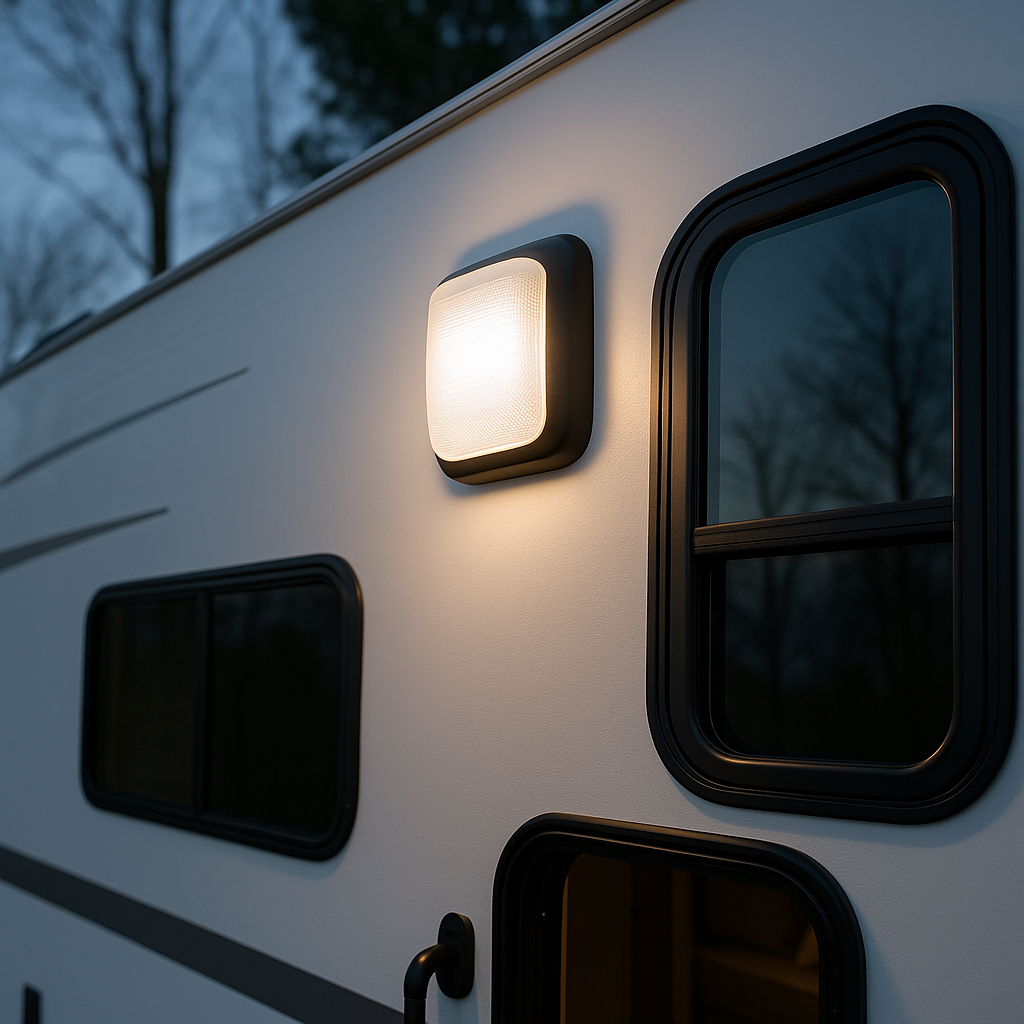
Finding the best RV porch light is one of the easiest ways we can improve campsite safety, visibility, and overall convenience. A good replacement porch light helps us see steps clearly at night, makes entry and exit safer, and stands up to rain, dust, road vibration, and long travel days. Whether we want a simple LED swap, a motion-sensing security light, or a brighter weatherproof fixture for full-time RV use, the right choice can make a noticeable difference.
In this buyer’s guide, we’ll walk through what matters most when shopping for an RV porch light replacement, compare the key features to prioritize, and highlight the types of lights that work best for different RV owners.
Comparison Table: Best RV Porch Light Replacement Features

| Feature | Basic LED Porch Light | Premium LED Porch Light | Motion Sensor RV Light | White/Amber Dual-Mode Light |
|---|---|---|---|---|
| Best For | Budget upgrades | Full-time RVers | Security and convenience | Bug-conscious campers |
| Brightness | 200–300 lumens | 300–600 lumens | 300–700 lumens | 250–450 lumens |
| Power Use | Low | Low | Moderate | Low |
| Weather Resistance | Good | Very good | Good to very good | Very good |
| Built-in Switch | Often | Often | Sometimes | Usually |
| Special Feature | Affordable efficiency | Better materials | Automatic activation | Amber insect-friendly mode |
| Installation Difficulty | Easy | Easy to moderate | Moderate | Easy |
| Typical Value | High | High for heavy use | Best for security | Best for comfort camping |
Why Upgrade Your RV Porch Light?
Factory-installed RV porch lights are often functional, but not always impressive. Many older fixtures use dim incandescent bulbs, brittle plastic housings, or poorly sealed lenses that let in moisture over time. Upgrading gives us several practical advantages:
- Brighter entry lighting for safer nighttime use
- Lower power draw with LED technology
- Better weather resistance for year-round camping
- Improved durability against vibration and road shock
- Optional features like amber bug lights, motion sensors, or dual-mode operation
- A more modern look that updates the RV exterior
If we dry camp often, every amp matters. LED porch lights use much less power than older incandescent fixtures, which helps preserve battery life without sacrificing visibility.
What to Look for in the Best RV Porch Light

Before we buy a replacement, it helps to know which features matter most.
Brightness and Beam Pattern
Brightness is usually measured in lumens. For a typical RV porch area, we usually want enough output to illuminate the door, steps, and a small area around the entry.
General guidelines:
- 150–250 lumens: Soft accent or basic entry lighting
- 250–500 lumens: Ideal for most RV porch applications
- 500+ lumens: Better for larger rigs, toy haulers, or security-focused lighting
Beam spread matters too. A focused beam can create glare and harsh shadows, while a wider flood-style output gives more useful coverage around the steps and patio side of the RV.
LED vs. Incandescent
For most shoppers, LED is the clear winner.
LED advantages:
- Lower power consumption
- Longer lifespan
- Less heat output
- Better vibration resistance
- Brighter light for the same energy use
Incandescent fixtures may appeal if we want a direct OEM-style replacement on an older rig, but in nearly every practical category, LED replacement porch lights perform better.
Weatherproof Construction
An RV porch light lives outside full-time, so weather resistance is non-negotiable. We recommend looking for:
- UV-resistant lens materials
- Sealed or gasketed housings
- Rust-resistant bases such as powder-coated metal or durable polymer
- Water-resistant switches and wiring connections
Even if a fixture is marketed for RV use, build quality can vary a lot. Good sealing helps prevent condensation, corrosion, and early failure.
Power Compatibility
Most RV porch lights run on a 12V DC electrical system, so compatibility is usually straightforward. Still, we should verify:
- Voltage rating matches the RV’s system
- Fixture dimensions fit the existing mounting location
- Wire configuration works with the current setup
- Polarity and switch configuration are compatible
A replacement that looks perfect online can still be frustrating if the screw holes or base size don’t match our existing cutout.
Size and Mounting Footprint
One of the most overlooked buying factors is the fixture footprint. If the new light is smaller than the original, it may expose faded paint, old sealant marks, or screw holes. If it’s larger, it may interfere with trim or door clearance.
We always recommend measuring:
- Overall fixture width and height
- Distance between mounting screws
- Existing wall opening, if any
- Clearance around the door and grab handle
Switch Style and Controls
RV porch lights come in a few common control styles:
- Built-in on/off switch
- Wall-switch controlled only
- Dual-mode white/amber switch
- Motion-sensor activation
A built-in switch is convenient for simple replacements. Motion-sensing lights can add security, but they may not be ideal if we camp in busy parks where frequent movement triggers the light.
Amber Bug Light Option
Many RVers love amber porch lights because they attract fewer insects than cool white lights. If we spend time camping in humid or buggy areas, a dual-color porch light can be a smart upgrade.
Our Top Picks by Category
Rather than focusing on a single one-size-fits-all product, we think it’s more useful to break the market into the types of RV porch lights that consistently perform best.
1. Best Overall: Sealed LED RV Porch Light
A sealed LED porch light is the best all-around choice for most RV owners. These fixtures combine strong brightness, low power draw, and dependable weather resistance in a compact package.
Why we like it
- Reliable 12V performance
- Good balance of brightness and efficiency
- Long-lasting LED boards reduce maintenance
- Better sealing than many factory fixtures
- Usually easy to install in place of older porch lights
Pros
- Excellent all-purpose upgrade
- Low battery drain
- Minimal bulb replacement hassle
- Strong value for frequent campers
Cons
- Light color may be too cool on some models
- Not all sealed units have replaceable LEDs
Who It’s For
This is the best fit for RV owners who want a straightforward, durable upgrade without adding extra complexity.
2. Best for Budget Buyers: Compact LED Utility Porch Light
If we just need to replace a failed porch light with something brighter and more efficient, a compact LED utility-style fixture is often the best value.
Why we like it
- Affordable and easy to find
- Usually lightweight and simple to mount
- Big efficiency improvement over incandescent lights
- Good option for older travel trailers and campers
Pros
- Lower upfront cost
- Easy DIY replacement
- Better brightness than many stock lights
Cons
- May use thinner materials
- Weather sealing can be less robust than premium models
- Styling is often basic
Who It’s For
This option is ideal for occasional campers, older RVs, and anyone who wants a practical replacement without spending much.
3. Best Premium Choice: Heavy-Duty Weatherproof LED Fixture
For full-time RVers or anyone who camps in harsh climates, a premium weatherproof fixture is worth considering. These models usually offer stronger housings, improved gaskets, and more consistent long-term performance.
Why we like it
- Better resistance to rain, UV exposure, and road vibration
- Often brighter and more evenly diffused
- Higher-quality lens and housing materials
- Better finish retention over time
Pros
- Excellent durability
- Great for four-season use
- More polished appearance
- Typically stronger overall construction
Cons
- Higher price
- May require more careful fitting due to larger footprint
Who It’s For
We recommend this type for full-timers, extended travelers, and RVers who want to install a light once and not think about it again for years.
4. Best for Bug Reduction: White/Amber Dual-Mode Porch Light
A dual-mode white/amber porch light is one of the smartest upgrades for warm-weather camping. White light gives us visibility when we need it, while amber mode creates a softer outdoor glow that tends to attract fewer bugs.
Why we like it
- More comfortable evening lighting
- Helpful in mosquito-heavy regions
- Flexible for both task lighting and relaxing outside
- Usually includes a convenient built-in switch
Pros
- Versatile lighting modes
- More campsite-friendly atmosphere
- Reduced insect attraction compared with bright cool white LEDs
Cons
- Usually costs more than a basic single-color fixture
- Amber mode may not be bright enough for all tasks
Who It’s For
This is the best option for RVers who spend evenings outdoors and want a more comfortable patio-side light.
5. Best for Security: Motion-Sensor RV Porch Light
A motion-sensor RV porch light adds convenience and visibility when we return to the rig after dark. It can also help us notice movement around the campsite or storage area.
Why we like it
- Automatic illumination near the door
- Useful for late-night arrivals
- Can improve security awareness
- Helps conserve power by running only when needed
Pros
- Hands-free operation
- Good for families and pet owners
- Adds a security-oriented feature set
Cons
- Sensor performance varies by model
- False triggers can be annoying in crowded campgrounds
- Installation may be slightly more involved
Who It’s For
We suggest this style for RVers who prioritize convenience, security, and hands-free entry lighting.
How to Choose the Right RV Porch Light for Your Rig
Not every “best” option is best for every RV. Here’s how we narrow it down.
For Travel Trailers and Older Campers
A compact LED replacement with a similar footprint to the original fixture is usually the easiest path. We want something that covers old sealant marks and uses the existing 12V wiring.
For Fifth Wheels and Larger Motorhomes
Larger rigs often benefit from brighter fixtures with a wider beam spread. A premium sealed LED light or a larger flood-style porch light can better illuminate taller entry steps and broader patio areas.
For Boondocking and Battery Conservation
Efficiency is the priority. We should focus on low-draw LED fixtures with practical brightness rather than oversized high-output lights that use more power than necessary.
For Wet or Coastal Climates
Weatherproofing matters even more here. Look for corrosion-resistant materials, sealed housings, and strong lens construction to reduce the chance of water intrusion and rust.
For Family Camping
If kids or pets are frequently moving in and out, brighter, wide-angle entry lighting improves safety. Motion-sensor lights can also be useful, especially when hands are full.
Features We Think Matter Most
When evaluating the best RV porch light options, these are the factors we put at the top of the list:
1. Real-World Visibility
The light should clearly illuminate the steps, threshold, and immediate ground near the door. Spec-sheet brightness means less if the beam pattern is harsh or poorly diffused.
2. Durable Housing Materials
Thin plastic can crack from UV exposure and vibration. Better materials hold up longer and keep the light looking good.
3. Moisture Resistance
A porch light that fogs internally or leaks during storms won’t last. Seals, gaskets, and quality lens fitment are worth paying for.
4. Easy Installation
Most RV owners prefer a simple two-wire, surface-mount replacement. The easier the install, the more likely the upgrade goes smoothly.
5. Sensible Power Draw
We love bright lighting, but not at the expense of battery life. Efficient LED output is one of the biggest reasons to upgrade.
Common Mistakes to Avoid
Choosing the wrong porch light can create more work than expected. We recommend avoiding these common mistakes:
- Buying without measuring the existing fixture footprint
- Ignoring whether the light is truly 12V DC compatible
- Choosing maximum brightness without considering glare
- Overlooking weather sealing and UV resistance
- Forgetting to check door clearance and mounting space
- Assuming all LED lights have the same color temperature and beam quality
A very cool white light may feel harsh outside, while a warmer white often creates a more inviting campsite atmosphere.
Basic RV Porch Light Replacement Steps
If we’re swapping a porch light ourselves, the process is usually manageable with basic tools.
How to Replace an RV Porch Light
- Turn off RV power to the porch light circuit or disconnect the battery.
- Remove the old fixture by taking out the mounting screws.
- Carefully pull the fixture away from the wall and expose the wiring.
- Disconnect the old wires, noting positive and negative connections.
- Clean off old sealant and inspect the mounting surface for cracks or water damage.
- Connect the new light’s wires using appropriate connectors.
- Apply fresh RV-safe sealant or butyl tape behind the new fixture if needed.
- Mount the new porch light and tighten screws evenly.
- Restore power and test the switch, brightness, and any extra modes.
- Seal the edges as needed to help prevent water intrusion.
If the new fixture doesn’t sit flat or the screw holes don’t align, it may be worth using a mounting plate designed for RV exterior accessories.
Final Verdict
The best RV porch light for most owners is a sealed LED replacement fixture that balances brightness, low power consumption, and dependable weather resistance. It delivers the biggest upgrade over a typical factory light without adding much installation complexity.
If we want maximum durability, a heavy-duty weatherproof LED fixture is the better premium choice. If bugs are a constant annoyance, a white/amber dual-mode light is one of the most worthwhile comfort upgrades we can make. And if convenience or security is the top priority, a motion-sensor RV porch light deserves a close look.
In the end, the right replacement comes down to matching the fixture to how we camp: quick weekend trips, full-time travel, off-grid stays, or family campground use. Once we focus on 12V compatibility, proper fit, weather sealing, and useful brightness, it becomes much easier to choose a porch light that will serve us well for seasons to come.
FAQ
What is the best RV porch light for most campers?
For most RV owners, the best choice is a sealed 12V LED porch light with a wide beam, moderate-to-high brightness, and solid weather resistance. It offers the best mix of efficiency, durability, and easy installation.
Are LED RV porch lights better than incandescent lights?
Yes. LED RV porch lights use less power, last longer, produce less heat, and usually handle road vibration better than incandescent fixtures. For nearly all replacement situations, LED is the better option.
How bright should an RV porch light be?
For most rigs, 250 to 500 lumens is a strong target range. That usually gives us enough light for the steps and entry area without excessive glare.
Do amber RV porch lights really attract fewer bugs?
In many camping situations, yes. Amber lighting generally attracts fewer insects than cool white light, which makes dual-mode white/amber fixtures especially appealing for summer camping.
Can we replace an RV porch light ourselves?
Usually, yes. Most RV porch lights are simple 12V surface-mount fixtures with basic wiring. As long as we verify compatibility, disconnect power, and reseal the mounting area properly, it’s a manageable DIY upgrade for many owners.
Get your free Get Our Free Full-Timer's Gear Guide
The no-fluff gear list trusted by full-time RVers — tested in real conditions across North America.