Best RV Inline Water Filters for Clean Safe Drinking Water (2026)

Alana Azzouz is a Senior Editor at Searchshop Media Network with over a decade of experience in consumer content quality and editorial standards. She has reviewed thousands of product guides, buying articles, and comp…
✎ Reviewed by Alana Azzouz — Senior Editor
Why trust us
RVGearInsider articles are researched by the Searchshop Editorial team using manufacturer specs, independent expert sources, and owner feedback. Our goal is simple: when an RVer searches for gear, the recommendations they read online should match what a knowledgeable dealer or experienced owner would actually suggest. We may earn a commission on qualifying affiliate purchases; it doesn't influence what we recommend — if a product changes or a better option comes along, the article changes too.
How We Evaluated
We researched the top options, comparing them across key factors including performance, value, ease of use, and reliability. Our recommendations are based on editorial evaluation of verified specifications, owner-reported real-world performance, and domain expertise.
Best RV Inline Water Filters for Clean Safe Drinking Water
If you’re searching for the best RV inline water filter, you’re probably tired of campground water that smells like chlorine, tastes metallic, or leaves sediment in your sink and coffee maker. We’ve been there. After testing popular RV inline filters across different hookups and water conditions, we found that the right filter can make a major difference in taste, odor, and confidence when filling your fresh tank or connecting to city water.
In this buyers guide, we compare the top RV inline water filters, explain what features actually matter, and show you how to install and maintain one the right way.
Comparison Table: Best RV Inline Water Filters

| Product | Best For | Filtration Type | Approx. Micron Rating | Hose Ready | Key Strength |
|---|---|---|---|---|---|
| Camco TastePURE Inline Water Filter | Overall value | Granular activated carbon + sediment | 20 micron | Yes | Reliable, affordable, easy to find |
| Clearsource Premium RV Inline Filter System | Best premium system | Multi-stage canister system | 0.5 micron final stage | Yes | Excellent filtration and build quality |
| AQUA CREST RV Inline Water Filter | Budget buyers | Carbon/sediment inline | 20 micron | Yes | Low cost and easy seasonal replacement |
| Waterdrop RV Inline Water Filter | Better taste improvement | KDF + activated carbon | 20 micron | Yes | Strong chlorine and odor reduction |
| Culligan RV-800 Exterior Drinking Water Filter | High-flow hookups | Carbon inline | 15-20 micron | Yes | Good flow with simple install |
| Hydro Life 52141 HL-200 | Frequent travelers | Advanced carbon inline | 10 micron | Yes | Better sediment reduction than many basic inline filters |
Why RV Owners Need an Inline Water Filter
Campground water quality varies a lot. Some parks have excellent municipal water, while others deliver water with heavy chlorine, visible sediment, sulfur smell, or old-pipe taste. Even when the water is technically safe, it may not be pleasant to drink.
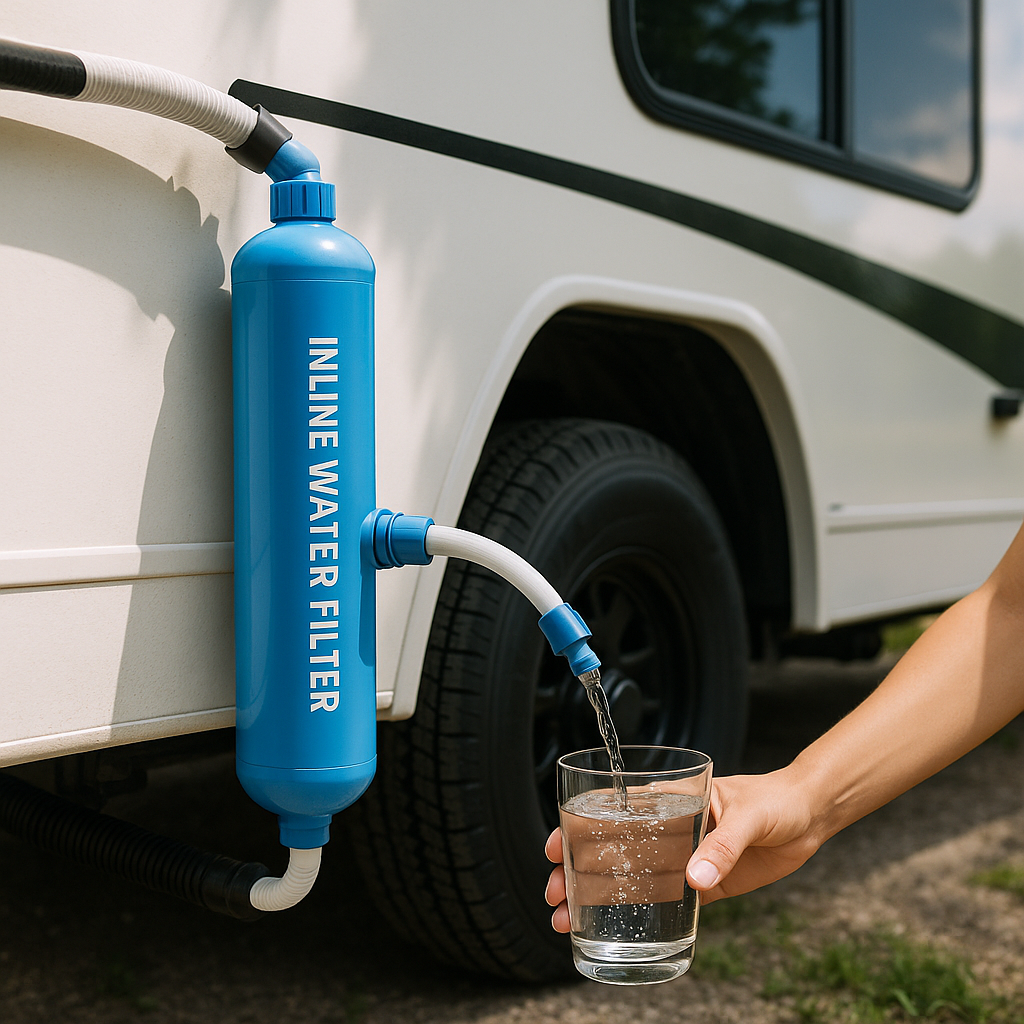
That’s where an inline RV water filter helps. Installed between the campground spigot and your RV hose, it can reduce:
- Sediment like sand, rust, and scale
- Chlorine taste and odor
- Some volatile organic compounds (VOCs)
- Bad taste from aging campground plumbing
We recommend an inline filter for nearly every RV setup because it’s simple, affordable, and easy to swap out during the season.
Our Top Picks at a Glance

Before we dig into the details, here’s a quick comparison of the filters we recommend most.
Best RV Inline Water Filters We Recommend
1. Camco TastePURE Inline Water Filter
The Camco TastePURE is the filter many RV owners start with, and for good reason. In our testing, it consistently improved taste and reduced the strong chlorine smell common at municipal campgrounds. It’s compact, widely available, and easy to thread directly onto a hose or pressure regulator.
Pros
- Affordable and easy to replace
- Noticeable improvement in taste and odor
- Flexible hose protector helps reduce strain
- Great availability online and in RV stores
Cons
- Basic filtration compared with multi-stage systems
- Not ideal for very poor water quality
- Flow can drop as sediment builds up
Who It’s For
We recommend this for most casual and seasonal RVers who want a simple, dependable inline filter without spending a lot.
2. Clearsource Premium RV Inline Filter System
If you want the highest level of filtration in this category, the Clearsource system stands out. It uses a multi-stage canister design rather than a disposable single-body inline filter. During testing, it delivered the best overall water clarity and taste while also handling sediment more effectively than basic filters.
This is closer to a serious water treatment setup than a simple throwaway hose filter.
Pros
- Excellent sediment and taste reduction
- Durable canister construction
- Replaceable cartridges instead of replacing whole unit
- Better for long trips and frequent use
Cons
- Much more expensive than basic inline filters
- Bulkier and heavier to store
- Setup takes more room at the campsite
Who It’s For
We recommend this for full-timers, extended travelers, and RV owners who regularly camp in areas with inconsistent water quality.
3. AQUA CREST RV Inline Water Filter
The AQUA CREST is one of the better budget-friendly alternatives to the Camco. It installs the same way, costs very little, and improves taste enough for many weekend RVers. We found it especially appealing for owners who replace filters often and want to keep operating costs low.
Pros
- Very affordable
- Simple hose-thread installation
- Good choice for light seasonal use
- Helps reduce chlorine taste and odor
Cons
- Filtration performance is basic
- Build quality can feel lighter than premium brands
- Not the best for heavy sediment conditions
Who It’s For
We recommend this for budget-conscious RV owners, occasional campers, and anyone who wants a backup filter in the storage bay.
4. Waterdrop RV Inline Water Filter
Waterdrop has earned a good reputation in home and portable filtration, and its RV inline model performs well where taste is the top concern. We noticed strong chlorine reduction and cleaner flavor compared with unfiltered hookup water. Some versions also use KDF media, which can help with odor and scale control.
Pros
- Strong taste and odor improvement
- Easy to install
- Good value for the performance
- Often includes durable hose fittings
Cons
- Still limited compared with true multi-stage systems
- Performance depends on source water quality
- Disposable design creates more waste over time
Who It’s For
We recommend this for RVers who mainly want better-tasting drinking water and cook from their onboard supply often.
5. Culligan RV-800 Exterior Drinking Water Filter
The Culligan RV-800 is another long-running favorite in the RV world. It’s easy to use, compact, and designed specifically for exterior hose hookups. In our experience, it balances decent filtration with respectable flow, which matters if you don’t want shower pressure to drop too much.
Pros
- Straightforward installation
- Good flow rate for most RV use
- Trusted brand with broad availability
- Helps reduce sediment and chlorine taste
Cons
- Not the most advanced filter media
- Disposable housing
- Can clog faster in dirty water sources
Who It’s For
We recommend this for RV owners who want a familiar brand and a simple setup that won’t overcomplicate campsite hookups.
6. Hydro Life 52141 HL-200
The Hydro Life HL-200 is a strong step up from entry-level inline filters. It offers finer sediment reduction than many basic models and performed well in our testing when campground water had visible particulates. It’s a practical middle ground between cheap disposable filters and premium canister systems.
Pros
- Better sediment filtration than many inline competitors
- Good taste improvement
- RV-friendly hose fittings
- Solid mid-range value
Cons
- Costs more than entry-level inline filters
- Still not as comprehensive as a full canister system
- Replacement intervals may be shorter in dirty water
Who It’s For
We recommend this for frequent travelers who visit older campgrounds and want better protection for faucets, ice makers, and plumbing fixtures.
How We Evaluated These Filters
When we compare RV water filters, we don’t just look at marketing claims. We focus on the things RV owners actually notice at the campsite.
Taste and Odor Reduction
This is the first thing most of us care about. If water smells like a pool or tastes metallic, we want that fixed fast.
Sediment Handling
A filter that improves taste but lets rust and grit through isn’t doing enough. We looked for models that help catch visible particles before they reach the RV.
Flow Rate
Some filters clean water well but noticeably reduce pressure. We prefer filters that strike a good balance between filtration and usable shower/sink flow.
Ease of Installation
RV gear should be simple. The best inline filters thread onto standard hoses without adapters or complicated mounting.
Long-Term Value
A cheap filter isn’t always the best deal if it clogs quickly or needs frequent replacement. We considered replacement cost and expected service life.
What to Look for in the Best RV Inline Water Filter
Choosing the right filter gets easier when you know which specs matter and which are mostly marketing.
Filtration Media
Most RV inline filters use activated carbon, often paired with sediment filtering layers. Carbon is excellent for reducing chlorine taste and odor. Some filters add KDF media or multi-stage cartridges for broader performance.
Micron Rating
Micron rating tells you how small a particle the filter can trap. Lower numbers generally mean finer filtration.
- 20 microns: common for basic inline RV filters
- 10 microns: better sediment control
- 1 micron or below: much finer filtration, usually in canister systems
For general RV use, 10 to 20 microns is common. If you regularly camp where water quality is questionable, a finer multi-stage system may be worth the upgrade.
Flow Capacity
Manufacturers often list a gallon capacity, but real-world lifespan depends heavily on source water quality. Sediment-heavy hookups will shorten filter life. We suggest treating published capacity as a best-case estimate.
Hose Compatibility
Most RV inline filters have standard garden-hose threads. That said, we always check whether the body design leaves enough clearance for pressure regulators, splitters, or elbows.
Disposable vs. Replaceable Cartridge Systems
Disposable inline filters are convenient and compact. Canister systems cost more up front but can be cheaper over time if you only replace cartridges.
Inline Filter vs. Canister System: Which Is Better?
For many RV owners, a basic inline hose filter is enough. It’s cheap, fast to install, and helps with taste and light sediment.
But if you’re a full-timer, travel for months at a time, or spend time at fairgrounds, race tracks, rural parks, or older campgrounds, a canister system may be the smarter choice.
Choose a Basic Inline Filter If:
- You camp on weekends or short trips
- You mostly visit parks with decent municipal water
- You want low cost and simple storage
- You replace filters seasonally without much hassle
Choose a Multi-Stage Canister System If:
- You RV full-time or travel often
- You encounter poor or inconsistent water quality
- You want finer sediment reduction
- You want better protection for plumbing and appliances
How to Install an RV Inline Water Filter
Installing an inline filter is one of the easiest RV water upgrades. Most setups take only a few minutes.
Tools and Materials
You’ll need:
- RV inline water filter
- Drinking-water-safe RV hose
- Water pressure regulator
- Optional 90-degree elbow fitting
- Optional quick-connect fittings
- Clean towel or rag
Numbered Installation Steps
- Turn off the campground spigot. Make sure there’s no water pressure on the hose before connecting anything.
- Attach the pressure regulator to the spigot. We always recommend using a regulator first to protect RV plumbing.
- Connect the inline filter to the regulator or hose. Follow the arrow on the filter body showing water-flow direction.
- Attach the RV hose to the outlet side of the filter. Hand-tighten only unless the manufacturer says otherwise.
- Connect the hose to your RV city water inlet. Check that washers are seated properly to prevent leaks.
- Flush the filter before use. Run water through it for a few minutes until any loose carbon fines clear out.
- Inspect for leaks. Turn the spigot on slowly and check every connection.
- Use water as normal. Once the water runs clear, your system is ready.
Safety Tips
- Always use a pressure regulator ahead of the filter when possible.
- Never overtighten plastic hose fittings.
- Flush new filters before drinking from them.
- Replace filters if flow drops significantly or if the water develops odor or taste again.
- Sanitize your RV fresh-water system periodically, because a filter alone does not clean the inside of your tank and plumbing.
Maintenance Tips for Better Performance
Even the best RV inline water filter won’t work well if it’s neglected.
Replace on Schedule
Most disposable inline filters are designed for one season or a set gallon range. If you camp often, you may need replacement sooner.
Don’t Let It Freeze
A frozen filter can crack internally or damage the media. If temperatures drop below freezing, disconnect and store it in a protected area.
Flush After Storage
If a filter has been sitting for weeks, we recommend flushing it before using it again.
Watch for Pressure Drop
A sudden loss in flow usually means sediment has loaded up the filter. At that point, replacement is often the best option.
Our Overall Recommendation
For most RV owners, the Camco TastePURE Inline Water Filter remains the best combination of affordability, availability, and real-world performance. It’s the easiest recommendation for weekend campers and seasonal travelers who want better tasting water with minimal effort.
If you want the best filtration performance and travel often, we recommend stepping up to the Clearsource Premium RV Inline Filter System. It costs much more, but it offers better sediment control, stronger overall filtration, and better long-term usability for serious RVers.
If value is your top priority, the AQUA CREST RV Inline Water Filter is a solid low-cost choice that still improves taste and odor enough for many campground hookups.
Final Thoughts
A good RV water filter does more than improve taste. It helps protect your plumbing, reduces sediment reaching your fixtures, and gives you more confidence in the water coming from unfamiliar hookups. For most travelers, a simple inline filter is one of the cheapest and most useful upgrades we can make.
When choosing the best RV inline water filter, think about how often you travel, how much storage space you have, and the kind of campgrounds you usually visit. A budget inline filter may be all you need for occasional trips, while a premium multi-stage setup makes more sense for full-time RV living.
FAQ
1. How often should we replace an RV inline water filter?
Most RV inline filters should be replaced every season or after the manufacturer’s rated gallon capacity. If flow drops, taste worsens, or the filter has been exposed to very dirty water, replace it sooner.
2. Can an RV inline water filter make unsafe water safe to drink?
Not always. Most basic inline filters mainly reduce sediment, chlorine, and bad taste or odor. They are not the same as a certified purifier. If you’re dealing with questionable biological contamination, use a more advanced treatment method.
3. Should the filter go before or after the pressure regulator?
We recommend installing the pressure regulator at the spigot first, then the filter, then the hose to the RV. That setup helps protect both the filter and your RV plumbing.
4. Can we use an inline filter when filling the fresh-water tank?
Yes. You can use the same inline filter when filling your fresh tank, and many RV owners do exactly that to reduce sediment and improve taste before the water enters the system.
5. What’s the difference between a 20-micron and 10-micron RV filter?
A 10-micron filter captures smaller particles than a 20-micron filter, which usually means better sediment reduction. The tradeoff can be slightly reduced flow or shorter life in dirty water conditions.
Get your free Get Our Free Full-Timer's Gear Guide
The no-fluff gear list trusted by full-time RVers — tested in real conditions across North America.