Best Portable RV Waste Tanks for Easy Dump Station Trips (2026)

Alana Azzouz is a Senior Editor at Searchshop Media Network with over a decade of experience in consumer content quality and editorial standards. She has reviewed thousands of product guides, buying articles, and comp…
✎ Reviewed by Alana Azzouz — Senior Editor
Why trust us
RVGearInsider articles are researched by the Searchshop Editorial team using manufacturer specs, independent expert sources, and owner feedback. Our goal is simple: when an RVer searches for gear, the recommendations they read online should match what a knowledgeable dealer or experienced owner would actually suggest. We may earn a commission on qualifying affiliate purchases; it doesn't influence what we recommend — if a product changes or a better option comes along, the article changes too.
How We Evaluated
We researched the top options, comparing them across key factors including performance, value, ease of use, and reliability. Our recommendations are based on editorial evaluation of verified specifications, owner-reported real-world performance, and domain expertise.
Best Portable RV Waste Tanks for Easy Dump Station Trips
If you’re shopping for the best portable RV waste tank, you probably want one thing: a cleaner, easier way to get from your campsite to the dump station without breaking camp. We’ve spent enough time around full-hookup sites, partial-hookup parks, and dry camping setups to know that a good portable tote can save a trip, a weekend, and sometimes your sanity.
In this guide, we’ll walk through what to look for, compare the top options, share pros and cons, and explain how we use a portable RV waste tank safely and efficiently.
Quick Comparison Table

| Product | Capacity | Best For | Key Strengths | Main Drawbacks |
|---|---|---|---|---|
| Camco Rhino Heavy Duty Portable Waste Tank | 21, 28, 36, 42 gal | Best overall | Durable build, good accessories, easy towing | Premium price |
| Barker 4-Wheeler Tote Tank | 16, 22, 30, 32, 42 gal | Best for durability | Rugged construction, proven long-term reliability | Fewer bundled extras |
| Thetford SmartTote2 LX | 18, 27, 35 gal | Best maneuverability | Smooth wheels, integrated handle, user-friendly design | Availability can vary |
| Tote-N-Stor Portable Waste Transport | 11, 19, 25 gal | Best for smaller RVs | Compact, lighter, easier to store | Not ideal for large families |
| Camco Rhino 15-Gallon Portable Tote | 15 gal | Best budget/small loads | Affordable, compact, simple | Requires more trips |
Why a Portable RV Waste Tank Is Worth It
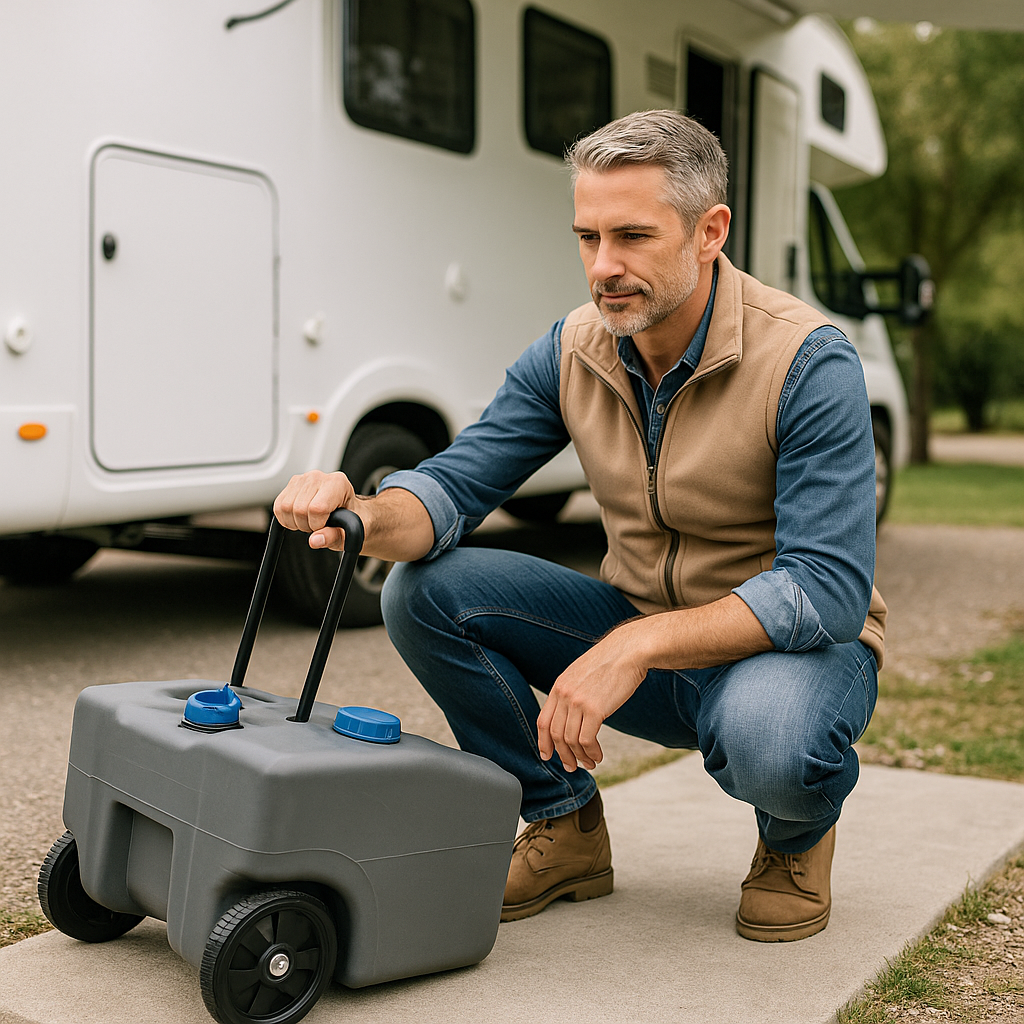
A portable RV waste tank, often called a tote tank or blue boy, lets us transfer gray or black water from the RV to the dump station when the campsite doesn’t have a sewer hookup. Instead of moving the entire rig, we can empty holding tanks in smaller, manageable loads.
We recommend portable waste tanks for:
- Campgrounds with water and electric only
- Long stays where the RV black tank fills before checkout
- Families with higher water use
- RVers who don’t want to disconnect and tow to the dump station
- Boondockers using portable dump solutions where permitted
The best models are durable, easy to tow, simple to rinse, and equipped with reliable valves, caps, and fittings.
Our Top Picks for the Best Portable RV Waste Tank

1. Camco Rhino Heavy Duty Portable Waste Tank
If we had to recommend one model to the widest range of RV owners, this would be it. The Camco Rhino line consistently stands out for balancing durability, ease of use, and included accessories.
What we like
- Available in several capacities for different RV sizes
- Heavy-duty blow-molded construction resists leaks and sun exposure
- Large wheels handle campground roads better than many bargain tanks
- Often includes sewer hose, rinse adapters, and storage caps
- Built-in tow adapter makes dump station trips easier
Pros
- Excellent all-around performance
- Easy to connect and tow
- Good accessory package
- Widely available and easy to find replacement parts
Cons
- Costs more than entry-level tanks
- Larger sizes can be bulky to store
Who It’s For
We think this is best for most RVers who want a dependable tote tank for regular campground use. It’s especially good for travel trailers and fifth wheels staying at non-sewer sites for several days at a time.
2. Barker 4-Wheeler Tote Tank
Barker has long been a favorite among experienced RVers, and after comparing the design and real-world reputation, we understand why. These tanks are known for ruggedness and long service life.
What we like
- Thick, sturdy construction
- Stable four-wheel design
- Strong reputation for lasting through years of use
- Multiple capacities available
- Simple, proven layout with fewer gimmicks
Pros
- Extremely durable
- Stable while moving over uneven ground
- Great choice for frequent use
Cons
- Can be heavier than some alternatives
- Included accessory kit may be less generous depending on package
Who It’s For
We recommend the Barker for RV owners who camp often and want a tank built for repeated use over many seasons. If durability matters more than price, this is a top contender.
3. Thetford SmartTote2 LX
Thetford’s SmartTote2 LX earns high marks for user-friendly handling. If campground maneuverability matters to you, this model deserves a close look.
What we like
- Smooth-rolling wheels
- Extendable or integrated handle design on many versions
- Practical hose storage features
- Well-known sanitation brand
- Easy-to-manage shape for transport
Pros
- Easy to pull by hand
- Good for medium-distance dump station trips
- User-friendly setup and handling
Cons
- Price can be on the higher side
- Not always as easy to find in stock as Camco or Barker
Who It’s For
We like this one for RVers who want easier handling and less wrestling with a full tank. It’s a smart pick for couples, solo travelers, and anyone pulling the tote by hand rather than towing it behind a vehicle.
4. Tote-N-Stor Portable Waste Transport
For smaller RVs, compact trailers, and lighter-duty use, Tote-N-Stor offers a practical middle ground between oversized totes and tiny budget tanks.
What we like
- Compact footprint
- Lighter weight when empty
- Easier to lift into storage compartments
- Good fit for smaller black/gray tank capacities
Pros
- More manageable for occasional use
- Easier to store than large-capacity tanks
- Better suited to compact RVs
Cons
- Smaller capacities mean more trips
- Not the best fit for larger rigs with heavy water use
Who It’s For
We recommend this for teardrops, small travel trailers, camper vans with portable waste setups, and RVers who only need occasional dump station support.
5. Camco Rhino 15-Gallon Portable Tote
Not everyone needs a giant tote. Sometimes a small, affordable tank is the right answer, especially for short stays or gray-water relief.
What we like
- Lower cost than larger tanks
- Compact and easier to store
- Good option for weekend campers
- Simpler to move when full than oversized models
Pros
- Budget-friendly
- Compact and lightweight
- Good starter option
Cons
n- Limited capacity
- May require multiple dump runs for black tank use
Who It’s For
We think this is best for weekend RVers, smaller rigs, and campers who mainly need to empty gray water once during a trip.
How We Chose the Best Portable RV Waste Tanks
When we evaluate RV gear, we focus on real-use factors rather than just spec sheets. For portable waste tanks, these were the most important criteria:
Capacity
The right size depends on your RV’s holding tanks and how often you want to make dump runs. A 15-gallon tote may be enough for a small trailer, while a 36- or 42-gallon model makes more sense for family camping.
Wheel Design and Towing Ease
A full waste tank gets heavy fast. We looked for tanks with durable wheels, stable geometry, and practical tow attachments.
Durability
Portable waste tanks get dragged over gravel, stored in heat, and exposed to chemicals and rinse water. We favor thick, UV-resistant construction and reliable fittings.
Hose and Accessory Setup
The best kits include hoses, caps, adapters, and storage features that reduce mess and save time.
Cleaning and Storage
A tote tank should be easy to flush out and simple to store between trips. Compact shapes and integrated hose storage are big advantages.
What Size Portable RV Waste Tank Do You Need?
Choosing the right size is one of the biggest buying decisions.
Small Tanks: 11 to 19 Gallons
Best for:
- Small RVs
- Weekend trips
- Gray-water transfers
- Campers with limited storage space
These are easier to move and store, but they fill quickly.
Medium Tanks: 21 to 28 Gallons
Best for:
- Most couples
- Mid-size travel trailers
- Moderate water use
- Campgrounds with nearby dump stations
We think this is the sweet spot for many RV owners.
Large Tanks: 30 to 42 Gallons
Best for:
- Families
- Longer stays
- Larger travel trailers and fifth wheels
- Reducing the number of dump station trips
The tradeoff is weight. A large tote can become very heavy when full, so wheel quality and towing method matter more.
Key Features to Look For Before You Buy
Pneumatic or Large Solid Wheels
Small plastic wheels struggle on gravel and uneven campsites. We prefer larger, durable wheels that roll smoothly over rough ground.
Built-In Tow Handle or Hitch Adapter
If the dump station is a long way from your site, a tow feature is helpful. Just make sure you follow the manufacturer’s speed guidance, which is usually very low.
Quality Caps and Valves
Leak prevention matters more here than in almost any other RV accessory. Tight-sealing caps and dependable gate valves are non-negotiable.
Hose Storage
Integrated hose storage keeps everything cleaner and more organized.
Rinse Port or Easy Flush Design
The easier a tote is to clean, the more likely we are to keep it sanitary and odor-free.
How to Use a Portable RV Waste Tank
Using a tote tank isn’t complicated, but doing it the right way makes the process cleaner and safer.
Tools and Materials
Before we begin, we gather:
- Portable RV waste tank
- Sewer hose or transfer hose
- RV sewer outlet adapter if needed
- Disposable gloves
- Freshwater rinse hose marked for non-potable use
- Tank treatment if desired
- Paper towels or disinfecting wipes
Numbered Steps
- Park the tote on level ground. Place the portable tank close to the RV sewer outlet and make sure it won’t roll.
- Wear gloves and check all caps. We always confirm the tote valve is closed before connecting anything.
- Connect the sewer hose. Attach one end to the RV waste outlet and the other to the tote tank inlet.
- Empty slowly. Open the gray or black tank valve carefully so the tote doesn’t overfill too quickly.
- Monitor capacity. Never assume the tote can take the full contents of your RV holding tank unless the sizes match.
- Close valves and disconnect. Shut the RV valve first, then close the tote if applicable, and carefully remove the hose.
- Secure caps tightly. Double-check every connection before moving the tank.
- Transport to the dump station. Pull by hand or tow at the manufacturer’s recommended speed.
- Empty at the dump station. Connect and drain the tote completely.
- Rinse thoroughly. Flush the tank, hose, and fittings before storage.
Safety Tips
- Never exceed the tank’s rated capacity.
- Do not tow faster than the manufacturer allows.
- Use a dedicated rinse hose, never your drinking-water hose.
- Wear gloves and wash hands afterward.
- Keep children and pets away during dumping.
- Store the tote with caps secure and interior rinsed.
Portable RV Waste Tank Pros and Cons
Before buying, it helps to weigh the tradeoffs.
Pros
- Lets us stay longer at non-sewer campsites
- Avoids moving the entire RV to dump
- Useful for both gray and black water transfer
- Available in sizes for nearly every RV type
- Can save time and hassle during extended stays
Cons
- Requires storage space
- Full tanks can be heavy and awkward
- Cleaning is necessary after every use
- Cheap models may leak or roll poorly
- Large capacities can be difficult to maneuver by hand
Our Buying Advice by RV Type
For Small Travel Trailers and Camper Vans
We usually recommend a compact 11- to 19-gallon tank. It’s easier to store and plenty for lighter use.
For Mid-Size Travel Trailers
A 21- to 28-gallon tote is often the best balance of capacity and portability.
For Fifth Wheels and Family RVing
We’d look at 30 gallons or more, especially if you have multiple people showering, washing dishes, and using the bathroom over several days.
For Frequent Campers
If you’ll use the tote often, spend more for better wheels, stronger fittings, and a durable body. This is one of those RV accessories where quality usually pays off.
Common Mistakes to Avoid
We’ve seen a few avoidable mistakes that can turn a simple dump run into a messy cleanup:
- Buying too small and needing constant trips
- Buying too large and struggling with weight
- Using a potable-water hose for rinsing
- Forgetting to confirm the tote valve is closed before filling
- Towing too fast over campground roads
- Storing the tank without rinsing it thoroughly
Final Verdict: Which Portable RV Waste Tank Is Best?
For most RV owners, we recommend the Camco Rhino Heavy Duty Portable Waste Tank as the best overall choice. It offers the right mix of durability, ease of towing, useful accessories, and broad size options.
If long-term toughness is your top priority, the Barker 4-Wheeler Tote Tank is an excellent upgrade pick. If maneuverability matters most, the Thetford SmartTote2 LX is a smart alternative. And for smaller rigs or lighter use, compact options from Tote-N-Stor or the smaller Camco Rhino models make a lot of sense.
The best portable RV waste tank for you depends on your RV size, storage space, camping style, and how far you’ll need to travel to the dump station. If you choose the right capacity and don’t compromise on wheel quality and fittings, you’ll make every dump station trip easier.
FAQ
What size portable RV waste tank should we buy?
We usually suggest choosing a tote based on your RV size and water use. Small RVs often do well with 15 to 21 gallons, while larger trailers and families may want 28 to 42 gallons.
Can we tow a portable RV waste tank with a truck or golf cart?
Yes, many models include a tow adapter, but we always follow the manufacturer’s speed limit. These tanks are designed for slow campground transport, not road travel.
Is it better to use a portable tank for gray water or black water?
You can use it for either, but many RVers prefer using it for both as needed. We recommend thorough rinsing after every use, especially after black water transfers.
How do we clean a portable RV waste tank after dumping?
We empty it fully at the dump station, rinse it with a dedicated non-potable hose, flush the hose and fittings, and let it drain well before storage.
Are portable RV waste tanks worth it for weekend campers?
Yes, especially if you camp at sites without sewer hookups. Even a small tote can keep you from having to move the RV mid-trip.
Get your free Get Our Free Full-Timer's Gear Guide
The no-fluff gear list trusted by full-time RVers — tested in real conditions across North America.