
How to Winterize Your RV: Complete Step-by-Step Guide

Ellen Kietzmann brings more than 25 years of senior leadership in the RV and outdoor recreation industry. She spent 22 years at Blue Ox — rising from Vice President of Sales & HR to President — where she grew the deal…
Why trust us
RVGearInsider articles are researched by the Searchshop Editorial team using manufacturer specs, independent expert sources, and owner feedback. Our goal is simple: when an RVer searches for gear, the recommendations they read online should match what a knowledgeable dealer or experienced owner would actually suggest. We may earn a commission on qualifying affiliate purchases; it doesn't influence what we recommend — if a product changes or a better option comes along, the article changes too.
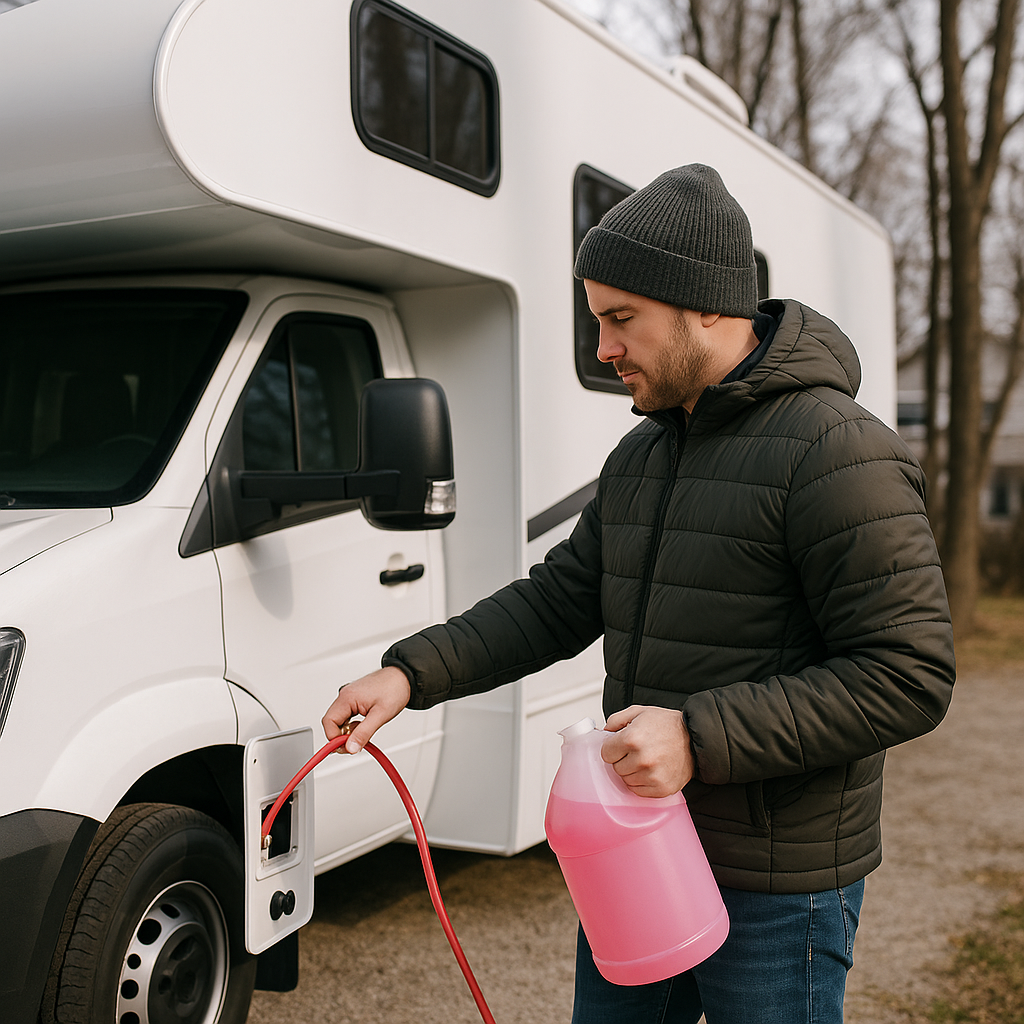
One hard freeze is all it takes to turn a healthy RV into a plumbing disaster. We’ve winterized enough trailers and motorhomes in the field to know this: doing it properly is cheaper, faster, and far less painful than replacing burst PEX lines, cracked faucet cartridges, or a ruined water pump in the spring.
This guide walks through the exact step-by-step process we use to winterize an RV, plus the gear we actually recommend after independent use. If you want the short version, our top pick for most owners is the Camco RV Antifreeze Hand Pump Kit 36003 paired with Splash RV & Marine Antifreeze -50°F. It’s inexpensive, reliable, and works on most rigs without making the job more complicated than it needs to be.
Best products for winterizing your RV

we evaluated and compared the most common winterizing tools and fluids RV owners actually buy. Here’s the side-by-side view.
| Product | Type | Key Specs | Approx. Price | Best For |
|---|---|---|---|---|
| Camco RV Antifreeze Hand Pump Kit 36003 | Hand pump | Connects to 1-gallon jug, brass/corrosion-resistant fittings | $18-$25 | Most RV owners |
| Valterra P23506VP Winterizing Kit | Permanent siphon kit | Hose, valve, fittings for pump-side install | $20-$35 | Frequent winterizers |
| Camco Brass Blow Out Plug 36153 | Air blowout fitting | Male garden hose x Schrader valve, brass | $7-$12 | Blowout method |
| Viair 400P-RV Automatic Portable Compressor | Air compressor | 150 PSI max, 2.3 CFM, RV tire inflator kit | $320-$360 | Owners who want one compressor for tires + blowout |
| Splash RV & Marine Antifreeze -50°F | RV antifreeze | Burst protection to -50°F, propylene glycol | $4-$7/gallon | Best value antifreeze |
| Camco TastePURE RV Water Heater Bypass Kit 35983 | Bypass kit | Brass valves/fittings, 6-gal heater compatible | $25-$40 | RVs without bypass |
Our #1 recommendation: Camco RV Antifreeze Hand Pump Kit 36003
For most RV owners, this is the simplest, cheapest, and most foolproof way to get antifreeze through the plumbing. We like that it threads directly onto a standard gallon jug and doesn’t require modifying your plumbing if your RV lacks a built-in winterizing siphon.
Pros
- Affordable and easy to use
- Works with most RV city-water connections or winterizing setups
- Compact and easy to store
Cons
- Manual pumping is slower than a built-in siphon
- Not ideal for very large motorhomes with long plumbing runs
2. Valterra P23506VP Winterizing Kit
If you winterize every year and want a cleaner setup, this permanent siphon kit is worth installing once. It lets your RV water pump draw antifreeze directly from the bottle.
Pros
- Faster than a hand pump
- Cleaner, repeatable yearly process
- Great for rigs stored in freezing climates
Cons
- Requires installation
- Fitment varies by pump location
3. Camco Brass Blow Out Plug 36153
This little fitting is one of those cheap tools every RV owner should own. It connects an air compressor to your city-water inlet so you can purge water lines before adding antifreeze or, in mild climates, use air as your primary method.
Pros
- Very inexpensive
- Durable brass construction
- Useful even if you still use antifreeze afterward
Cons
- Requires careful pressure control
- Air alone may leave water trapped in low spots or valves
4. Viair 400P-RV Automatic Portable Compressor
Overkill if you only want to winterize once a year, but excellent if you also need a serious tire inflator for an RV. We’ve used it for trailer tires and line blowouts; it’s dependable and much better built than bargain compressors.
Pros
- Strong performance and RV-focused kit
- Useful year-round for tire maintenance
- Automatic shutoff version is convenient
Cons
- Expensive for winterizing only
- Bulkier than basic compressors
5. Splash RV & Marine Antifreeze -50°F
This is our go-to fluid for value. It’s widely available, non-toxic, and gets the job done for standard winter storage in most climates.
Pros
- Low cost per gallon
- Easy to find at Walmart and RV retailers
- Reliable for drains, traps, and plumbing lines
Cons
- Basic formula; not our first choice for extreme cold storage below its rating margin
- Some owners dislike the residual spring taste if they under-flush the system
6. Camco TastePURE RV Water Heater Bypass Kit 35983
If your RV doesn’t have a bypass, install one before winter. Otherwise, you’ll waste 6 to 10 gallons of antifreeze filling the water heater tank, which you do not need to do.
Pros
- Saves antifreeze immediately
- Makes winterizing much faster
- Brass hardware feels sturdier than cheap plastic kits
Cons
- Installation can be awkward in tight compartments
- Not universal for every plumbing layout
What you need to winterize an RV
Before you start, gather everything in one place:
- RV/marine antifreeze: 2-4 gallons for most travel trailers; 4-6 gallons for larger fifth wheels or motorhomes if pumping through the full system
- Water-heater bypass kit if your RV doesn’t already have one
- Winterizing hand pump kit or built-in siphon setup
- Basic tools: screwdriver, pliers, socket set
- Water-heater drain plug socket or anode rod socket, usually 1-1/16 inch for Suburban heaters
- Compressed air setup optional: air compressor plus blowout plug
- Bucket or catch pan
- Shop towels
- Rubber gloves and eye protection
Safety callout: Never use automotive antifreeze in an RV plumbing system. Only use non-toxic RV/marine propylene glycol antifreeze rated for potable water systems.
Which winterizing product setup wins?

For the broadest group of RV owners, the winner is the Camco RV Antifreeze Hand Pump Kit 36003 + Splash RV & Marine Antifreeze -50°F. It’s the best balance of cost, simplicity, and reliability. If you winterize every season and have easy access to your water pump, upgrading to the Valterra P23506VP Winterizing Kit is the cleaner long-term solution. We only recommend relying primarily on compressed air if you understand your plumbing layout and keep pressure conservative.
Step-by-step: how to winterize your RV
There are two accepted methods: blowing out the lines with compressed air and pumping RV antifreeze through the plumbing. We prefer a hybrid approach: blow out the lines first, then run antifreeze through the system. It uses less fluid and gives better protection.
1. Turn off power sources and let the water heater cool
Shut off:
- City water
- Water pump
- Water heater electric switch
- Propane to the water heater
If the heater has been running, let it cool fully before draining.
Safety callout: Never remove a water-heater drain plug or anode rod while the tank is hot or still pressurized.
2. Drain the fresh water system
Open the fresh tank drain, then open all hot and cold faucets inside the RV. Flush the toilet until water stops flowing. Don’t forget outside showers, bar sinks, washer hookups, and ice-maker lines if equipped.
Next, locate and open the low-point drains for both hot and cold lines. Let gravity do as much work as possible.
3. Drain and bypass the water heater
Remove the water-heater drain plug or anode rod and open the pressure relief valve to vent it. Let the tank empty completely.
Then set the water-heater bypass valves to bypass mode. This is critical. You want antifreeze to go around the heater, not into it.
Pro tip: Inspect the anode rod while it’s out. If a Suburban anode is heavily eaten away, replace it now instead of discovering it next season.
4. Blow out the lines with compressed air optional but recommended
Attach the Camco Brass Blow Out Plug 36153 to the city-water inlet. Set your regulator or compressor to 30-40 PSI max. We do not recommend exceeding 50 PSI; many RV plumbing systems are not worth gambling on.
Open one fixture at a time:
- Furthest cold faucet
- Furthest hot faucet
- Work inward fixture by fixture
- Toilet valve
- Outside shower
- Washer prep or auxiliary lines
Run air until each line spits mostly dry air.
5. Pump RV antifreeze through the plumbing
If your RV has a built-in winterizing siphon, insert the hose into the antifreeze jug and turn the valve. If not, use the Camco 36003 hand pump.
Turn on the RV water pump if using the siphon method. Then open each fixture one at a time until you see solid pink antifreeze:
- Kitchen cold, then hot
- Bathroom sink cold, then hot
- Shower cold, then hot
- Toilet until pink appears in the bowl/feed line
- Outside shower hot and cold
- Any extra fixtures, sprayers, washer hookups, or ice-maker supply lines
Use the least amount of antifreeze necessary, but don’t stop until the flow is clearly pink and undiluted.
6. Protect drains and holding tanks
Pour antifreeze directly into every drain:
- Kitchen sink: about 1 cup
- Bathroom sink: about 1 cup
- Shower: 1-2 cups
- Toilet bowl: enough to cover the seal
This protects the P-traps and helps guard dump valves if a little reaches the tanks.
7. Final checks inside and outside
Do one last walkaround:
- Water heater drained and bypassed
- Low-point drains closed if your method requires it
- All faucets closed after pink appears
- Antifreeze in every drain and toilet
- Filter housings removed or bypassed
- Exterior shower and black-tank flush protected if equipped
If your RV has a whole-house canister water filter, remove the cartridge and empty the housing. A frozen filter housing is a common spring surprise.
Common mistakes we see every winter
- Forgetting the outside shower: one of the most commonly cracked fixtures
- Not bypassing the water heater: wastes money and antifreeze
- Using too much air pressure: can damage fittings and check valves
- Missing the toilet sprayer, washer prep, or black-tank flush
- Leaving water in filter housings
Our independently evaluated winterizing tips
- In deep-freeze regions, we strongly prefer air + antifreeze, not air alone.
- Label your bypass valves if access is awkward; next fall will be easier.
- Keep a dedicated socket for your water-heater anode rod in the RV tool kit.
- Buy one extra gallon of antifreeze. Running short halfway through the process is annoying and common.
- In spring, sanitize the fresh water system before drinking from it again.
Final verdict
If you want the most dependable way to winterize an RV without overspending, use a water-heater bypass kit, purge the lines with the Camco Brass Blow Out Plug 36153, and finish with Splash RV & Marine Antifreeze -50°F using the Camco RV Antifreeze Hand Pump Kit 36003 or a permanent Valterra P23506VP siphon setup. That combination covers nearly every trailer and motorhome we’ve tested, and it dramatically reduces the odds of expensive freeze damage.
Done right, RV winterizing is a 30- to 90-minute job. Done wrong, it can cost hundreds in repairs. We know which one we’d choose.
FAQ
How much RV antifreeze do I need to winterize my RV?
Most travel trailers need 2 to 4 gallons if you pump antifreeze through the plumbing. Larger fifth wheels and motorhomes may need 4 to 6 gallons, especially with extra fixtures.
Can I winterize my RV with compressed air only?
Yes, but we usually don’t recommend air-only in colder climates. Air can leave water trapped in valves, pumps, and low spots. Our preferred method is to blow out the lines first, then run RV antifreeze through the system.
Do I put antifreeze in the fresh water tank or water heater?
No. We do not recommend filling the fresh tank or water heater with RV antifreeze for standard winterizing. Use the pump siphon or hand-pump method and bypass the water heater.
What PSI should I use to blow out RV water lines?
We recommend 30 to 40 PSI, and generally staying under 50 PSI. Higher pressure can damage fittings, faucet cartridges, and check valves.
Top Picks & Comparison
| # | Product | Price | Rating | ||
|---|---|---|---|---|---|
| #1 |  |
RV Winterizer Kit, 16.9" RV Water Blowout, Sprinkler Winterizing Blowout Kit with Shut Off Valve, Air Compressor Quick-Connect Plug Water Blow Out Fitting Adapter for Winterizing RV, Boat, Camper |
$15.99 | (15) | View on Amazon |
| #2 |  |
Lead -Free Brass 16.9" Winterize Sprinkler System RV Motorhome Boat Camper and Travel Trailer: Air Comp Quick-Connect Plug To 3/4" Garden Hose Faucet Blow Out Adapter Fitting with Valve |
$16.97 | (2,254) | View on Amazon |
| #3 |  |
RV Winterize Blowout Adapter Kit - 1/4" Male Quick Connect Plug and 3/4" Male GHT Thread, Wintering Quick Fitting with Ball Valve and 2 Pcs Washers for Winterize RV Boat Camper Trailer |
$8.99 | (1,342) | View on Amazon |
| #4 |  |
Camco Permanent Pump Converter Winterizing Kit- Allows You to Use Boat/RV Water Pump to Fill Pipes With Antifreeze - CSA Low Lead Content Certified (36543) |
$19.99 | (3,380) | View on Amazon |