
How to Manage RV Black and Gray Tanks Like a Pro

Ellen Kietzmann brings more than 25 years of senior leadership in the RV and outdoor recreation industry. She spent 22 years at Blue Ox — rising from Vice President of Sales & HR to President — where she grew the deal…
Why trust us
RVGearInsider articles are researched by the Searchshop Editorial team using manufacturer specs, independent expert sources, and owner feedback. Our goal is simple: when an RVer searches for gear, the recommendations they read online should match what a knowledgeable dealer or experienced owner would actually suggest. We may earn a commission on qualifying affiliate purchases; it doesn't influence what we recommend — if a product changes or a better option comes along, the article changes too.
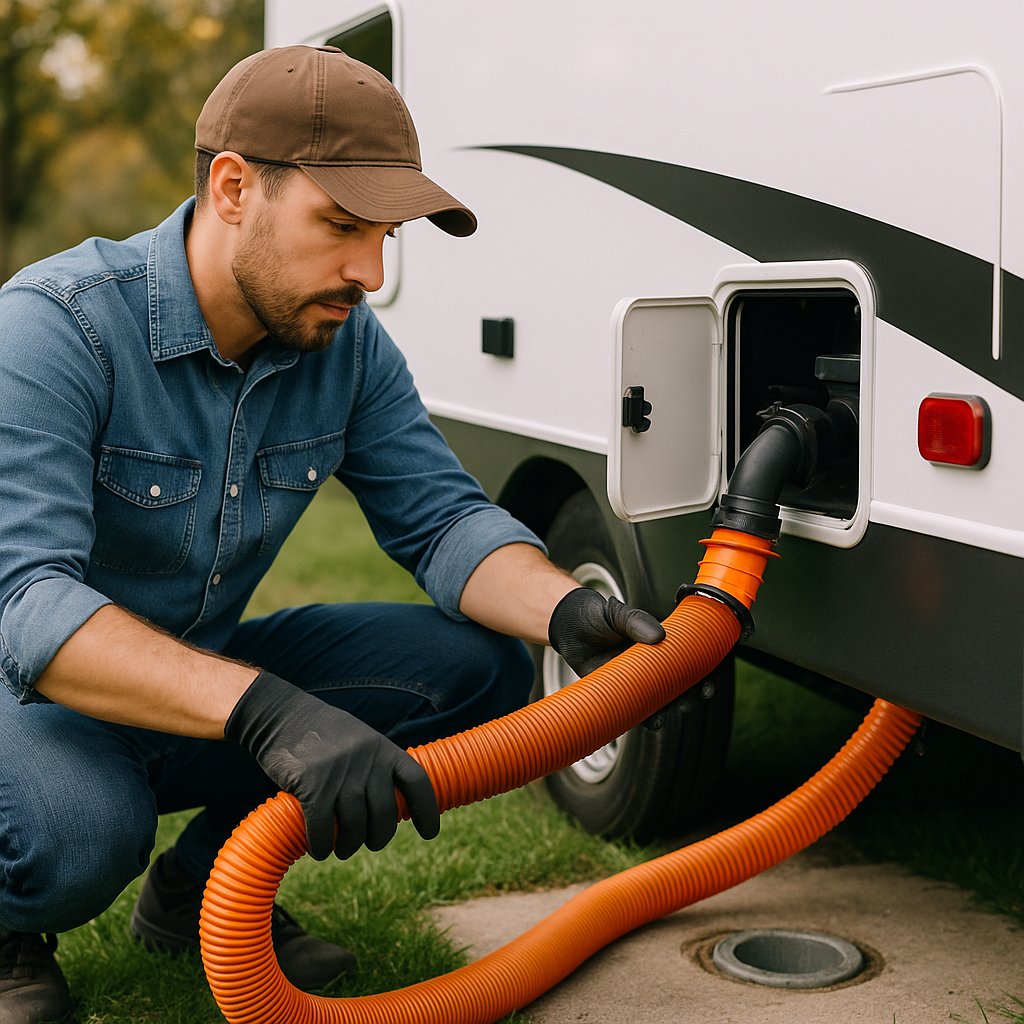
If you wait until your RV smells like a truck stop restroom, you’ve already lost the black-tank game. The good news: managing RV black and gray tanks is not complicated if you use the right gear, follow the right order, and stop believing a few persistent myths.
At RVGearInsider, we’ve tested sewer hoses, treatment packs, flush systems, and tank monitors in real campground conditions. Our opinionated take: the best setup is the one that reduces handling, improves rinse-out, and gives you accurate tank data so you’re not guessing. Below, we’ll show you exactly how to manage your tanks like a pro, plus the independently evaluated products we’d actually spend our own money on.
Our top picks for RV black and gray tank management

We compared five products that solve the biggest tank headaches: leaks, poor rinse-out, bad level readings, odor, and awkward dump-station handling.
| Product | Best for | Key specs | Approx. price | Pros | Cons |
|---|---|---|---|---|---|
| Camco RhinoFLEX 15' Sewer Hose Kit | Best overall sewer hose | 15 ft, 23 mil polyolefin, 4-in-1 adapter | $45-$60 | Tough, compresses small, fittings stay secure | 15 ft can be short for some sites |
| Valterra Viper 20' Sewer Hose Kit | Best heavy-duty upgrade | 20 ft, extra-thick TPE construction, rotating fittings | $70-$90 | More flexible in cold weather, longer reach | Bulkier, pricier |
| Camco Rhino Blaster Pro w/ Gate Valve | Best for tank rinsing | Built-in backflush valve, clear elbow body | $35-$50 | Excellent for dislodging buildup, visual flow check | Adds one more fitting to manage |
| GEO Method-compatible Happy Campers Holding Tank Treatment | Best odor control | Powder treatment, septic-safe, no perfume-heavy smell | $35-$45 for 64 treatments | Strong odor control, economical per use | Requires measuring/scooping |
| SeeLevel II 709-RVC Tank Monitor System | Best tank monitoring upgrade | External adhesive sensors, 3-tank support, digital readout | $220-$300 | Far more accurate than factory probes, no internal fouling | Higher upfront cost, install required |
#1 recommendation: Camco RhinoFLEX 15' Sewer Hose Kit
If we had to recommend just one product for most RV owners, it’s the Camco RhinoFLEX 15' Sewer Hose Kit. It solves the most common failure point in tank management: a flimsy, awkward sewer hose that leaks, kinks, or won’t fit the dump inlet correctly. in our research, RhinoFLEX hits the sweet spot of durability, flexibility, compact storage, and price. It’s not the cheapest hose on the shelf, but it’s the one we’d trust for repeated use without babying it.
What you need before you dump
Here’s the basic materials list we recommend keeping in a dedicated sewer bin:
- Sewer hose kit with fittings and storage caps
- Clear sewer elbow or adapter
- Disposable nitrile gloves
- Tank treatment packets or liquid treatment
- Non-potable rinse hose for black tank flush
- Tank level monitor or sensor system
- Paper towels/disinfecting wipes
- Backup seals and hose gaskets
Side-by-side analysis: which gear is actually worth it?

The RhinoFLEX is our overall winner because nearly every RV owner needs a dependable sewer hose, and this one performs without drama. If you camp in colder climates or often need extra reach, the Valterra Viper 20' is a worthwhile upgrade. It’s more flexible when temperatures drop, but you’ll pay more and give up some storage convenience.
For maintenance, the Camco Rhino Blaster Pro is one of the few add-ons we think genuinely earns space in your storage bay. If your black tank sensors are already lying to you—or you’ve inherited a used rig with buildup—this tool helps flush solids more aggressively than a standard dump alone.
For odor control, Happy Campers Holding Tank Treatment beat many blue chemical liquids we’ve used because it controls smell without overpowering fake fragrance. And if you’re tired of guessing whether your tank is one-third full or one bad shower away from overflow, the SeeLevel II 709-RVC is the premium fix. It’s expensive, but it’s the real cure for inaccurate factory tank readings.
Verdict: For most buyers, start with the Camco RhinoFLEX 15' Sewer Hose Kit and a quality treatment like Happy Campers. If your sensor readings are unreliable, the clear long-term winner is the SeeLevel II 709-RVC. Together, those products eliminate the biggest causes of tank stress: bad hose handling, odor, and false level readings.
How to manage RV black and gray tanks like a pro
1. Know what goes into each tank
Your black tank holds toilet waste. Your gray tank holds sink and shower water. We know this sounds basic, but tank problems often start with what owners put down the drain.
Only put these into the black tank:
- Human waste
- RV-safe toilet paper
- Enough water with every flush
- Approved tank treatment
Keep these out of both tanks unless specifically labeled safe:
- Flushable wipes
- Paper towels
- Grease and cooking oil
- Harsh household bleach mixes
- Feminine products
- Food scraps
Pro tip: The biggest black-tank mistake we see is not using enough water. Solids need liquid to move and break down. A dry black tank is how you create the dreaded poop pyramid.
2. Don’t dump too early
We recommend waiting until the black tank is at least two-thirds full before dumping. A fuller tank creates stronger flow, which helps carry solids out. Dumping a half-empty black tank often leaves waste behind.
Gray tanks are more forgiving, but we still prefer to let them build up enough volume to help rinse the sewer hose after the black tank is emptied.
3. Set up the dump station the right way
Before touching anything:
- Put on nitrile gloves
- Confirm the dump inlet is clear and secure
- Connect the sewer hose to the RV first, then the dump inlet
- Use a clear elbow if possible so you can see flow
- Make sure the hose slopes downward with no major sags
Safety callout: Never use your fresh-water drinking hose for tank flushing. Keep a dedicated non-potable rinse hose in a different color—gray or bright orange works well.
4. Dump black first, then gray
This order matters.
- Open the black tank valve fully.
- Let it drain completely.
- If your RV has a built-in black tank flush, connect the rinse hose and flush according to the manufacturer instructions.
- If not, use a backflush tool like the Camco Rhino Blaster Pro.
- Close the black valve.
- Open the gray tank valve and let soapy gray water rinse the hose.
- Close the gray valve.
The gray tank’s relatively cleaner water helps wash residue from the hose, which is why black-first, gray-second is the professional standard.
5. Rinse, recharge, and add treatment
After dumping, don’t leave the black tank bone dry. We recommend adding 2-5 gallons of water back into the black tank, then adding your tank treatment. This gives waste a wet base for the next use and helps prevent solids from hardening on the floor of the tank.
With Happy Campers Holding Tank Treatment, we’ve had the best results using the recommended dose and enough water to dissolve and distribute it fully.
6. Keep your sensors honest
Factory probe sensors are notorious for false readings because residue sticks to them. If your panel always shows two-thirds full, even after a dump, that’s usually not a mystery—it’s fouled probes.
You can reduce bad readings by:
- Using plenty of flush water
- Doing periodic deep rinses
- Avoiding wipes and solids that cling
- Using a backflush tool regularly
If you want a real fix, upgrade to the SeeLevel II 709-RVC. Its external sensors read through the tank wall, so waste inside the tank doesn’t foul the sensing points like traditional probes do.
7. Manage gray tanks before they smell
Gray tanks don’t hold sewage, but they absolutely can stink. Soap scum, food residue, and hair create a swampy odor over time.
To keep gray tanks under control:
- Use sink strainers to catch food particles
- Wipe greasy pans before washing
- Run plenty of water when draining dishes
- Periodically flush the gray tank well before storage
Our opinion: gray tank odor is underrated. Many RVers blame the toilet when the galley tank is actually the offender.
8. Prep tanks for storage
Before parking the RV for more than a week or two:
- Dump and thoroughly rinse both tanks
- Add a little water and treatment to the black tank if recommended for your climate and storage plan
- Leave termination caps secure
- Store hoses with caps on and in a separate bin
- Sanitize any surfaces or compartments that touched sewer gear
Safety callout: Never store sewer gear in the same compartment as drinking-water hoses, water filters, or pressure regulators.
Pro tips from our field testing
- Use more water than you think you need. Most black tank issues start with under-flushing.
- Buy a clear elbow. Being able to see when flow runs clean is more useful than guessing.
- Keep spare gaskets. A 50-cent seal can save a disgusting dump-station surprise.
- Don’t leave the black valve open at full hookup. Liquids drain away and solids stay behind.
- Gray valve strategy depends on camping style. At full hookup, we often leave gray closed for a day or two so there’s enough water to rinse the hose well.
Common mistakes to avoid
- Dumping black tank too frequently
- Using household toilet paper that doesn’t break down well
- Flushing wipes labeled “septic safe” but not RV safe
- Forgetting to add water back into the black tank after dumping
- Trusting old factory sensors without verification
- Using scented chemicals to mask odors instead of fixing buildup
FAQ
How often should we dump the RV black tank?
We recommend dumping when it reaches about two-thirds full or before breaking camp. Avoid dumping too early, because stronger flow helps remove solids more effectively.
Can we leave the gray tank valve open at a full-hookup site?
Yes, but we usually don’t leave it open all the time. Keeping it closed for a day or two builds enough water to flush the sewer hose after dumping the black tank.
What is the best RV tank treatment for odor?
From our research, Happy Campers Holding Tank Treatment is one of the best for reliable odor control without an overpowering perfume smell. It’s also cost-effective per treatment.
Why do RV tank sensors read full after dumping?
Usually because waste or paper has fouled the internal probes. Better rinsing can help, but the most reliable upgrade is an external-sensor system like the SeeLevel II 709-RVC.
Managing RV black and gray tanks comes down to a simple formula: use enough water, dump in the right order, rinse thoroughly, and stop relying on junk gear. If you upgrade only one thing, make it your sewer hose; if you upgrade two, add a real tank monitor. That’s how we keep tank duty fast, clean, and drama-free on the road.
Top Picks & Comparison
| # | Product | Price | Rating | ||
|---|---|---|---|---|---|
| #1 |  |
Unique RV Digest-It Plus - RV Holding Tank Treatment Eliminates Odor, Liquifies Waste and Toilet Paper, RV Waste Digester (32 oz) |
$19.99 | (12,527) | View on Amazon |
| #2 |  |
Camco Rhino Blaster RV Tank Rinser with Gate Valve & Backflow Preventer - RV Accessories for Waste Tank Cleaning - Essential Camper Supplies for Odor Control and Sensor Maintenance - (39086) |
$45.39 | (1,237) | View on Amazon |
| #3 |  |
How to Inspect and Maintain Your RV Like a Pro |
$4.99 | — | View on Amazon |
| #4 |  |
Happy Campers RV Toilet Treatment & Holding Tank Treatment - Controls Odors, Helps Prevent Clogs, Buildup & Sensor Issues in RV Black & Gray Tanks – Supports Reliable Dumping (18 Treatments) |
$28.45 | (31,297) | View on Amazon |