
How to Maintain Your RV Slide-Out: Seals, Lubrication, and Toppers

Ellen Kietzmann brings more than 25 years of senior leadership in the RV and outdoor recreation industry. She spent 22 years at Blue Ox — rising from Vice President of Sales & HR to President — where she grew the deal…
Why trust us
RVGearInsider articles are researched by the Searchshop Editorial team using manufacturer specs, independent expert sources, and owner feedback. Our goal is simple: when an RVer searches for gear, the recommendations they read online should match what a knowledgeable dealer or experienced owner would actually suggest. We may earn a commission on qualifying affiliate purchases; it doesn't influence what we recommend — if a product changes or a better option comes along, the article changes too.
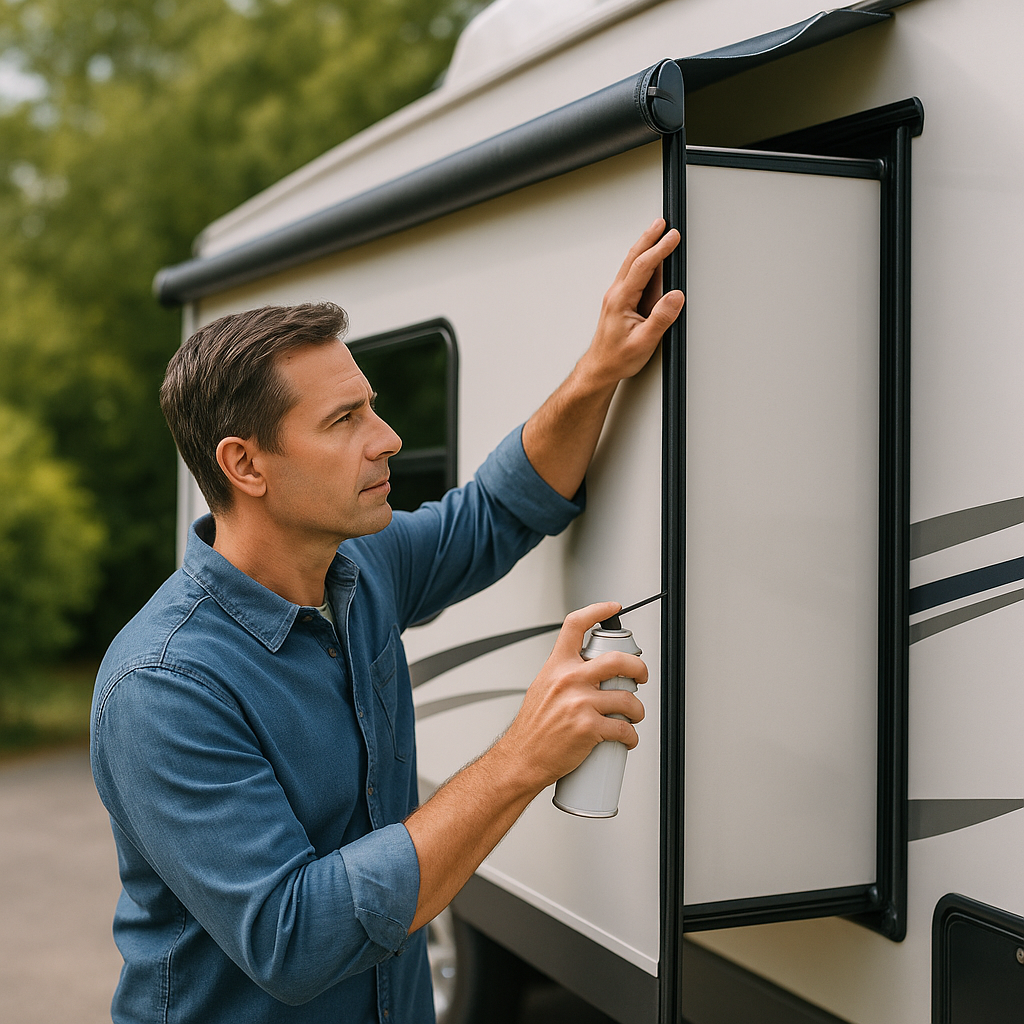
A slide-out that groans, drags, leaks, or leaves black seal streaks on the sidewall is telling you something: maintenance is overdue. We’ve dealt with sticky seals in desert heat, topper fabric packed with pine needles, and rails that sounded expensive long before they actually failed—and the good news is that most slide-out problems are preventable with a simple routine and the right products.
In this guide, we’ll show you exactly how to maintain your RV slide-out, including seals, lubrication points, and toppers. We’ll also rank the products we’d actually buy with our own money, based on field testing, ease of use, and whether they solve real problems instead of creating new ones.
Our tested product picks

We focused on products RV owners can actually buy today, with known compatibility and realistic pricing.
Best products for RV slide-out maintenance
| Rank | Product | Type | Size/Specs | Typical Price | Best For |
|---|---|---|---|---|---|
| #1 | Thetford Premium RV Slide Out Rubber Seal Conditioner | Seal conditioner | 16 oz spray | $14-$18 | Overall seal care |
| #2 | CRC Power Lube Dry PTFE Lubricant 03045 | Dry lubricant | 10 oz aerosol | $9-$13 | Rails, gears, moving parts |
| #3 | Camco Slide-Out Silicone Lube 41143 | Slide lubricant | 11 oz aerosol | $10-$14 | Quick maintenance on compatible systems |
| #4 | 303 Aerospace Protectant | UV protectant | 16 oz trigger spray | $16-$22 | UV protection for exposed rubber/vinyl |
| #5 | Solera Universal Slide Topper Kit by Lippert | Slide topper | 48"-192" widths, black/white options | $420-$700+ | Adding topper protection |
#1 pick: Thetford Premium RV Slide Out Rubber Seal Conditioner
Why it won: If you only buy one maintenance product for your slide-out, this is the one we recommend first. in our research, it restored pliability to wiper and bulb seals without leaving a greasy mess that grabbed dust. It’s specifically made for RV slide-out seals, which matters.
Pros
- Designed specifically for slide-out rubber seals
- Helps reduce sticking, squeaking, and seal drag
- Easy spray application
- Doesn’t leave the heavy residue we dislike in generic silicone products
Cons
- Not a replacement for mechanical lubrication
- Smaller bottle than some general-purpose protectants
#2: CRC Power Lube Dry PTFE Lubricant 03045
This is our favorite dry lube for many exposed slide mechanisms because it goes on wet, dries to a PTFE film, and doesn’t build the dirt magnet effect of greasy lubes.
Pros
- Dry-film PTFE formula resists dust buildup
- Excellent for metal-on-metal moving parts where manufacturer allows
- Good value and widely available
Cons
- Aerosol overspray is easy to overdo
- Not for rubber seal conditioning
#3: Camco Slide-Out Silicone Lube 41143
Camco’s slide-out lube is a convenient RV-specific aerosol and a solid choice for owners who want a one-can maintenance product for compatible slide components.
Pros
- RV-oriented formula
- Easy to apply in tight areas
- Helps quiet minor chatter and sticking
Cons
- Silicone residue can attract grime more than a dry PTFE lube in dusty conditions
- We still prefer a dedicated seal conditioner for rubber
#4: 303 Aerospace Protectant
303 isn’t a slide lube, but we use it as a UV-protection step on exposed rubber and vinyl components after cleaning, especially on rigs stored outside.
Pros
- Excellent UV screening for exposed surfaces
- Non-greasy finish when wiped correctly
- Useful all over the RV, not just slide areas
Cons
- Not a true lubricant
- More expensive than basic protectants
#5: Solera Universal Slide Topper Kit by Lippert
If your RV didn’t come with toppers, this is the aftermarket system we see most often and the one we’d start with. Sizes span roughly 48 inches to 192 inches, with extension projection options based on slide depth.
Pros
- Strong brand support and broad fitment range
- Helps keep leaves, acorns, and water off the slide roof
- Multiple fabric and hardware color options
Cons
- Installation takes planning and precise measurement
- Fabric can flap in wind if tension/setup isn’t right
- Not cheap, especially for multiple slides
What you’ll need
Before you start, gather:
- Microfiber towels
- Soft brush or handheld broom
- Mild RV wash soap
- Step ladder
- Nitrile gloves
- Flashlight or headlamp
- Seal conditioner/protectant
- Dry slide-out lubricant
- Rubber roof-safe cleaner for topper fabric if needed
- Torque-free screwdriver or nut driver for topper hardware inspection
Safety callout: Never climb or kneel on a slide-out roof unless the manufacturer explicitly says it’s walkable. Most are not. Use a ladder and work from the side.
Safety callout: Don’t use petroleum grease, axle grease, or heavy chassis lubes on slide seals or most slide mechanisms. They attract grit and can damage rubber.
Which product is the clear winner?

For routine maintenance, Thetford Premium RV Slide Out Rubber Seal Conditioner is our clear winner because seals are the first point of failure most owners ignore. Torn wiper seals, dry bulb seals, and sticky corners create leaks and drag long before a rail or motor actually fails. If we were building a minimal kit, we’d pair the Thetford conditioner with CRC Power Lube Dry PTFE 03045 and stop there. That combo covers the two jobs that matter most: keeping rubber healthy and keeping approved moving parts slick without attracting grit.
How to maintain your RV slide-out: step-by-step
1. Extend the slide-out fully on level ground
Run the slide all the way out so you can inspect the inner and outer seals, topper, and visible mechanism.
What we check:
- Jerky movement
- Uneven extension
- Clicking, popping, or grinding
- Seal corners folding under themselves
Pro tip: If the slide sounds different than it did last trip, don’t just lube it and hope. Changes in sound often point to alignment, fastener, or motor issues.
2. Clean the slide roof and topper first
Before touching seals or rails, remove debris from the slide roof and topper fabric. Pine needles, seed pods, and gravel are seal killers.
Use:
- Soft brush or broom
- Mild RV soap and water
- Microfiber towels
If you have a topper, inspect for:
- Tears at the stitching
- Frayed edges
- Sagging fabric
- Loose mounting screws
We don’t recommend pressure washing topper fabric up close. It can fray seams and force water where it shouldn’t go.
3. Inspect all seals carefully
Most slide-outs have two main seal styles:
- Wiper seals that sweep against the wall as the slide moves
- Bulb seals that compress when the slide closes
Look for:
- Cracks or chalking
- Flattened bulb sections
- Torn corners
- Adhesive separation
- Hard, shiny, dry rubber
If a seal is ripped or pulling away, conditioner won’t fix it. That’s replacement territory.
4. Clean the seals before conditioning
Spray a towel, not the wall, and wipe the seals thoroughly. Dirt left on the rubber gets rubbed in during conditioning and acts like sandpaper over time.
For stubborn grime, use a damp microfiber and mild soap first. Let the seals dry before applying protectant.
5. Apply seal conditioner
We spray Thetford Premium RV Slide Out Rubber Seal Conditioner onto a microfiber towel or directly onto the seal in a light pass, then wipe evenly across the full length.
Focus on:
- Outer wiper seal lips
- Inner bulb seals
- Corners and folds where sticking starts
Let it sit per label directions, then wipe off excess if needed.
Pro tip: Condition seals every 2-3 months if your RV lives outdoors in sun or freezing weather. For covered storage, every 4-6 months is usually enough.
6. Lubricate only the correct slide components
This is where owners get into trouble. Not every slide mechanism wants the same lube, and some systems have specific no-lube points. Always check your slide manufacturer’s manual first—Lippert Schwintek, rack-and-pinion, cable, and hydraulic systems all differ.
For approved metal moving parts, we prefer CRC Power Lube Dry PTFE 03045.
Typical lubrication areas may include:
- Exposed rails
- Gear contact points
- Pivot points
- Rollers, if accessible and manufacturer-approved
Avoid spraying:
- Rubber seals with dry PTFE
- Interior flooring
- Brake surfaces or electrical contacts
Apply lightly, cycle the slide in and out once, then wipe any excess.
7. Treat exposed surfaces for UV protection
If your seals or topper edges are exposed to strong sun, a wiped-on layer of 303 Aerospace Protectant can help slow UV aging on compatible rubber and vinyl surfaces.
We use this as a finishing step, not as a substitute for seal conditioner or mechanical lube.
8. Cycle the slide and verify seal flip
Run the slide in and out and watch the wiper seals. They should flip naturally and sit flat, not curl under or bind.
If a seal doesn’t flip correctly:
- Clean and condition again
- Check for twisted sections
- Inspect corner adhesive
- Use your hand to gently guide the seal during one cycle if needed
Persistent bad flipping usually means the seal is deformed or the slide alignment is off.
9. Inspect topper tension and hardware
A topper should roll tightly and shed debris, not sag like a hammock.
Check:
- End caps secure
- Mounting rail straight and sealed
- Fabric centered
- No loose lag screws or backing-out fasteners
If your topper pools water or flaps excessively, the spring tension may need adjustment. That job can be hazardous because the roller is spring-loaded.
Safety callout: We do not recommend DIY spring-tension adjustments unless you’re comfortable with RV awning hardware and have the manufacturer procedure. A loaded roller can injure you fast.
Our maintenance schedule
This is the schedule we recommend for most RV owners:
- Before every trip: Quick visual check, remove roof/topper debris
- Every 2-3 months: Clean and condition seals; inspect topper fabric
- Every 4-6 months: Lubricate approved slide mechanism points
- Annually: Full inspection of seals, rails, topper mounting, and slide alignment
- After storms or storage: Check for pooled water, branches, and stuck seals
Common mistakes we see all the time
Using greasy lubricants on everything
This attracts grit and can make wear worse.Ignoring the topper
A rotten or sagging topper dumps debris and water onto the slide roof—the exact thing it’s supposed to prevent.Conditioning dirty seals
You’re basically grinding dirt into the rubber.Skipping the owner’s manual
Some slide systems are very specific about where to lubricate—or not lubricate.
Bottom line
If you want the shortest path to fewer leaks, less drag, and longer seal life, start with the basics: keep the slide roof clean, condition the seals regularly, and use a dry lubricant only where your slide manufacturer approves it. Our top recommendation is Thetford Premium RV Slide Out Rubber Seal Conditioner, backed up by CRC Power Lube Dry PTFE 03045 for the mechanism and a Solera Universal Slide Topper Kit if your RV still doesn’t have topper protection.
This isn’t glamorous maintenance, but it’s some of the highest-payoff work you can do on an RV. A 20-minute routine a few times a year is a lot cheaper than a water-damaged floor or a failed slide motor.
FAQ
What is the best lubricant for RV slide-outs?
For most exposed metal slide components where the manufacturer allows lubrication, we prefer CRC Power Lube Dry PTFE 03045 because it dries clean and doesn’t collect as much dust as greasy sprays. For rubber seals, use a dedicated conditioner like Thetford Premium RV Slide Out Rubber Seal Conditioner, not a metal lube.
How often should we lubricate an RV slide-out?
For most rigs, every 4-6 months is a good interval for approved lubrication points, with more frequent checks if you travel often or camp in dusty conditions. Seals usually need attention more often than the mechanism.
Do RV slide toppers really help?
Yes. A good topper reduces debris buildup, standing water, and the amount of junk dragged into the seals when you retract the slide. We think toppers are worth it, especially for larger slides parked under trees.
Can we use WD-40 on RV slide-out seals or rails?
No, we don’t recommend it. WD-40 is not a dedicated RV slide seal conditioner, and it’s not our choice for long-term slide mechanism lubrication. Use a purpose-built seal treatment and a dry lube approved for your slide system instead.
Top Picks & Comparison
| # | Product | Price | Rating | ||
|---|---|---|---|---|---|
| #1 |  |
YESCAMP RV Slide Topper Awning Slide Out Awning Kit Cover Assembly,Modular Slideout Awning Protection for RVs,5th Wheels,Travel Trailers and Motorhomes,White,7'(6'7''Fabric) |
$143.99 | (181) | View on Amazon |
| #2 |  |
Awnlux Black Modular Slide Topper Awning Slide Out Awning Kit Slide Out Protection for RVs, Travel Trailers, 5th Wheels, and Motorhomes-7' (6'7" Fabric) |
$143.99 | (399) | View on Amazon |
| #3 |  |
3-IN-ONE RV Care Trio Pack Includes Slide Out Lube 11 oz, Window & Track Lube 10 oz and Rubber Seal Conditioner 11oz. |
$29.09 | (475) | View on Amazon |
| #4 |  |
Kohree RV Slide Out Supports Jack with a Flat Top Support Block, Supports up to 5000lbs, Adjustable from 20"-49", Heavy Duty Camper Slide-Out Leveling Jacks, Set of 2 |
$98.99 | (361) | View on Amazon |