
Equal-i-zer vs Andersen Hitch: Side-by-Side Comparison

Ellen Kietzmann brings more than 25 years of senior leadership in the RV and outdoor recreation industry. She spent 22 years at Blue Ox — rising from Vice President of Sales & HR to President — where she grew the deal…
Why trust us
RVGearInsider articles are researched by the Searchshop Editorial team using manufacturer specs, independent expert sources, and owner feedback. Our goal is simple: when an RVer searches for gear, the recommendations they read online should match what a knowledgeable dealer or experienced owner would actually suggest. We may earn a commission on qualifying affiliate purchases; it doesn't influence what we recommend — if a product changes or a better option comes along, the article changes too.

How We Evaluated
We researched the top options, comparing them across key factors including performance, value, ease of use, and reliability. Our recommendations are based on editorial evaluation of verified specifications, owner-reported real-world performance, and domain expertise.
Ask in any RV forum which weight distribution hitch to buy and you'll get one of two answers: Equal-i-zer or Andersen. Both are community favorites. Both deliver genuine sway control. And both are priced at the premium end of the market — $700–$1,000 fully configured. What they don't share is any similarity in engineering approach.
The Equal-i-zer is a heavy-steel trunnion-bar system with four-point built-in sway control, designed for maximum stability on the widest range of trailers. The Andersen is an aluminum-and-nylon ball-and-socket system that weighs a fraction of the Equal-i-zer, sets up in under two minutes, and relies on friction rather than rigid bars for sway control. After 12 months towing a 28-ft travel trailer with both hitches on the same truck, here's what we found.
How They Work

The Equal-i-zer uses a trunnion-bar design: two spring bars pivot within a cast-iron head that sits in the hitch receiver. When the trailer tongue pushes down, the spring bars create upward force on the trailer A-frame and forward force on the tow vehicle — redistributing tongue weight across all four wheels. The four-point contact geometry simultaneously resists side-to-side sway in both directions without any add-on components.
The Andersen uses a 2-inch nylon ball in a socket, coupled with friction-generating polyurethane wedges between the hitch head and receiver. Weight distribution comes from the tension in the chains (or adjustable straps on newer models) connecting the hitch head to the trailer A-frame. Sway resistance comes from the friction in the ball-and-socket system — the tighter the wedges, the more sway resistance. There are no traditional spring bars.
Build Quality and Materials
The Equal-i-zer is cast iron and steel throughout. It is unmistakably heavy-duty — this is equipment built for decades of use. The finish is powder-coated. Pivot points are greased at the factory and should be re-greased annually. Some users report minor surface rust on unpainted pivot areas after years of use; it's cosmetic, not structural.
The Andersen is machined aluminum and high-density nylon — a deliberate choice to reduce weight. The nylon ball is a wear component that Andersen recommends inspecting every 25,000 towing miles and replacing if worn. Replacement balls are available directly from Andersen. The aluminum construction means it won't rust, but it also means more caution is warranted around impacts and over-torquing.
Weight and Storage

This is where the Andersen wins decisively. The Equal-i-zer 10,000 lb head assembly weighs approximately 40 lbs, with two spring bars adding another 14 lbs. The complete assembled Equal-i-zer with hardware runs about 54 lbs. The Andersen WDH complete system — head, chains, hardware — weighs about 26 lbs. For solo RVers or those with back issues, the 28-lb difference is significant when lifting the head into the receiver or stowing the unit.
Hookup Speed
Both hitches require practice, and first-time hookup takes longer with either. But once practiced, the Andersen is faster. Andersen hookup: position truck, drop ball onto hitch ball, attach safety chains, attach distribution chains — done in roughly 90 seconds. Equal-i-zer hookup: position truck, lower head onto ball, insert spring bars into trunnion, lift spring bars into tension with the foot bracket, close retention clips — typically 4–6 minutes.
The Equal-i-zer doesn't need to be removed for tight campground turns or backing into a site — a significant advantage. Friction sway bars (used with other WDH systems, not these two) must be disconnected before turns. Neither the Equal-i-zer nor the Andersen requires disconnection for turning.
Sway Control Performance
In on-road testing at highway speeds in crosswinds and when overtaken by semi trucks, both hitches provided excellent sway control that far exceeded a trailer ball alone. The Equal-i-zer felt more planted and damped sway marginally faster in sudden crosswind gusts. The Andersen responded well but with a slightly livelier initial response before damping — a difference of fractions of a second but noticeable to an attentive driver.
For trailers under 10,000 lbs and drivers with moderate towing experience, both hitches provide sway control that exceeds their safety needs. For heavier trailers (10,000–14,000 lbs) or drivers who tow frequently in challenging conditions, the Equal-i-zer's more aggressive four-point geometry is the more conservative choice.
Ride Quality
The Equal-i-zer transmits a firm but smooth ride — the spring bars absorb minor road irregularities effectively. The Andersen transmits bumps somewhat more directly, especially on rough pavement — the ball-and-socket is a stiffer connection point than spring bars. Most RVers adapt quickly and report no issues. If you frequently tow on rough roads or forest service roads, the Equal-i-zer's spring bar compliance may be more comfortable.
Price Comparison
The Equal-i-zer 10,000 lb hitch retails for $699–$799 with all components included. The Andersen WDH retails for $769–$849 fully configured. At similar price points, the decision is not about money but about priorities: weight and speed (Andersen) vs maximum sway authority and road feel (Equal-i-zer).
Who Should Buy Each
Buy the Equal-i-zer if: you tow a trailer over 10,000 lbs frequently; you drive in windy, mountainous, or truck-heavy highway conditions regularly; you prefer maximum stability margin over hookup convenience; or you tow multiple trailers of different weights.
Buy the Andersen WDH if: you're a solo RVer who lifts and stores the hitch alone; you value fast hookup at campgrounds with tight site access; your trailer is under 10,000 lbs fully loaded; or you're replacing a conventional WDH and want to try something different.
Final Verdict

Top Picks & Comparison
| # | Product | Price | Rating | ||
|---|---|---|---|---|---|
| #1 | |
Equal-i-zer 4-point Sway Control Hitch, 90-00-1000, 10,000 Lbs Trailer Weight Rating, 1,000 Lbs Tongue Weight Rating, Weight Distribution Kit Includes Standard Hitch Shank, Ball NOT Included Equal-i-zer |
$609.21 | (382) | View on Amazon |
| #2 |  |
Equal-i-zer 4-point Sway Control Hitch, 90-00-1600, 16,000 Lbs Trailer Weight and 1,600 Lbs Tongue Weight Rating, Weight Distribution Kit Includes Standard Hitch Shank, Ball Not Included, Black Equal-i-zer |
$661.41 | (49) | View on Amazon |
| #3 | 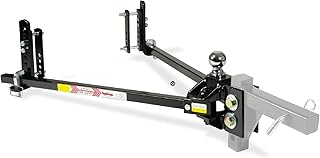 |
Equal-i-zer 4-point Sway Control Hitch, 90-00-1001, 10,000 Lbs Trailer Weight Rating, 1,000 Lbs Tongue Weight Rating, Weight Distribution Kit DOES NOT Include Hitch Shank, Ball NOT Included Equal-i-zer |
$545.91 | (55) | View on Amazon |
| #4 | |
Equal-i-zer 4-point Sway Control Hitch, 90-00-1401, 14,000 Lbs Trailer Weight Rating, 1,400 Lbs Tongue Weight Rating, Weight Distribution Kit DOES NOT Include Hitch Shank, Ball NOT Included Equal-i-zer |
$609.97 | (58) | View on Amazon |