
Best RV Water Filters: Inline to Multi-Stage (2026)

Ellen Kietzmann brings more than 25 years of senior leadership in the RV and outdoor recreation industry. She spent 22 years at Blue Ox — rising from Vice President of Sales & HR to President — where she grew the deal…
Why trust us
RVGearInsider articles are researched by the Searchshop Editorial team using manufacturer specs, independent expert sources, and owner feedback. Our goal is simple: when an RVer searches for gear, the recommendations they read online should match what a knowledgeable dealer or experienced owner would actually suggest. We may earn a commission on qualifying affiliate purchases; it doesn't influence what we recommend — if a product changes or a better option comes along, the article changes too.

Ask any experienced RVer what they connect before their fresh water hose and the answer is almost always a water filter. Campground water is technically potable, but "technically potable" leaves a lot of room for sulfur smell, chlorine taste, sediment, and occasionally worse. A proper RV water filter removes these issues at the point of entry before the water ever reaches your tank — and it protects your water lines, fittings, and water heater from sediment buildup that shortens their lifespan.
We tested five water filtration systems across six months of travel, connecting each to campground water in Arizona, Utah, Colorado, and New Mexico — a range that includes some of the more mineral-heavy municipal water systems in the country. These are our recommendations.
The Rankings

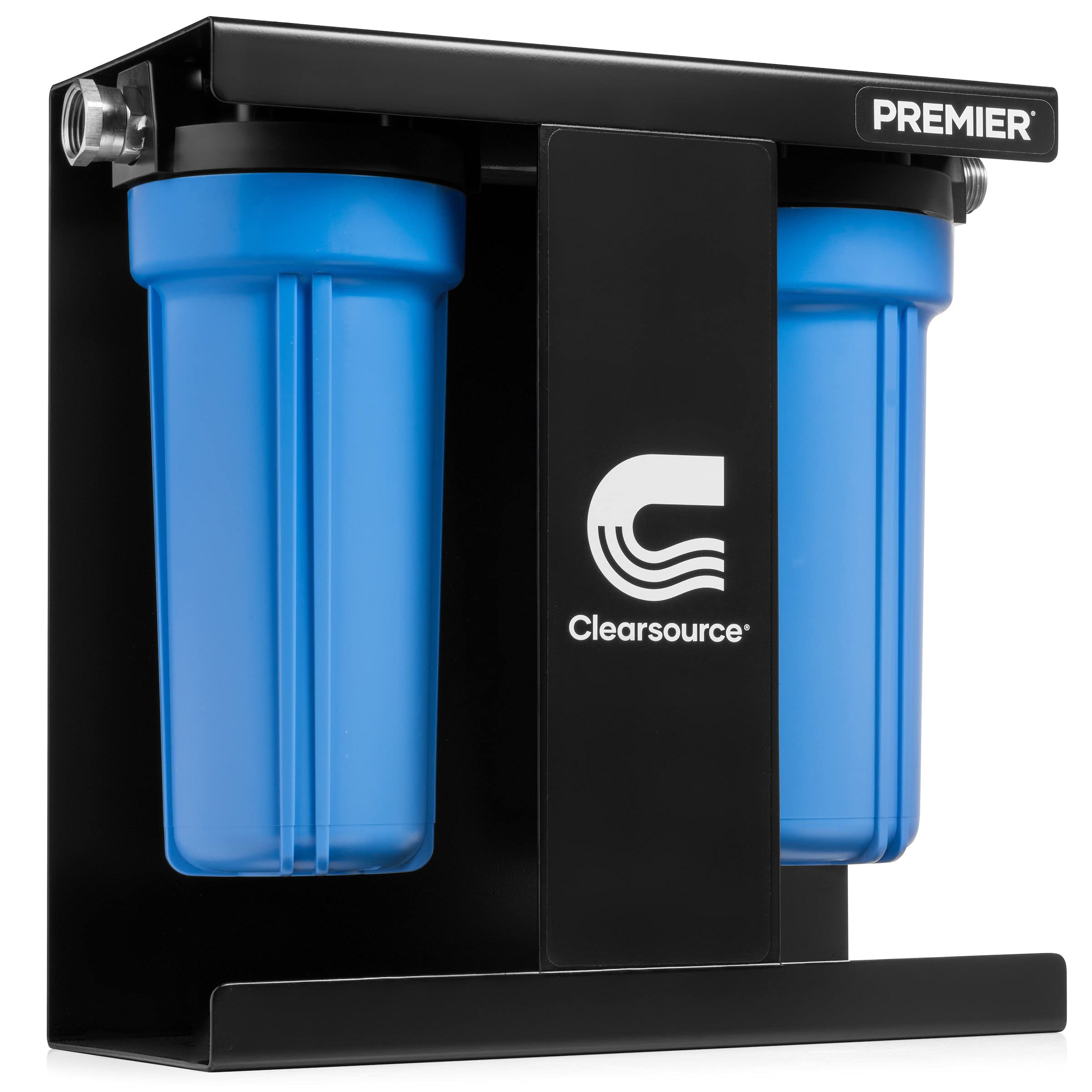
The Clearsource Premier is the gold standard for full-timer water filtration. Its two-stage system combines a 0.5-micron sediment pre-filter with a 0.5-micron carbon block — delivering the cleanest, best-tasting water in our test. The stainless steel housing is built for years of outdoor use, the filter housings are easy to access and change, and Clearsource's filter cartridges are available in three grades (Essential, Ultra, Plus) for different water quality conditions. It's significantly more expensive than inline filters, but it's also the system that makes campground water taste like home.
| Stages | 2 — sediment + carbon block |
| Micron Rating | 0.5 micron |
| Housing | Stainless steel |
| Flow Rate | Up to 4 GPM |
| Filter Life | ~3 months / 3,000 gallons |
- Best water taste improvement in the test — noticeable difference from day one
- Stainless housing is weather and UV resistant for outdoor use
- Easy filter access and cartridge swaps without tools
- Premium filter cartridge options for varying water quality
- Most expensive system in the ranking by a wide margin
- Larger footprint — requires storage space or a dedicated pass-through mounting
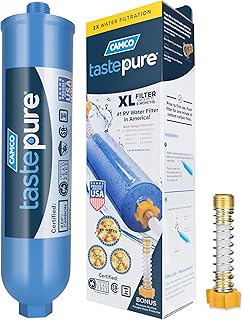
The Camco TastePURE XL is the most popular RV water filter in the world for good reason: it works, it's cheap, and it fits in any gear bag. A single KDF/carbon media block removes chlorine taste and odor effectively in most campground water. The XL version has a larger media volume than the original TastePURE, extending filter life to approximately 3 months of moderate use. For weekend campers and entry-level RVers, the TastePURE XL is the correct starting point — spend the $29, see how much difference filtration makes, then upgrade if your travel pattern demands it.
| Stage | 1 — KDF/carbon inline |
| Micron Rating | Not specified (coarse filtration) |
| Housing | Plastic |
| Flow Rate | Adequate at campground pressure |
| Filter Life | ~3 months or 3,000 gallons |
- Cheapest effective filter in the ranking
- Widely available — Walmart, Amazon, Camping World
- Easy to install — no tools, just thread onto hose
- Single-stage only — doesn't remove sediment or finer contaminants
- Plastic housing degrades over time in UV exposure
- Coarser filtration than multi-stage systems
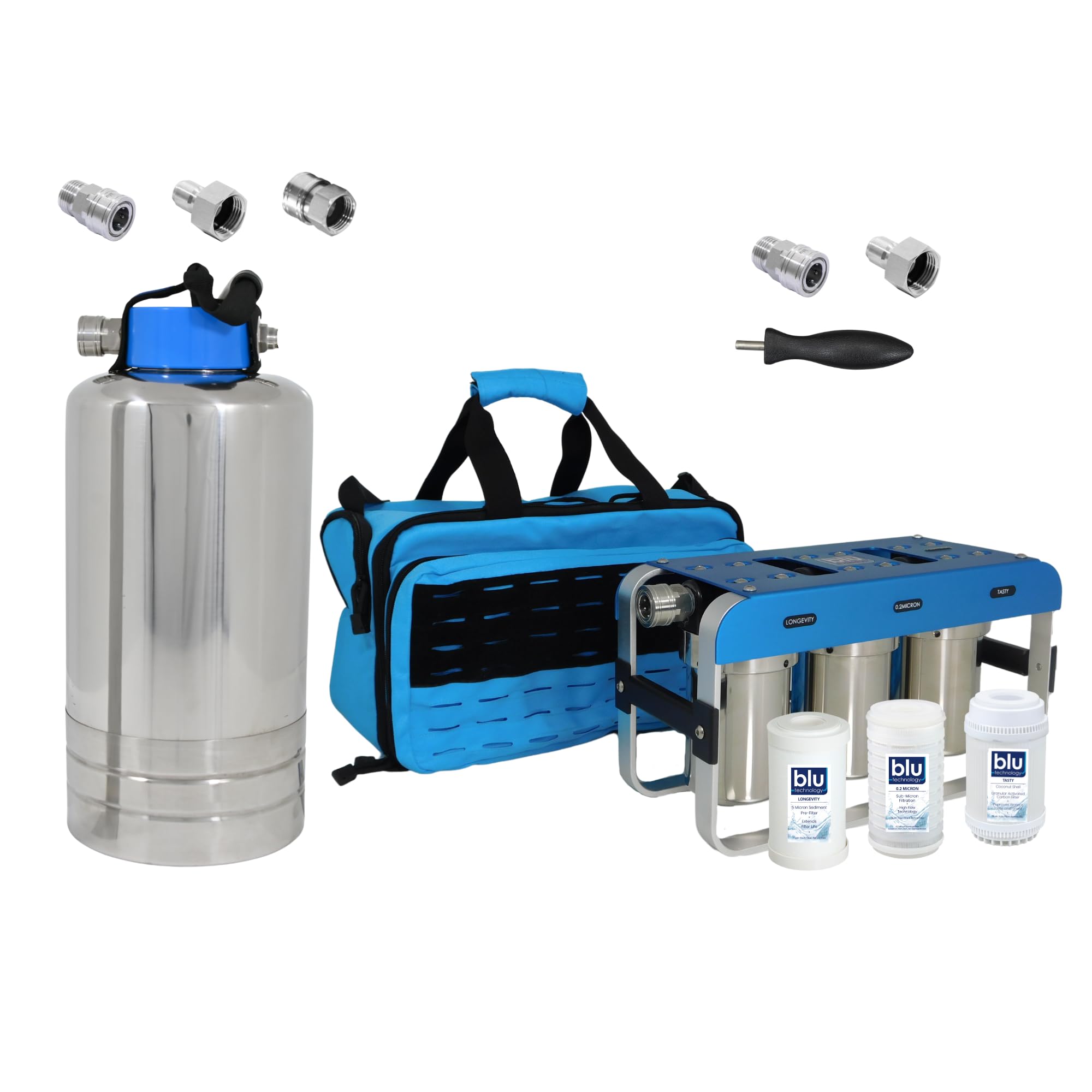
The AR3 Essential splits the gap between a cheap inline filter and the Clearsource Premier. Its three stages — sediment (20 micron), carbon block (5 micron), and a final KDF stage — deliver noticeably cleaner water than single-stage inline filters at roughly half the Clearsource's price. The canister-style housings use standard 10-inch replacement cartridges, so generic replacements are available cheaply. Flow rate is strong — no pressure drop complaints in our testing. The downsides are plastic housings (not stainless) and a slightly bulky profile.
| Stages | 3 — sediment + carbon + KDF |
| Micron Rating | 5 micron carbon stage |
| Housing | Plastic canister |
| Filter Life | ~6 months per stage |
| Replacements | Standard 10" housings — generic available |
- Three-stage filtration at a reasonable mid-range price
- Standard housing accepts inexpensive generic replacement cartridges
- Noticeably better than single-stage inline in hard water
- Plastic housing — not as durable as stainless for long-term outdoor use
- Larger profile than inline filters
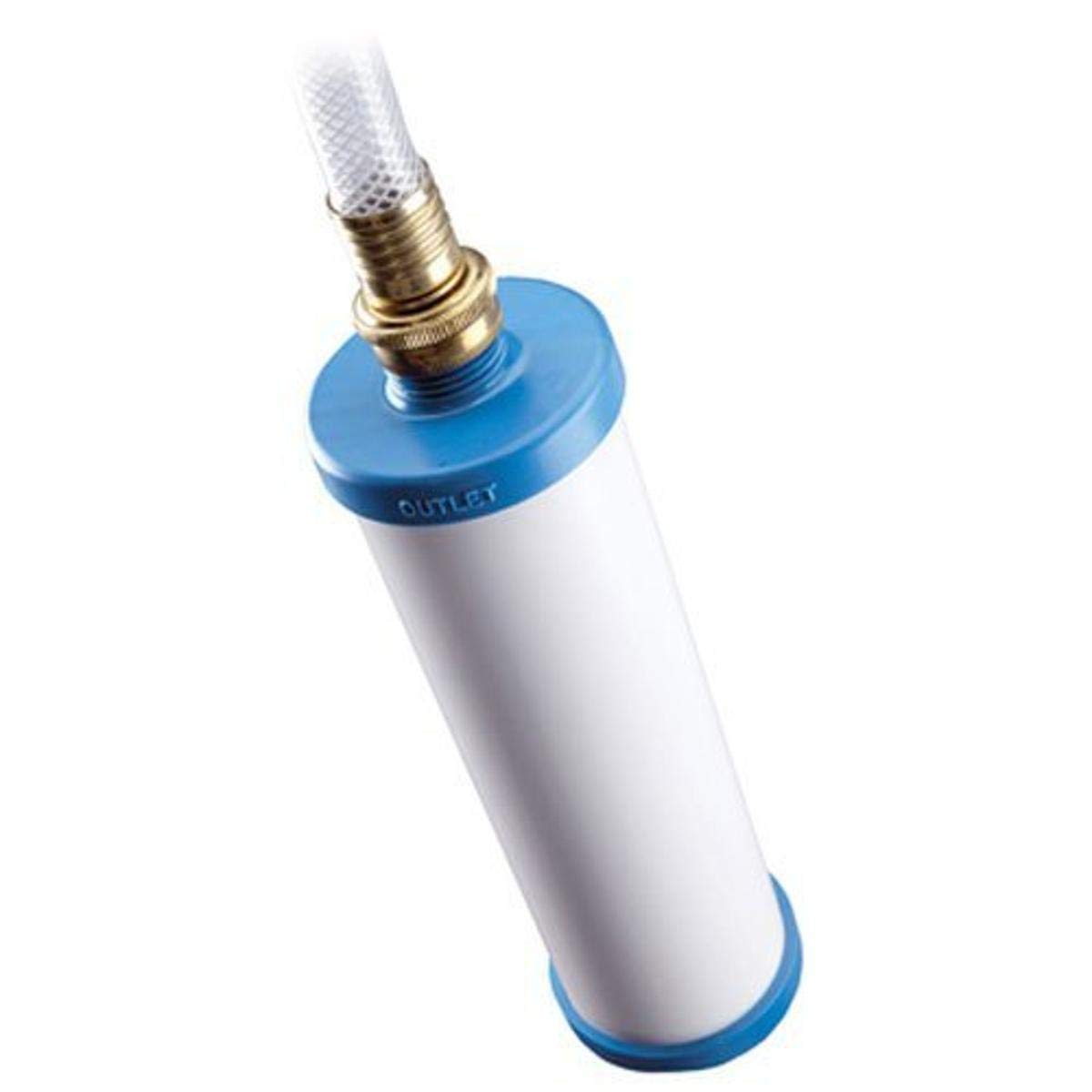
The Culligan is designed as a point-of-use drinking water filter — typically plumbed under the kitchen sink or connected to a dedicated drinking water tap. It's not a whole-coach filter. If you're comfortable using campground water for showering and dishes but want filtered water for drinking and cooking specifically, the Culligan delivers good carbon filtration in a compact inline form factor at a trusted consumer brand.
| Stage | 1 — carbon block |
| Micron Rating | 5 micron |
| Connection | Standard 3/8" or 1/2" push-fit |
| Filter Life | ~6 months drinking-only use |
| NSF Certified | NSF/ANSI 42 |
- NSF/ANSI 42 certified — verified contaminant reduction claims
- Good brand recognition and customer support
- Compact for under-sink or kitchen area installation
- Point-of-use only — doesn't filter water to tank or other fixtures
- Not designed for outdoor hose-connection use
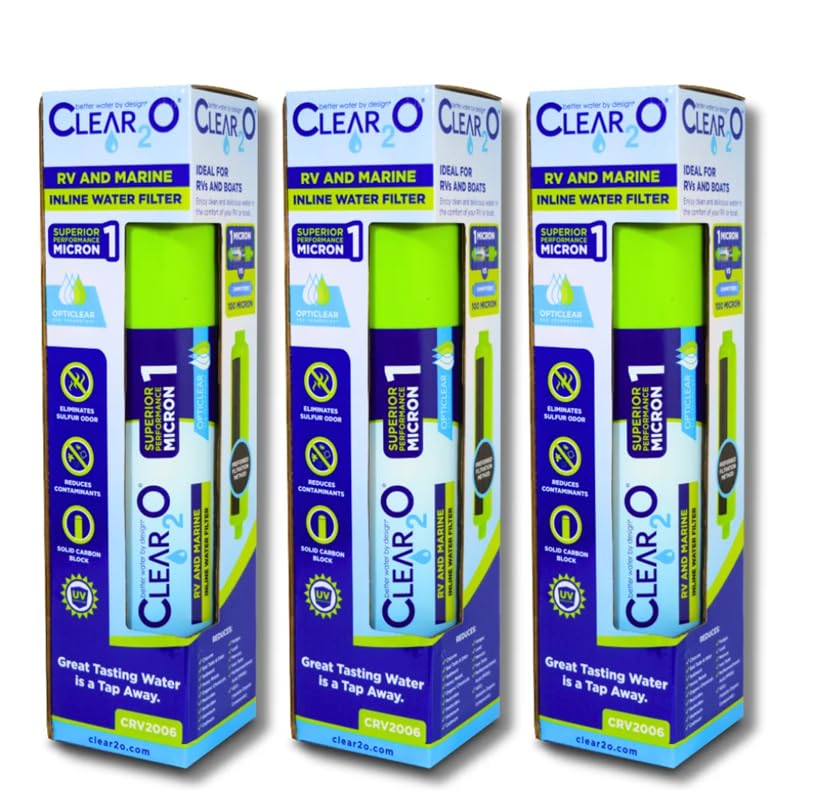
The Clear2O uses a 1-micron carbon block — a finer filtration rating than the Camco TastePURE — at barely more cost. It's a solid upgrade from entry-level inline filters for under $40. The main limitation is the standard inline plastic housing that's not built for years of UV and weather exposure. For seasonal RVers who store the filter between trips and replace it annually, it's excellent value.
| Stage | 1 — 1-micron carbon block |
| Micron Rating | 1 micron |
| Housing | Plastic inline |
| Filter Life | ~2 months or 2,000 gallons |
| NSF Certified | NSF/ANSI 42 |
- 1-micron rating finer than Camco TastePURE — better sediment removal
- NSF/ANSI 42 certified
- Barely more expensive than entry-level inline filters
- Single-stage only
- Shorter filter life than Camco TastePURE XL
- Not built for permanent outdoor installation
How We Tested
We ran each filter through a standardized 30-day test protocol at each campsite: baseline water sample collected before filter, post-filter sample collected after 30 minutes of steady flow, and taste testing by three household members. We checked for visible sediment, sulfur odor, and chlorine taste. Flow rate was measured at each filter's inlet pressure (typically 40–60 PSI with a regulator in line). We also used an affordable TDS (Total Dissolved Solids) meter to compare baseline and filtered readings, though note that TDS reduction isn't always meaningful — minerals like calcium aren't necessarily removed by carbon filters.
Inline vs Canister vs Multi-Stage

Inline filters are single-cartridge units that screw directly onto your water hose — the simplest possible setup. They typically use a single activated carbon block or KDF media to remove chlorine, taste, and odor. They're the cheapest ($20–$40) and the most popular for entry-level use.
Canister systems use a standard whole-house style housing with a replaceable cartridge. They're larger, flow better at high pressure, and allow cartridge swaps without buying a complete new unit. Multi-stage systems (typically 2–4 stages) combine sediment pre-filtration, carbon block filtration, and sometimes an additional specialty stage for improved removal of specific contaminants.
What About Water Pressure Regulators?
Every RV water filter in this ranking should be used with a water pressure regulator upstream (between the campground pedestal and your filter). RV water systems are typically rated for 45–60 PSI; campground water can arrive at 80–100 PSI and blow fittings, hoses, and filter housings. A quality brass or stainless pressure regulator (like the Camco Brass or Valterra Pressure Regulator) runs $15–$40 and should be a permanent part of your hookup kit. Reddit's r/GoRVing consistently lists the water filter + pressure regulator combo as one of the first two purchases for any new RV owner.
What Filters Remove (and What They Don't)
Carbon block filters effectively remove: chlorine, chloramines, taste, odor, sediment (to their rated micron level), volatile organic compounds (VOCs), and some heavy metals including lead. Carbon filters do NOT remove: dissolved minerals (TDS — calcium, magnesium), nitrates, fluoride, bacteria, or viruses. If you're camping at locations with known bacterial contamination or using water from unknown sources, a filter alone is insufficient — you need UV purification or chemical treatment in addition.
Top Picks & Comparison
| # | Product | Price | Rating | ||
|---|---|---|---|---|---|
| #1 | 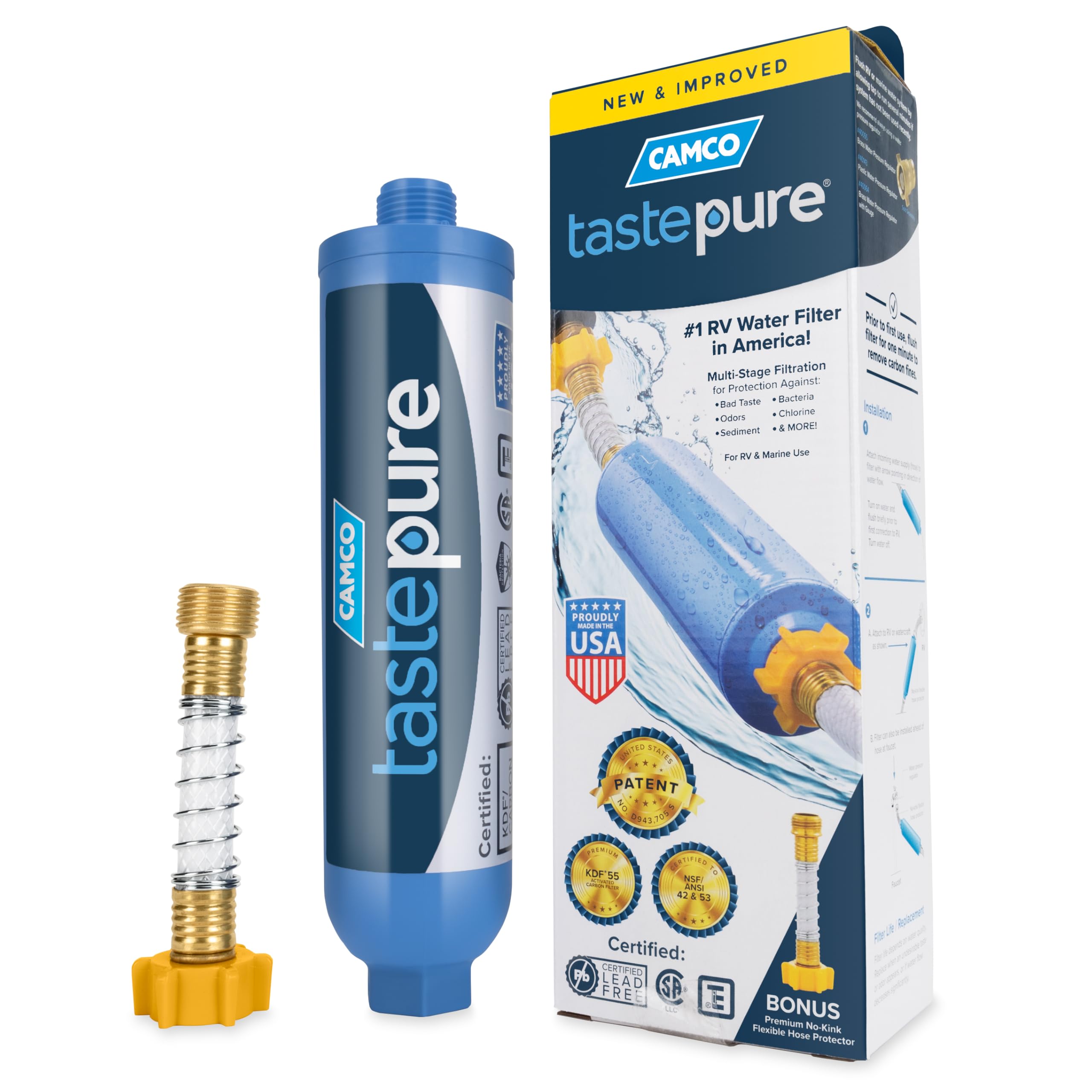 |
Camco Tastepure RV Water Filter - Advanced RV Inline Water Filter with Flexible Hose Protector - GAC & KDF Filtration - Made in USA - Camping Essentials for Fresh Drinking Water (40043) Standard Filter Camco |
$20.82 | (53,209) | View on Amazon |
| #2 |  |
Camco Tastepure RV Water Filter - Advanced 6-Step Patent-Protected Filtration - Camping Essentials for Fresh Drinking Water - 2-Pack of RV Inline Water Filters, Made in USA (40045) |
$30.58 | (20,329) | View on Amazon |
| #3 |  |
RVGUARD Inline RV Water Filter, Reduces Odors, Bad Taste, Rust, Chlorine, Ideal for RV and Marine use, 4 Pack |
$27.99 | (3,378) | View on Amazon |
| #4 |  |
GLACIER FRESH RV/Marine Water Filter with 2 Flexible Hose Protector, Greatly Reduces Bad Taste, Odors, Chlorine and Sediment in Drinking Water, 4 Pack |
$40.99 | (1,215) | View on Amazon |