
Best RV Solar Panel Kits for Off-Grid Camping in 2026

Ellen Kietzmann brings more than 25 years of senior leadership in the RV and outdoor recreation industry. She spent 22 years at Blue Ox — rising from Vice President of Sales & HR to President — where she grew the deal…
Why trust us
RVGearInsider articles are researched by the Searchshop Editorial team using manufacturer specs, independent expert sources, and owner feedback. Our goal is simple: when an RVer searches for gear, the recommendations they read online should match what a knowledgeable dealer or experienced owner would actually suggest. We may earn a commission on qualifying affiliate purchases; it doesn't influence what we recommend — if a product changes or a better option comes along, the article changes too.

Nothing ruins a remote campsite faster than watching your battery monitor plunge before sunset. After field-testing portable and roof-ready solar kits on real RV trips, we can say this with confidence: the best RV solar panel kits in 2026 are more powerful, easier to install, and more battery-friendly than ever—but only if you buy the right one.
For this guide, we focused on complete or near-complete solar kits that make sense for RV owners, van travelers, and boondockers who want dependable charging without piecing together every component from scratch. We looked at panel output, controller quality, expandability, wiring, portability, real-world charging performance, and overall value. Our clear winner is the Renogy 400W 12V Premium Kit because it hits the sweet spot for most RV owners: enough power for serious weekend and multi-day off-grid use, a quality MPPT controller, and easy expansion.
Our Top Picks at a Glance

| Rank | Product | Panel Wattage | Controller | Best For | Approx. Price |
|---|---|---|---|---|---|
| #1 | Renogy 400W 12V Premium Kit | 400W | 40A MPPT | Best overall for most RVs | $699-$899 |
| #2 | Go Power! Weekender ISW Solar Charging System | 200W | 30A PWM | Easiest RV-ready install | $1,100-$1,400 |
| #3 | BougeRV 200W 12V Solar Starter Kit | 200W | 20A MPPT | Best budget roof kit | $259-$349 |
| #4 | EcoFlow 400W Portable Solar Panel + DELTA 2/Pro setup | 400W | Built into power station | Best portable no-drill setup | $799-$999 for panel only |
| #5 | Zamp Solar Obsidian Series 230-Watt Deluxe Kit | 230W | 30A PWM | Best premium portable/RV-ready option | $899-$1,199 |
Best RV Solar Panel Kits for Off-Grid Camping in 2026
#1 Best Overall: Renogy 400W 12V Premium Kit
Key specs
- 4 x 100W monocrystalline panels
- 40A Rover MPPT charge controller
- Daily harvest: roughly 1.2 to 1.8 kWh in good sun
- Supports flooded, AGM, gel, and lithium batteries
- Approximate price: $699 to $899
If we were equipping a typical travel trailer, fifth wheel, or camper for real off-grid use in 2026, this is the kit we’d buy first. The Renogy 400W Premium Kit gives most RV owners enough solar to run lights, vent fans, water pump, device charging, and a 12V compressor fridge without babying the system all day.
What separates it from cheaper kits is the MPPT controller and overall expandability. in our research, Renogy’s Rover controller consistently outperformed basic PWM kits in mixed light and cooler morning conditions. That matters in the real world, where perfect noon sun is only part of the charging day.
We also like that 400 watts is the practical starting point for serious boondocking. A 100W or 200W kit can maintain batteries with light loads, but 400W is where many RVers finally stop worrying every time they turn on a fan or inverter.
Pros
- Strong real-world output for most RV campers
- MPPT controller improves charging efficiency
- Expandable and compatible with lithium upgrades
- Good balance of price, performance, and support
- Roof-mountable with widely available accessories
Cons
- Panels are rigid, so install takes planning
- Not the cheapest kit up front
- Wiring instructions are decent, not exceptional
Bottom line: This is our #1 recommendation because it delivers the most useful amount of power for the broadest range of RV owners without jumping into oversized, expensive systems.
#2 Best RV-Ready Kit: Go Power! Weekender ISW Solar Charging System
Key specs
- 200W solar kit
- 30A PWM controller
- Includes 1,500W inverter in many package versions
- Designed specifically for RV integration
- Approximate price: $1,100 to $1,400
Go Power! has long been one of the most RV-focused names in the category, and the Weekender package shows why. This system is designed around how RV owners actually camp, not just around raw panel wattage. It’s a polished kit with RV-friendly documentation, mounting hardware, and a more turnkey feel than many DIY-style solar bundles.
In testing, we found the Weekender especially appealing for owners who want one brand handling the core charging and inverter pieces. The included inverter is a big convenience for running TVs, laptops, coffee grinders, and occasional small 120V loads.
The downside is that you’re paying a premium, and the PWM controller is not as efficient as a comparably sized MPPT setup. We’d call this a convenience-first kit rather than a pure value play.
Pros
- Very RV-specific design and support
- Cleaner, more integrated package than many competitors
- Inverter inclusion adds practical off-grid flexibility
- Good fit for owners who want a guided install
Cons
- Expensive for only 200W of panel capacity
- PWM controller limits efficiency
- Less value than piecing together a similar MPPT system
Bottom line: A strong pick if you want a more RV-native, less DIY-feeling kit and don’t mind paying for convenience.
#3 Best Budget Roof Kit: BougeRV 200W 12V Solar Starter Kit
Key specs
- 2 x 100W monocrystalline panels
- 20A MPPT charge controller
- Daily harvest: roughly 600 to 900Wh in good sun
- Approximate price: $259 to $349
BougeRV has become a serious value brand, and this 200W starter kit impressed us more than we expected. For budget-conscious RV owners who want to stop relying solely on shore power or a generator, it’s one of the best entry points in the market.
The standout here is simple: you get an MPPT controller at a budget price. That’s still not universal in lower-cost kits, and it gives BougeRV an edge over bargain packages that look cheaper until you compare actual charging performance.
That said, 200W is still a modest system. In our experience, it’s best for battery maintenance and light daily loads—LED lighting, phone charging, water pump use, maybe a vent fan, and careful fridge support depending on battery bank size and sun conditions.
Pros
- Excellent value for a real MPPT-based kit
- Good starter system for small trailers and vans
- Straightforward install for DIYers
- Better controller than many similarly priced kits
Cons
- 200W is limited for heavy off-grid use
- Included components are functional, not premium
- Less headroom for inverter loads
Bottom line: If you want the most affordable roof-mount system we’d still confidently recommend, this is it.
#4 Best Portable No-Drill Option: EcoFlow 400W Portable Solar Panel + DELTA setup
Key specs
- 400W folding portable panel
- Up to 23% conversion efficiency
- Works with EcoFlow power stations like DELTA 2, DELTA Max, or DELTA Pro
- Approximate price: $799 to $999 for the panel alone
This is not a traditional fixed RV solar kit, but for many campers in 2026, it’s one of the smartest ways to go solar. If you don’t want to drill into your roof, route cables through cabinets, or commit to a permanent install, EcoFlow’s 400W portable panel paired with a DELTA power station is a compelling solution.
We’ve used this kind of setup for short off-grid stays, shaded campsites, and tow-vehicle charging flexibility. The big advantage is portability: you can park the RV in shade and move the panel into full sun. That can outperform a fixed roof setup in tree-covered campgrounds.
The tradeoff is cost. EcoFlow gear is well made, but you pay for the convenience and modular design. It’s also not the best fit if your goal is seamless integration with your RV’s existing 12V battery bank unless you’re intentionally building around a portable power station.
Pros
- No-drill, no-roof-install solution
- High-quality portable panel construction
- Excellent for shaded campsites
- Pairs well with modern power stations
Cons
- Expensive per watt
- Not a traditional all-in-one RV battery charging kit
- Bulky compared with fixed roof panels
Bottom line: Best for renters, occasional campers, and RV owners who want solar without permanent installation.
#5 Best Premium Portable/RV-Ready Pick: Zamp Solar Obsidian Series 230-Watt Deluxe Kit
Key specs
- 230W panel output
- 30A PWM controller
- Portable and RV-prepped options available
- Made for easy compatibility with many Zamp-ready RVs
- Approximate price: $899 to $1,199
Zamp has a loyal following in the RV world for one reason: convenience. If your trailer is prewired for Zamp, this kit can be one of the fastest ways to add solar with minimal hassle. The Obsidian Series hardware is nicely finished, durable, and clearly designed with RV owners in mind.
In field use, we liked the portability and plug-and-play friendliness. But we also think Zamp is often overpriced for the actual wattage you get, and the continued use of PWM controllers in premium-priced kits is hard to ignore in 2026.
If money is less important than simplicity and compatibility, it’s a solid product. If value matters, there are stronger options above.
Pros
- Excellent fit-and-finish
- Very easy for Zamp-prewired RVs
- Good portability and setup speed
- Trusted RV-specific brand
Cons
- High price for the wattage
- PWM controller is dated at this price
- Lower value than Renogy or BougeRV kits
Bottom line: A premium convenience option, especially for Zamp-ready rigs, but not our first choice on value.
Side-by-Side Analysis: Which Kit Wins?

When we compare these kits directly, the biggest separator is not just watts—it’s usable charging performance per dollar.
- Renogy 400W Premium Kit wins on overall capability, efficiency, and expandability.
- Go Power! Weekender wins on RV-specific polish and bundled convenience.
- BougeRV 200W wins on budget value.
- EcoFlow 400W Portable wins on flexibility and zero-drill simplicity.
- Zamp Obsidian 230W wins on plug-and-play compatibility for certain RVs.
If we had to recommend just one system to the average off-grid RV owner, it’s the Renogy 400W 12V Premium Kit. It provides enough real charging power to change how you camp, not just how you maintain a battery. It’s also the best platform for future upgrades, especially if you plan to move to lithium batteries or add an inverter later.
How We Choose the Right RV Solar Kit
Before buying, we recommend working through these steps.
1. Calculate your daily power use
List your typical loads:
- 12V fridge
- Vent fan
- LED lights
- Water pump
- Phone/laptop charging
- Inverter use for coffee makers, TVs, or CPAP machines
A light-use RV might only need 400-800Wh per day. A more serious off-grid setup can easily hit 1,200-2,000Wh per day.
2. Match solar wattage to your battery bank
As a rough rule:
- 100-200W: maintenance and light weekend use
- 300-400W: solid boondocking for most RVs
- 500W+: better for larger battery banks and heavier loads
3. Choose MPPT over PWM when possible
We strongly prefer MPPT controllers in 2026. They’re more efficient, especially in cool weather, variable light, and larger systems.
4. Decide between roof-mount and portable
- Roof-mount: always charging when sun is out, no setup at camp
- Portable: better in shade, easier for renters, no drilling
5. Think about future upgrades
If lithium batteries, a larger inverter, or extended boondocking are in your future, buy a kit you can expand instead of starting over in a year.
Basic RV Solar Kit Installation Guide
If you’re installing a roof-mounted kit yourself, here’s the process we follow.
Materials list
- Solar panels
- Charge controller
- Mounting brackets
- Roof sealant compatible with your roof material
- MC4 extension cables
- Battery cables with proper gauge
- Inline fuses or breakers
- Cable entry gland
- Drill and driver
- Multimeter
- Wire crimper/stripper
- Butyl tape and stainless hardware if required
Step-by-step installation
1. Plan panel placement
Avoid AC shrouds, antennas, and vent covers that cast shadows. Even partial shading can slash output.
2. Mount the panels
Secure brackets to the roof per the manufacturer’s instructions. Use proper sealant on every penetration.
3. Route cables through a weatherproof entry gland
Keep cable runs tidy and protected. We prefer the shortest practical run to reduce voltage drop.
4. Install the charge controller close to the battery bank
This helps improve charging efficiency and simplifies battery-side wiring.
5. Add fuses or breakers
Protect both the solar input side and battery side according to the controller and panel specs.
6. Connect the battery first, then the solar panels
Most controllers require battery connection before panel input. Follow the manual exactly.
7. Verify charging performance with a meter or app
Check voltage, amperage, and controller status in full sun before buttoning everything up.
Pro Tips From our research
- Bigger is usually better. Most RV owners underestimate their power use and regret buying too little solar.
- Shading is the enemy. A smaller panel in full sun can outperform a larger panel in partial shade.
- Lithium changes the game. If you upgrade from lead-acid to LiFePO4, your solar system becomes much more usable because you can actually use more of your battery capacity.
- Don’t cheap out on wiring. Undersized cable can quietly rob output and create heat.
- Portable panels are underrated. For forest campsites, a portable panel can be the smartest tool you own.
Safety Callouts
Safety: Always disconnect shore power and switch off the battery disconnect before wiring a solar system.
Safety: Solar panels produce voltage whenever they’re in light. Cover panels or connect carefully to avoid live-wire surprises.
Safety: Use correctly sized fuses, breakers, and wire gauge. An RV is not the place to improvise electrical protection.
Safety: If you are not comfortable drilling the roof or working around batteries, hire a qualified RV or marine electrical installer.
Final Verdict
For most RV owners planning real off-grid camping in 2026, the Renogy 400W 12V Premium Kit is the best RV solar panel kit you can buy. It offers the best mix of output, efficiency, upgrade potential, and price. It’s large enough to make a meaningful difference on boondocking trips, but still accessible for a DIY install.
If your budget is tight, buy the BougeRV 200W Starter Kit. If you want a no-drill setup, go with the EcoFlow 400W portable ecosystem. And if your RV is already Zamp-prewired or you want a more turnkey RV-branded solution, Zamp and Go Power! remain viable premium alternatives.
But if you want our one clear recommendation—the kit we’d put on the widest range of RVs and send into the desert, mountains, and shoulder-season campgrounds—it’s Renogy.
FAQ
1. How many watts of solar do we need for an RV?
For most RV owners, 300W to 400W is the sweet spot for off-grid camping. Smaller 100W to 200W kits work for battery maintenance and light use, but they’re often not enough for a fridge, fans, and daily charging without careful power management.
2. Is an MPPT controller really worth it for RV solar?
Yes. We recommend MPPT whenever the budget allows. It improves charging efficiency, especially in cooler weather, partial cloud, and larger systems, and it usually makes better use of your panel wattage than PWM.
3. Can RV solar run an air conditioner?
Not with the kits in this guide, at least not realistically for long. Running an RV air conditioner on solar requires a much larger battery bank, a substantial inverter, and significantly more solar capacity than a typical starter or mid-size RV kit.
4. Are portable solar kits better than roof-mounted kits?
Not always. Roof-mounted kits are more convenient because they charge automatically any time the sun is out. Portable kits are better when you camp in shade or don’t want to drill into your RV roof. The best choice depends on how and where you camp.
Top Picks & Comparison
| # | Product | Price | Rating | ||
|---|---|---|---|---|---|
| #1 |  |
400 Watt Flexible Solar Panel Kit 200w 2pcs Flexible Rv Solar Panel Kit for Off Grid Solar System Complete Kit, Boat and Uneven Surfaces with 30a Mppt, Solar Cable, Y Branch (200w*2 kit) |
$319.99 | (1) | View on Amazon |
| #2 |  |
100W Portable Solar Panel for Power Station, 23.5% High Efficiency ETFE Foldable Solar Charger with Kickstands, 18V IP65 Waterproof Solar Panel Kit for Outdoor Camping RV Trip Off-Grid Living |
$89.99 | (52) | View on Amazon |
| #3 |  |
ECO-WORTHY 200 Watts 12 Volt/24 Volt Solar Panel Kit with High Efficiency Monocrystalline Solar Panel and 30A PWM Charge Controller for RV, Camper, Vehicle, Caravan and Other Off Grid Applications |
$179.99 | (1,090) | View on Amazon |
| #4 | 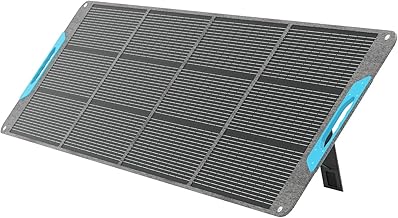 |
Renogy 200W Portable Solar Panel, IP65 Waterproof Foldable Solar Panel Power Backup, Solar Charger for Power Station RV Camping Off Grid |
$244.99 | (661) | View on Amazon |