
Best RV Roof Sealants to Stop Leaks (Dicor, EternaBond, & More)
 By Salem Hassan — Co-Founder, Searchshop · 30+ years in RV & marine dealerships· February 15, 2026· 11 min read· Updated 1d ago
Salem Hassan has spent more than 30 years building and operating dealerships across the RV, marine, and powersports industries. He founded Suncoast RV in 1994 and later owned Travelcamp RV in Jacksonville for a decade…
Why trust us
RVGearInsider articles are researched by the Searchshop Editorial team using manufacturer specs, independent expert sources, and owner feedback. Our goal is simple: when an RVer searches for gear, the recommendations they read online should match what a knowledgeable dealer or experienced owner would actually suggest. We may earn a commission on qualifying affiliate purchases; it doesn't influence what we recommend — if a product changes or a better option comes along, the article changes too.
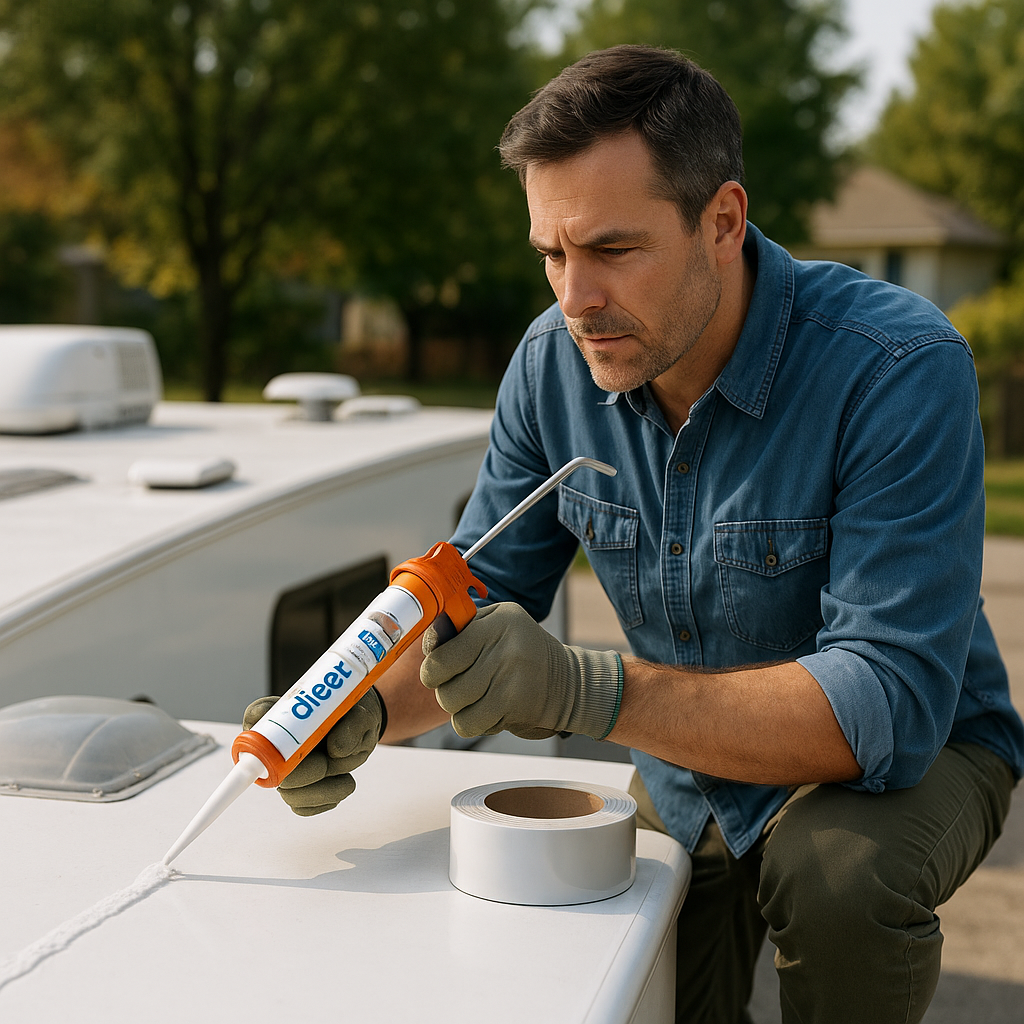
A roof leak is one of the fastest ways to turn a good camper into a moldy money pit. The good news: the right RV roof sealant can stop leaks cold — but only if you choose the right product for your roof material, repair type, and weather conditions.
We’ve used these sealants on EPDM, TPO, aluminum, and fiberglass RV roofs for routine maintenance, vent flange reseals, emergency patch jobs, and long-term seam repairs. Some are true self-leveling lap sealants. Some are permanent seam tapes. A few are better for vertical surfaces than horizontal roof penetrations. Below, we break down the best RV roof sealants we’d actually buy with our own money.
Side-by-Side Comparison: Which RV Roof Sealant Is Best?

Here’s how these products stack up where it counts.
| Product | Best Surface | Ease of Use | Durability | Flexibility | Value | Our Take |
|---|---|---|---|---|---|---|
| Dicor 501LSW-1 | Horizontal roof penetrations | Excellent | Very good | Very good | Excellent | Best all-around sealant for most RV owners |
| EternaBond RoofSeal | Seams, cracks, long patches | Good | Excellent | Excellent | Very good | Best permanent-style patch solution |
| Dicor 551LSW-1 | Vertical seams and sidewalls | Very good | Very good | Very good | Very good | Best for non-horizontal applications |
| Geocel Pro Flex RV | Trim, sidewalls, mixed materials | Very good | Very good | Very good | Good | Best specialty sealant for sidewall/detail work |
| Alpha Systems 1021 | Horizontal roof reseals | Good | Good | Good | Very good | Best lower-cost alternative |
Our Top Picks at a Glance
| Rank | Product | Best For | Type | Roof Compatibility | Typical Price |
|---|---|---|---|---|---|
| #1 | Dicor 501LSW-1 Self-Leveling Lap Sealant | Most RV roof repairs around vents, skylights, antennas | Self-leveling sealant | EPDM, TPO, PVC, metal, fiberglass, wood | $10-$15 per 10.3 oz tube |
| #2 | EternaBond RoofSeal Tape 4" x 50' | Permanent seam and crack repair | Microsealant tape | EPDM, TPO, metal, fiberglass, aluminum | $65-$85 per roll |
| #3 | Dicor 551LSW-1 Non-Sag Lap Sealant | Vertical seams and sidewall transitions | Non-sag sealant | EPDM, TPO, PVC, metal, fiberglass | $11-$16 per 10.3 oz tube |
| #4 | Geocel Pro Flex RV Flexible Sealant | Fast repairs in mixed weather, sidewalls, trim | Tripolymer sealant | Metal, fiberglass, wood, vinyl, aluminum | $12-$18 per 10 oz tube |
| #5 | Alpha Systems 1021 Self-Leveling Sealant | Budget alternative to Dicor | Self-leveling sealant | EPDM, TPO, metal, fiberglass | $9-$14 per 10.3 oz tube |
Best RV Roof Sealants Ranked

#1 Best Overall: Dicor 501LSW-1 Self-Leveling Lap Sealant
If you own an RV, this is the tube we think should already be in your maintenance bin. Dicor 501LSW-1 Self-Leveling Lap Sealant is the industry standard for a reason: it’s easy to apply, levels out cleanly on horizontal surfaces, and bonds reliably to the materials most RV roofs use.
We’ve used it around roof vents, plumbing stacks, skylights, refrigerator vents, antenna mounts, and screw heads. It skins over reasonably fast, remains flexible after curing, and is compatible with EPDM, TPO, PVC, aluminum, galvanized metal, concrete, mortar, wood, and vinyl according to the manufacturer. The 10.3-ounce tube typically covers about 30 linear feet with a 1/4-inch bead.
For most owners with a standard rubber or TPO roof, this is the safest all-around choice.
Pros
- Excellent all-purpose choice for horizontal RV roof penetrations
- Self-levels smoothly for a watertight finish
- Proven long-term flexibility and UV resistance
- Widely available and easy to match with existing roof maintenance products
- Good value at around $10-$15 per tube
Cons
- Not for vertical surfaces where sagging is a problem
- Cure time slows in cool or humid weather
- Messy if you over-apply
Best for: Routine roof maintenance and resealing around roof fixtures
#2 Best for Permanent Patches: EternaBond RoofSeal Tape 4" x 50'
When we want a repair that’s closer to a permanent patch than a bead of caulk, we reach for EternaBond RoofSeal Tape. This is not a traditional sealant tube — it’s a microsealant tape with a UV-stable backing that forms an extremely aggressive bond once rolled into place.
We’ve used the 4-inch x 50-foot roll on split membrane seams, old screw lines, edge trim, and emergency crack repairs where lap sealant alone wasn’t enough. On clean surfaces, it sticks hard. Really hard. It works on EPDM, TPO, Hypalon, aluminum, steel, fiberglass, and many plastics, and it’s one of the best products available for long roof seams.
The catch is prep. Surface cleaning matters more with EternaBond than with any tube sealant in this guide. If the roof is chalky, oily, wet, or poorly prepped, you won’t get the bond you paid for.
Pros
- Outstanding long-term waterproofing for seams and cracks
- Excellent UV resistance and weather durability
- Ideal for emergency repairs and preventive seam reinforcement
- Covers a lot of area quickly
- Often outlasts standard lap sealants in high-stress seam applications
Cons
- More expensive upfront at $65-$85 per roll
- Surface prep has to be meticulous
- Hard to reposition once it touches down
- Not the best choice for every small penetration detail
Best for: Long seams, tears, edge repairs, and “fix it once” patch jobs
#3 Best for Vertical Seams: Dicor 551LSW-1 Non-Sag Lap Sealant
One of the most common mistakes we see is using self-leveling roof sealant on a vertical seam or sidewall transition. It runs, sags, and looks terrible. For those jobs, Dicor 551LSW-1 Non-Sag Lap Sealant is the right tool.
This version is formulated for vertical surfaces and side seams, including window frames, corner trim, beltline moldings, and upper sidewall joints. It offers the same RV-friendly compatibility as Dicor’s self-leveling formula, but it stays where you put it.
We like keeping both Dicor formulas on hand: 501LSW-1 for horizontal roof penetrations, 551LSW-1 for vertical work. If you’re resealing marker lights, trim rails, or a front cap seam, this is the one we’d buy.
Pros
- Stays in place on vertical surfaces
- Strong adhesion to common RV materials
- Cleaner-looking bead than self-leveling products on sidewalls
- Good flexibility after cure
- Easy to find and reasonably priced
Cons
- Not ideal for broad horizontal roof areas
- Tooling can take a little practice for a clean finish
- Still not as robust as tape for major seam reinforcement
Best for: Vertical seams, sidewalls, trim, and front/rear cap joints
#4 Best for Mixed-Material Repairs: Geocel Pro Flex RV Flexible Sealant
Geocel Pro Flex RV has a loyal following, and after testing it on aluminum trim, fiberglass caps, and sidewall details, we understand why. It’s a tripolymer sealant that adheres well to a wide range of materials and can be applied in less-than-perfect conditions better than many lap sealants.
We don’t think it replaces Dicor on every roof penetration, especially on flat horizontal roof areas that benefit from self-leveling coverage. But for trim rails, window perimeters, corner moldings, and mixed-material joints, it’s one of the better products on the shelf.
It also tends to skin over quickly and remains paintable, which matters more on sidewall repairs than roof work.
Pros
- Excellent adhesion to aluminum, fiberglass, vinyl, and wood
- Good flexibility and weather resistance
- Better than average in variable weather conditions
- Great for sidewall and trim repairs
- Paintable after cure
Cons
- Not our first choice for horizontal roof penetrations
- Strong odor during application
- Can be harder to remove during future repairs
Best for: Sidewall trim, window frames, corner joints, and mixed-material repairs
#5 Best Budget Alternative: Alpha Systems 1021 Self-Leveling Sealant
If Dicor isn’t available or you’re trying to save a few dollars on a basic reseal, Alpha Systems 1021 Self-Leveling Sealant is a credible alternative. It’s designed for horizontal RV roof applications and is commonly used on EPDM, TPO, metal, and fiberglass.
in our research, it flowed well and sealed adequately around vents and small penetrations. We still give Dicor the edge for consistency and long-term confidence, but Alpha Systems is a perfectly workable option for routine maintenance.
Pros
- Usually slightly cheaper than Dicor
- Self-levels well on horizontal surfaces
- Compatible with common RV roofing materials
- Good option for maintenance touch-ups
Cons
- Not as universally trusted in the field as Dicor
- Availability can be hit or miss
- We’ve seen more variation in finish and flow depending on temperature
Best for: Budget-conscious owners doing standard roof resealing
Our Verdict: The Clear Winner
If we had to recommend just one RV roof sealant for the average owner, it’s Dicor 501LSW-1 Self-Leveling Lap Sealant.
Why? Because most RV roof leaks start around vents, skylights, antennas, ladder mounts, and plumbing penetrations — exactly where Dicor’s self-leveling formula works best. It’s affordable, easy to apply, compatible with the most common roof materials, and field-proven over years of use. It’s not the answer to every problem, but it’s the best first purchase for most owners.
That said, if you’re repairing a split seam, puncture, or long crack, we’d choose EternaBond RoofSeal Tape instead. In our shop and on the road, the smartest approach is often using both: Dicor for fixtures and details, EternaBond for seam reinforcement and structural patching.
How to Choose the Right RV Roof Sealant
Before you buy, match the product to the repair.
1. Identify your roof material
Most RV roofs are EPDM rubber, TPO, fiberglass, aluminum, or coated metal. Not every sealant plays nicely with every surface. Always confirm compatibility on the label.
2. Decide whether the repair is horizontal or vertical
- Horizontal roof penetrations: use a self-leveling sealant like Dicor 501LSW-1
- Vertical seams or sidewalls: use a non-sag sealant like Dicor 551LSW-1 or Geocel Pro Flex RV
3. Determine whether you need a bead or a patch
- For small gaps, screw heads, and fixture flanges, use a tube sealant
- For tears, long seams, edge rails, or recurring cracks, use EternaBond tape
4. Consider weather and cure conditions
Most sealants apply best in moderate temperatures on a dry surface. If rain is coming soon, postpone the job unless the product specifically allows damp-condition application.
5. Think about future maintenance
Some products are easier to inspect, touch up, and remove later. If you expect to replace a vent or skylight in a year or two, that matters.
How We Reseal an RV Roof: Step-by-Step
If you’re tackling a leak yourself, this is the process we use.
Materials You’ll Need
- RV-safe roof cleaner or mild soap and water
- Clean rags or shop towels
- Plastic scraper
- Caulk gun
- Chosen sealant or tape
- Roller for EternaBond application
- Denatured alcohol or manufacturer-approved surface prep cleaner
- Nitrile gloves
- Ladder and roof-safe shoes
Step 1: Inspect the entire roof
Don’t just seal the obvious leak point. We inspect every vent, skylight, antenna, seam, termination bar, and old patch. Water often travels before it shows up inside.
Step 2: Clean the repair area thoroughly
Remove dirt, oxidation, loose old sealant, and chalky residue. A sealant is only as good as the surface under it.
Step 3: Remove failing sealant carefully
Use a plastic scraper, not a metal putty knife that can gouge a rubber membrane. You don’t have to remove every trace if the old material is sound, but anything cracked, loose, or lifting has to go.
Step 4: Dry the surface completely
This matters especially for tape repairs. We wait until the surface is fully dry before applying new material.
Step 5: Apply the right product for the repair
- For Dicor 501LSW-1, run a continuous bead around the flange or seam and let it self-level
- For Dicor 551LSW-1 or Geocel, apply a controlled bead and tool it if needed
- For EternaBond, cut to length, peel backing gradually, apply with pressure, then roll firmly
Step 6: Check coverage and edge seal
Look for gaps, pinholes, or missed fasteners. On tape repairs, pay special attention to edges and corners.
Step 7: Let it cure before heavy rain or travel
Follow the product instructions. We avoid washing the roof or hitting highway speeds immediately after a fresh repair if the sealant hasn’t had time to set.
Pro Tips From our research
- Don’t mix products blindly. Some new sealants won’t bond well over unknown old materials.
- Warm tubes apply better. If it’s chilly out, keep sealant indoors first for smoother flow.
- Use more prep, not more caulk. A giant blob of sealant over a dirty seam is not a real repair.
- Tape needs pressure. EternaBond works best when rolled aggressively into the surface.
- Inspect twice a year. We recommend checking your roof at least every spring and fall.
Safety Callouts
Roof Safety: RV roofs can be slick, especially with morning dew, cleaners, or oxidation. Wear shoes with good grip and avoid working near roof edges alone.
Ventilation: Some sealants give off strong fumes. Work outdoors and avoid breathing concentrated vapors over the bead.
Membrane Protection: Never use harsh solvents or metal tools on EPDM or TPO unless the roof manufacturer specifically approves them.
When to Use Sealant vs. Replace a Component
Sealant can stop a leak, but it won’t fix every problem. If a vent flange is cracked, a skylight is crazed, or a roof membrane is torn beyond a small patch, replacing the damaged component is the better long-term move. We’ve seen too many owners chase leaks for months because they kept adding sealant over broken hardware.
Final Buying Advice
For most RV owners, the smartest combo is simple:
- Buy Dicor 501LSW-1 for regular roof maintenance and penetration resealing
- Keep EternaBond RoofSeal Tape on hand for emergency seam repairs and permanent patches
- Add Dicor 551LSW-1 or Geocel Pro Flex RV if you also need to tackle vertical seams or sidewall trim
If you only buy one product today, make it Dicor 501LSW-1 Self-Leveling Lap Sealant. It’s our top pick because it solves the most common RV roof leak problems with the least fuss and the best overall value.
FAQ
1. What is the best sealant for an RV roof leak?
For most roof leaks around vents, skylights, and roof fixtures, we recommend Dicor 501LSW-1 Self-Leveling Lap Sealant. For long seams, tears, or patch repairs, EternaBond RoofSeal Tape is often the better choice.
2. Can I use silicone sealant on an RV roof?
We generally do not recommend standard household silicone on RV roofs. It often has poor long-term compatibility with RV roofing materials and can make future repairs harder because many sealants won’t adhere well over old silicone.
3. How often should I reseal my RV roof?
We inspect roof sealant twice a year and after major storms or tree strikes. Full resealing depends on exposure and storage conditions, but many RVs need touch-ups every 1-3 years.
4. Is EternaBond better than Dicor?
They do different jobs. Dicor is better for sealing around roof penetrations and fixtures. EternaBond is better for seam repairs, cracks, and patching larger damaged areas. In practice, many owners should keep both on hand.
Top Picks & Comparison
| # | Product | Price | Rating | ||
|---|---|---|---|---|---|
| #1 |  |
Liquid Rubber RV Roof Sealant- Professional-Grade Solar Reflective Flexible Waterproof Membrane Coating for EPDM, TPO, Fiberglass & Aluminum Camper & Travel Trailers- Brilliant White, 5 Gallon |
$299.95 | (1,301) | View on Amazon |
| #2 |  |
BEEST RV Roof Coating White, 1 Gallon Covers up to 50 sq ft (2 Coats), Solar Reflective & Waterproof Sealant| Elastomeric Leak Repair Coating, Liquid Rubber RV Roof Sealant for Trailers, Camper & More |
$71.95 | (265) | View on Amazon |
| #3 |  |
Liquid Rubber RV Lap Sealant, Self-Leveling Roof Sealant for RV Vents, Skylights, AC Units & Roof Seams, Waterproof, White, 4 Pack |
$49.95 | (565) | View on Amazon |
| #4 |  |
TITANPATCH PRO Waterproof Sealant Tape – White 4" x10' – Stops Leaks Fast & Stays Sealed for 15+ Years – Sticks to RVs, Roofs, Pools, Boats, Gutters – Built for Harsh Weather (-40°F to 190°F) |
$16.99 | (345) | View on Amazon |