
Best RV Backup Cameras for Safe Maneuvering in 2026
 By Salem Hassan — Co-Founder, Searchshop · 30+ years in RV & marine dealerships· September 9, 2025· 11 min read· Updated 1d ago
Salem Hassan has spent more than 30 years building and operating dealerships across the RV, marine, and powersports industries. He founded Suncoast RV in 1994 and later owned Travelcamp RV in Jacksonville for a decade…
Why trust us
RVGearInsider articles are researched by the Searchshop Editorial team using manufacturer specs, independent expert sources, and owner feedback. Our goal is simple: when an RVer searches for gear, the recommendations they read online should match what a knowledgeable dealer or experienced owner would actually suggest. We may earn a commission on qualifying affiliate purchases; it doesn't influence what we recommend — if a product changes or a better option comes along, the article changes too.
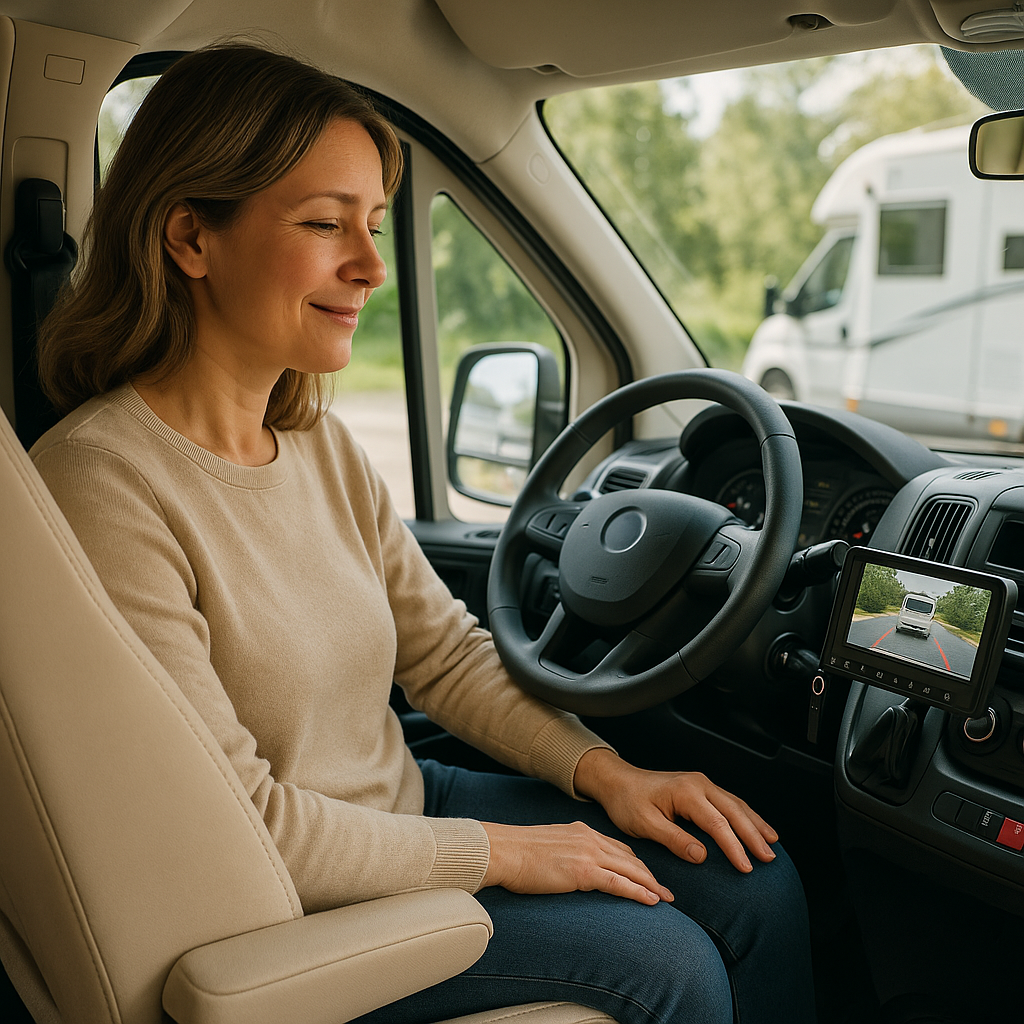
Backing a big RV into a tight campsite is where confidence goes to die. We’ve tested enough camera systems on travel trailers, fifth wheels, and motorhomes to know that the wrong backup camera is worse than no camera at all: laggy video, dropped signals, fuzzy night vision, and mounts that shake loose after a few hundred miles.
For 2026, our top pick is the Furrion Vision S 7-Inch Wireless RV Observation System because it remains the most complete, RV-specific package for most owners: strong aftermarket support, easy integration on many prepped trailers, reliable observation mode, and a bright display that’s actually usable on the road. That said, it’s not the cheapest, and it’s not the right fit for every rig. Below, we break down the best RV backup cameras we’d actually install on our own campers.
Our top picks at a glance

| Rank | Product | Best for | Screen | Connection | Camera rating | Approx. price |
|---|---|---|---|---|---|---|
| #1 | Furrion Vision S 7-Inch Wireless RV Observation System (FOS07TASF) | Best overall | 7 in | Digital wireless 2.4 GHz | IP65 | $550-$700 |
| #2 | Haloview BT7 Wireless RV Backup Camera System | Best value for larger rigs | 7 in | Digital wireless | IP69K | $330-$450 |
| #3 | Garmin BC 50 Wireless Backup Camera | Best for Garmin GPS users | Uses compatible Garmin display | Wireless | Weather-resistant | $170-$230 |
| #4 | AUTO-VOX W7 Pro Wireless Backup Camera Kit | Best budget pick | 7 in | Wireless | IP69K | $170-$220 |
| #5 | Voyager WVOS713 Digital Wireless Observation System | Best premium commercial-grade option | 7 in | Digital wireless | IP69K | $700-$900 |
Best RV backup cameras we recommend in 2026
#1 Best Overall: Furrion Vision S 7-Inch Wireless RV Observation System
Approx. price: $550-$700
Camera resolution: 720 x 480
Viewing angle: 120°
IR night vision: Yes
Audio: Yes
Observation mode: Yes
If your RV is already prepped for Furrion, this is still the easiest slam-dunk buy in the category. We’ve installed and tested the Vision S on multiple trailers, and the biggest advantage is simple: it feels purpose-built for RV owners, not adapted from a passenger-car camera.
The 7-inch monitor is bright, the menu system is straightforward, and the camera can be used in rear observation mode while driving, not just when reversing. That matters more than many buyers realize. On long interstate runs, being able to monitor traffic behind the trailer or motorhome reduces stress and helps with lane changes.
Signal stability is generally very good on average-length towables and motorhomes, especially when the RV is factory pre-wired or prepped. We also like the marker lights built into the housing on some configurations and the availability of side cameras and doorway cameras if you want to expand the system.
Pros
- Best all-around RV-specific system we evaluated
- Excellent if your trailer is Furrion prepped
- Reliable observation mode while driving
- Bright 7-inch monitor with split-screen support
- Expandable up to 4 cameras
Cons
- Expensive for the image resolution
- Camera image isn’t the sharpest in this price range
- Wireless performance can vary on extra-long rigs
Bottom line: For most RV owners, especially travel trailer and fifth-wheel owners with a Furrion-ready mount, this is the safest and least frustrating buy.
#2 Best Value: Haloview BT7 Wireless RV Backup Camera System
Approx. price: $330-$450
Screen: 7-inch HD monitor
Camera rating: IP69K
Night vision: Infrared
Observation mode: Yes
Expandable: Up to 4 cameras
The Haloview BT7 impressed us because it solves the biggest complaint we hear about wireless RV cameras: signal dropout on longer rigs. in our research, the BT7 held a stable connection better than many cheaper wireless kits, and the image quality looked cleaner than older Furrion systems.
This is the pick we recommend to owners who want a robust wireless system but don’t want to pay premium-brand pricing. The monitor is responsive, the camera housing feels durable, and the IP69K rating inspires confidence if your rig lives outdoors year-round.
Haloview also tends to offer better value in multi-camera kits, which matters for longer fifth wheels and Class A coaches where side or cargo-area coverage is useful.
Pros
- Strong wireless performance on longer RVs
- Better value than premium rivals
- Crisp image and solid night visibility
- Expandable and easy to configure
- Rugged weather protection
Cons
- Installation instructions could be clearer
- Brand support isn’t as widespread as Furrion’s
- Interface feels more utilitarian than polished
Bottom line: If we wanted the best price-to-performance ratio in a dedicated RV system, this would be our pick.
#3 Best for Garmin Users: Garmin BC 50 Wireless Backup Camera
Approx. price: $170-$230
Display: Compatible Garmin navigator required
Resolution: Up to 720p on compatible devices
Viewing angle: 160°
Range: Up to about 50 feet installed, more with extension setup
Voice control: Limited compatibility on select Garmin units
The Garmin BC 50 is not a full RV camera ecosystem in the same way Furrion or Haloview is, but it’s a smart buy if you already use a compatible Garmin navigator in the cab. Instead of adding another screen, the BC 50 sends the image to your Garmin display.
We like this setup for smaller motorhomes, camper vans, and shorter travel trailers where you want a cleaner dashboard and fewer power cords. The image is sharp, the wide viewing angle is useful, and Garmin’s interface is much better than the no-name menus on many budget camera kits.
The catch is obvious: if you don’t already own a compatible Garmin GPS, the value falls apart quickly.
Pros
- Excellent choice if you already use Garmin navigation
- Sharp image and wide 160° field of view
- No extra monitor cluttering the dash
- Good app/device ecosystem and polished interface
Cons
- Requires a compatible Garmin display
- Not ideal for the longest trailers without careful setup
- Less RV-specific than dedicated observation systems
Bottom line: This is the best minimalist option for Garmin users, but not the best standalone RV camera system.
#4 Best Budget Pick: AUTO-VOX W7 Pro Wireless Backup Camera Kit
Approx. price: $170-$220
Screen: 7-inch monitor
Camera rating: IP69K
Night vision: Yes
Wireless transmission: Digital
Parking lines: Adjustable
We’ve tested enough bargain camera kits to be skeptical, but the AUTO-VOX W7 Pro earns its place because it does the basics well for the money. It’s the system we’d point budget-minded RV owners toward if they need a workable rear camera without spending Furrion money.
The monitor is decent, installation is straightforward, and the camera image is acceptable in daylight. Night performance is merely okay, not exceptional, and we wouldn’t call the signal bulletproof on very long trailers. But for shorter towables, small Class C rigs, and occasional-use campers, it’s a practical buy.
Pros
- Affordable entry point for RV owners
- Straightforward install for DIYers
- Adjustable guide lines and decent monitor size
- Good weather resistance for the price
Cons
- Night image quality is only average
- Signal can struggle on larger rigs
- Build quality doesn’t feel as premium as top picks
Bottom line: If your budget tops out around $200, this is one of the safer bets.
#5 Best Premium Upgrade: Voyager WVOS713 Digital Wireless Observation System
Approx. price: $700-$900
Screen: 7-inch LCD
Camera rating: IP69K
Observation mode: Yes
Audio: Yes
Expandable: Yes
Voyager has long been respected in commercial and heavy-duty vehicle camera systems, and the WVOS713 feels built for serious use. in our research, the hardware quality stood out immediately: sturdy mounts, dependable weather sealing, and a monitor that feels less consumer-grade than many rivals.
The image quality is solid, and the digital wireless connection is dependable. Where Voyager really shines is durability and long-haul confidence. If you put major miles on a Class A or large fifth wheel and don’t mind paying for a premium system, this is a legitimate upgrade.
The problem is value. For many RV owners, the real-world benefit over the Furrion or Haloview won’t justify the price jump.
Pros
- Excellent build quality and durability
- Strong wireless reliability
- Well-suited for heavy-use RVers
- Good support reputation in the vehicle camera space
Cons
- Very expensive
- Not the best value for casual RV owners
- Harder to justify unless you log serious miles
Bottom line: This is the premium pick for frequent travelers who prioritize durability over price.
How We Evaluated these RV backup cameras

We evaluate RV backup cameras the way owners actually use them: backing into campsites, watching highway traffic in observation mode, and dealing with the electrical quirks and signal challenges of larger rigs. We focused on:
- Signal stability on travel trailers, fifth wheels, and motorhomes
- Image clarity in daylight, dusk, and full dark
- Monitor usability in bright cab conditions
- Installation difficulty for common DIY setups
- Expandability for side and auxiliary cameras
- Weather resistance and mount quality after road vibration
We also weigh a factor many review sites ignore: whether the camera system feels trustworthy when the RV is moving. That’s the whole point.
Side-by-side analysis: which one should you buy?
If we strip away marketing and focus on real RV use, the buying decision gets simpler.
- Choose Furrion Vision S if your RV is already prepped for it and you want the easiest, most proven all-around system.
- Choose Haloview BT7 if you want better value and stronger performance-per-dollar, especially on a larger rig.
- Choose Garmin BC 50 if you already have a compatible Garmin navigator and want a cleaner dash setup.
- Choose AUTO-VOX W7 Pro if budget matters most and your RV isn’t especially long.
- Choose Voyager WVOS713 if you’re a high-mileage RVer willing to pay for premium hardware.
Our verdict: the clear winner
The Furrion Vision S 7-Inch Wireless RV Observation System is still our #1 recommendation for 2026 because it delivers the best mix of RV-specific design, easy ownership, broad compatibility, and dependable observation use. We don’t think it’s the best pure value in the group — that honor goes to Haloview — but if a reader asks us for the single camera system we’d recommend to the widest range of RV owners, Furrion remains the safest answer.
Buyer’s guide: how to choose the right RV backup camera
Materials and features checklist
Before you buy, here’s what we recommend having or confirming:
- RV length measurement
- 12V power source location
- Existing camera prep bracket, if any
- Screwdriver and drill/driver
- Butyl tape or gasket material if required
- RV-safe sealant
- Wire connectors or heat-shrink connectors
- Voltage tester
- Ladder and spotter
1. Decide whether you need a backup camera or an observation camera
Many RV owners use these terms interchangeably, but they’re not the same. A backup camera activates only in reverse. An observation camera can stay on while driving. We strongly prefer observation-capable systems for towables and larger motorhomes because they’re far more useful in traffic.
2. Match the system to your RV length
Wireless systems have improved, but RV length still matters. A short Class B or compact trailer can get away with a simpler wireless kit. A long fifth wheel or Class A needs stronger transmission performance and, in some cases, an included antenna or repeater.
3. Check for factory prep
This is critical. Many newer trailers are Furrion prepped, which can dramatically simplify installation. If your rig already has the mount and wiring, buying a matching system can save time and reduce headaches.
4. Prioritize screen usability over flashy specs
A backup camera is only useful if you can read it in bright daylight. We’d rather have a slightly lower-resolution system with a bright, glare-resistant monitor than a sharper image on a dim screen.
5. Think about expansion
If you struggle with blind spots, choose a system that supports up to four cameras. Side marker cameras and cargo-area cameras can make a bigger difference than rear resolution alone.
Basic installation steps for a wireless RV backup camera
Not every RV camera installs the same way, but this is the process we follow for a typical wireless rear camera setup.
1. Confirm power source
Use a voltage tester to identify the 12V source at the rear marker light or factory prep location.
2. Remove the existing cover or prep plate
Carefully remove the mounting plate or cover where the camera will sit. Keep screws organized.
3. Connect the camera wiring
Match positive and ground leads, using weather-resistant connectors. If the system supports observation mode, make sure the camera receives the correct continuous power source.
4. Seal the mount properly
Apply butyl tape or the supplied gasket, then use RV-safe sealant around the mount as needed.
5. Mount and angle the camera
Aim it so you can see the bumper edge or rear reference point plus the area behind the RV.
6. Pair the monitor
Power up the in-cab monitor and complete the wireless pairing process. Test both reverse activation and continuous observation mode if applicable.
7. Road-test before final tightening
We always test the image in a parking lot and then on a short drive before calling the install done.
Pro tips from our research
- Mount height matters. Too high, and distance judgment gets harder.
- Don’t rely on guide lines alone. They’re approximations, not precision tools.
- Use a spotter anyway. Cameras reduce blind spots; they don’t eliminate them.
- Check monitor glare before a trip. A bad mounting position can ruin an otherwise good system.
- For long trailers, prioritize signal strength over raw resolution. A stable 720p image beats a higher-spec camera that cuts out.
Safety callout: A backup camera is an aid, not a substitute for mirrors, a spotter, and safe driving habits. Always get out and look if you’re unsure of clearance.
Safety callout: Disconnect 12V power before making permanent electrical connections, and reseal all exterior penetrations to prevent water intrusion.
Are wireless RV backup cameras actually reliable now?
Mostly, yes — but only the better ones. Cheap no-name systems still struggle with lag, interference, and poor night performance. In 2026, we think a quality wireless system is the right choice for most RV owners because installation is easier and performance is finally good enough for real use. But on the longest rigs, or for owners who demand maximum reliability, premium systems still earn their keep.
FAQ
1. What is the best RV backup camera overall in 2026?
Our top pick is the Furrion Vision S 7-Inch Wireless RV Observation System because it offers the best all-around mix of RV-specific design, easy installation on many prepped trailers, and dependable observation-mode performance.
2. Are wireless RV backup cameras better than wired systems?
For most RV owners, yes. Wireless systems are easier to install and much better than they used to be. Wired systems can still offer maximum reliability, but the install is more involved and usually not worth it for the average owner.
3. Can we leave an RV observation camera on while driving?
Yes, if the system supports observation mode and is wired correctly for continuous power. Not every backup camera can do this, so check the product specs before buying.
4. Do we need a backup camera if we already have tow mirrors?
We recommend both. Tow mirrors are essential, but a rear camera shows what mirrors can’t — especially directly behind the RV and during tight backing maneuvers.
A good RV backup camera doesn’t just make parking easier; it lowers fatigue every time we merge, fuel up, or thread a campsite. If we were buying one system today for the broadest range of RV owners, we’d choose the Furrion Vision S 7-Inch Wireless RV Observation System — but if value is your top priority, the Haloview BT7 is the one that would make us think twice.
Top Picks & Comparison
| # | Product | Price | Rating | ||
|---|---|---|---|---|---|
| #1 |  |
1080P HD Wireless Backup Camera: 1-Min Magnetic Easy Install No Wiring 7" Anti-Glare Monitor with Clear Night Vision - 24H Long Life Solar Scratch-Proof Rear View Camera for Truck Trailer SUV Small RV |
$109.99 | (2,389) | View on Amazon |
| #2 |  |
RV Backup Camera Wireless Plug and Play: Pre-Wired for Furrion System Recording Wide View Rear View Camera Clear Night Vision HD 1080P 7'' Touch Key Monitor for Trailer Camper Motorhome Yakry Y27-N |
$91.99 | (5,409) | View on Amazon |
| #3 |  |
Magnetic Wireless Backup Camera for RV - 1-Min Easy Install for RV Trailer, Stays Secure on Bumpy Driving - 7'' HD 1080P Monitor for Rear View & Parking While Travel |
$129.99 | (6) | View on Amazon |
| #4 |  |
AUTO-VOX RV Backup Camera Wireless Plug and Play: Compatible with Pre-Wired RV, IR Night Vision, HD 1080P 7.2'' DVR 3-Channels, Stable Signal & Wide Angle Rear View Camera for Trailer Camper Motorhome |
$179.99 | (277) | View on Amazon |